

“My Brother’s Baseball Mitt”–Script & Video on Salinger’s The Catcher in the Rye
By Colin Capenito, IV Form
“My Brother’s Baseball Mitt”–Script & Video on Salinger’s The Catcher in the Rye
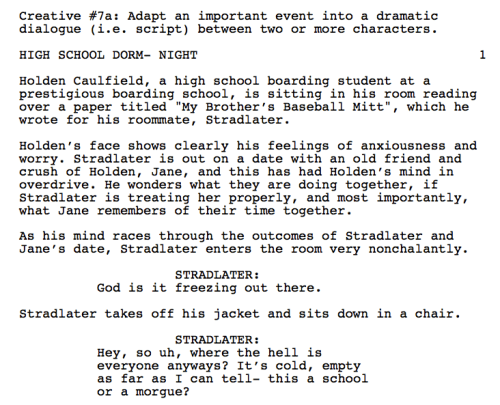
Continued: Click here for full script!
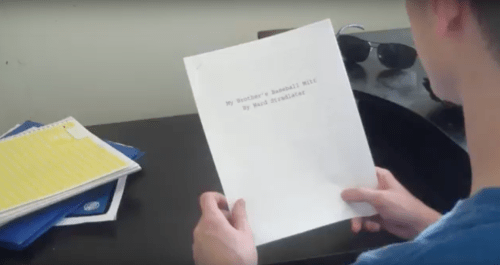

Moments of Significant Expansion or Contraction of U.S. Democracy
By Anthony D’Angelo, Sophie Haugen, Kaela Dunne, Rebecca Lovett, and Izzy (Minjae) Kim, V Form
Moments of Significant Expansion or Contraction of U.S. Democracy
The Shen Prize is a speech competition for V Formers responding to the prompt: What is a moment of significant expansion or contraction of United States’ democracy?
Below are links to the text of the speeches by the five finalists as well as the video of the actual speeches. The Shen Prize was bestowed upon Rebecca Lovett.
In order of appearance:
Anthony D’Angelo: The All-American Girl’s Professional Baseball League
Sophie Haugen: Xenophobia–Never the Answer
Kaela Dunne: Reclaim the Title “Home of the Brave”
Rebecca Lovett (Shen Prize): The Civil Rights Act of 1964–Greatest Expansion of Human Rights, Suffrage, Opportunity, and Democracy
Izzy (Minjae) Kim: Leveraging the “Soft Power” of the U.N. (more…)

Collaborating on the Command Form in French
By Two French II Classes
Collaborating on the Command Form in French
Editor’s Note: French II students did a full class collaboration in which they made a video entitled, “How to survive at St. Mark’s: A guide for new students.” The video was designed to use the command form in French. The collaborative nature of this project meant that every student had a role in editing, filming, adding music, collecting videos, writing and revising the actual script.
Click here or above image for video by Frank Hua, Nate King, Luc Côté, Jovin Ho, William Osborne, Paige LaMalva, Emma Viens, Izzy O’Toole, Jonathan Noel, Daniela Martinez, and Julianna Gong.
Click here above image for video by Ainsley Dubose, Tucker Hartmann, Sam Leslie, Leann Li, Phoebe Macleod, Aidana Maitekova, Dom Mongillo, Edwardo Perez, Noah Robb, Robert Somme’s, Lindsay Strong, Benjamin Teixeira, Madeleine Wass, TianYu Zhao, and Lucy Zheng. (more…)

Explaining the Immigration Crisis with Confucianism
By Alan Gao, IV Form
Explaining the Immigration Crisis with Confucianism
In recent years, news of immigrants and refugees flooding into Europe along with reports of violence and terrorist attacks have spread rapidly. As a result, many people have become more hostile towards immigrants, especially as Donald Trump appeared on the political stage. In Europe, which has been affected most by the refugee crisis, there was a rise in anti-immigrant supporters that led to an increase in support for many populist right-wing political parties. France, for instance, saw the National Front rise to be the second largest party in the nation. In Hungary, the leader of its current ruling party, Fidesz, has claimed that “[f]or us migration is not a solution but a problem … not medicine but a poison, we don’t need it and won’t swallow it” (The Guardian). In Netherlands, the “Dutch Donald Trump” Geert Wilders, led the Party for Freedom to be the second largest party in the nation as well. Not to mention, there are many countries, like Denmark, that have already instituted a strict immigration process in the past dozen years. What is the cause of the rise? (more…)

The West Nile Virus: The Minor Zoonotic Problem Without A Major Solution
By Anuoluwa Akibu, Jack Griffin, Sierra Petties, & Ben West, III Form; with mentors Ben Robb, V Form & Blaine Duffy, VI Form
The West Nile Virus: The Minor Zoonotic Problem Without A Major Solution
Abstract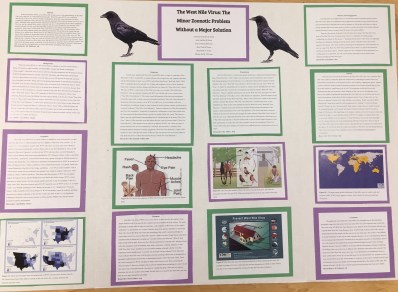
In the information below, you will be able to take away a full understanding on the West Nile virus, and how it is transmitted zoonotically. West Nile virus (WNV) is a pathogen, specifically a flavivirus, and it is found in arthropods. West Nile virus infections are most common in temperate areas, between late summer and early fall, when mosquito activity is at it’s peak. Although many people become infected with WNV most people do not show symptoms. The few who do, mostly have minor symptoms like fever and headache. One percent of the people infected with the virus develop lethal symptoms that require immediate medical assistance. Most cases of West Nile virus come from mosquito bites. The mosquitoes infect humans and other animals which are called dead end hosts. Dead-end hosts cannot pass the disease on to another host. Birds however are different because they are amplifier hosts. That means they continue to spread the disease to mosquitoes have not received the virus yet. The only known treatment to West Nile virus at the moment is pain killers because scientists are still figuring out a solution. There are cures for animals and some in development for humans. There isn’t a practical solution to West Nile virus, but there have been prevention methods created. The main focus for many groups worldwide is of the disease by managing the mosquito population and observing the bird population to restrict the further spreading of the disease. Researcher(s): All; Editor(s): All (more…)

Asians & Asian Americans: A “Model Minority”?
By Ivy Li, IV Form
Asians & Asian Americans: A “Model Minority”?
 On April 9, I participated in a conference regarding Asian identity and the impact of such on living in America: Asian American Footsteps Conference: Embrace Your Passion and Others’ Stereotype. Although we were not able to explore the topics thoroughly and deeply enough within small group discussions due to the limited time, I have two main takeaways:
1. Don’t Let Go Your Passion
2. Stereotype Is Motivation
1. “My mother wanted me to be a nurse just like she and other relatives did, but I always had this passion to write. So I quit and became a poet…” This was Keynote Speaker Tina Chang talking about her experience as a Chinese immigrant and the obstacles on her way of pursuing dream. (more…)

Redesigning Learning Spaces & Flexible Seating
By John Camp, English Department Head
Redesigning Learning Spaces & Flexible Seating
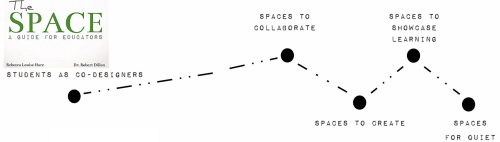
from The Space: A Guide for Educators (Hare & Dillon, 2016)

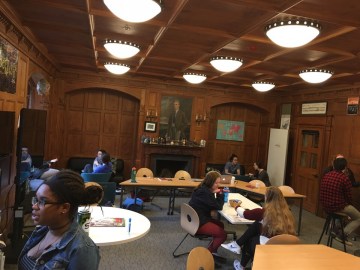
As difficult as it may sometimes be to relinquish the manacles of some tradition(s) in education, I have focused on a main mantra when considering change: what is best for students and learning. Thus, driven by this guiding principle and my teaching methods, I decided to pursue a critical trend in 21st-century teaching and learning: the importance of space, flexible seating, and classroom design. The rub, however, was my particular classroom; since I arrived at St. Mark’s in 2008, I have been fortunate to teach in Room 8/Room 136, which historically had been the “Sixth Form Room” until 1995 (read the partner piece to this article on the history of this room here). Hence, making changes to the “seminar” classroom would be bold, as the beginning move would be removing the large, classic seminar classroom table that has been a fixture since 1995. When I teach, I do not often lecture (if at all), and while seminar-esque discussion is a crucial element of my classes, it certainly is not the only element. In all of my classes (VI Form electives “Getting LOST,” “Getting LOST II: The Writers’ Room,” “Rebels with a Cause,” and V Form English class “Books Without Borders”), students work in small and medium groups, write on their own, present to the class, do activities that include movement and interaction, utilize media, collaborate on writing and projects, watch videos/films, brainstorm and note take on the whiteboards, and conference one-on-one with me (see images below for most of these activities in action!). The large oval table was not conducive to quality student learning in these endeavors. My first stop en route to change was John Warren. (more…)

Before it was LOST: The Sixth Form Room at St. Mark’s
By Nick Noble ’76, Communications Manager, Editor, and School Historian
Before it was LOST: The Sixth Form Room at St. Mark’s
In 1890, when the Main Building was first occupied, Headmaster William E. Peck set aside a small room along the Chapel corridor exclusively for the Sixth Form. A small narrow room, it had a fireplace, mailboxes for the Sixth Form (there were 27 Sixth Formers in 1893, the largest senior class up to that time), and Sixth Formers took to marking the window frame/sill area with Groton game results. That space is currently room 132, where Dr. Glomset teaches. That original Sixth Form Room was under the direct supervision and authority of the Monitors. (more…)



 LEO
LEO 