

Drawing on Our Brains: How Neuroscience and Art Can Teach Us About Learning
By Gabe Brower, VI Form
Drawing on Our Brains: How Neuroscience and Art Can Teach Us About Learning
I have yet to meet a single student at Saint Mark’s that has never crammed for an exam. They fill up their brain temporarily with information for an upcoming test in a vain attempt to not fall flat on their face the next day during their test. To be honest, it sometimes “works”, as defined by a good score, and I can speak from experience in this area. However, that doesn’t mean cramming is effective. It is the result of disengaged students and ineffective teaching methods that culminates in temporary information retention, and over the long run the crammed information isn’t retained. Therefore, no valuable learning takes place. (more…)

Empathy Through Education in China’s Xi Ma Yin Village
By Carrick Zhu, V Form
Empathy Through Education in China’s Xi Ma Yin Village
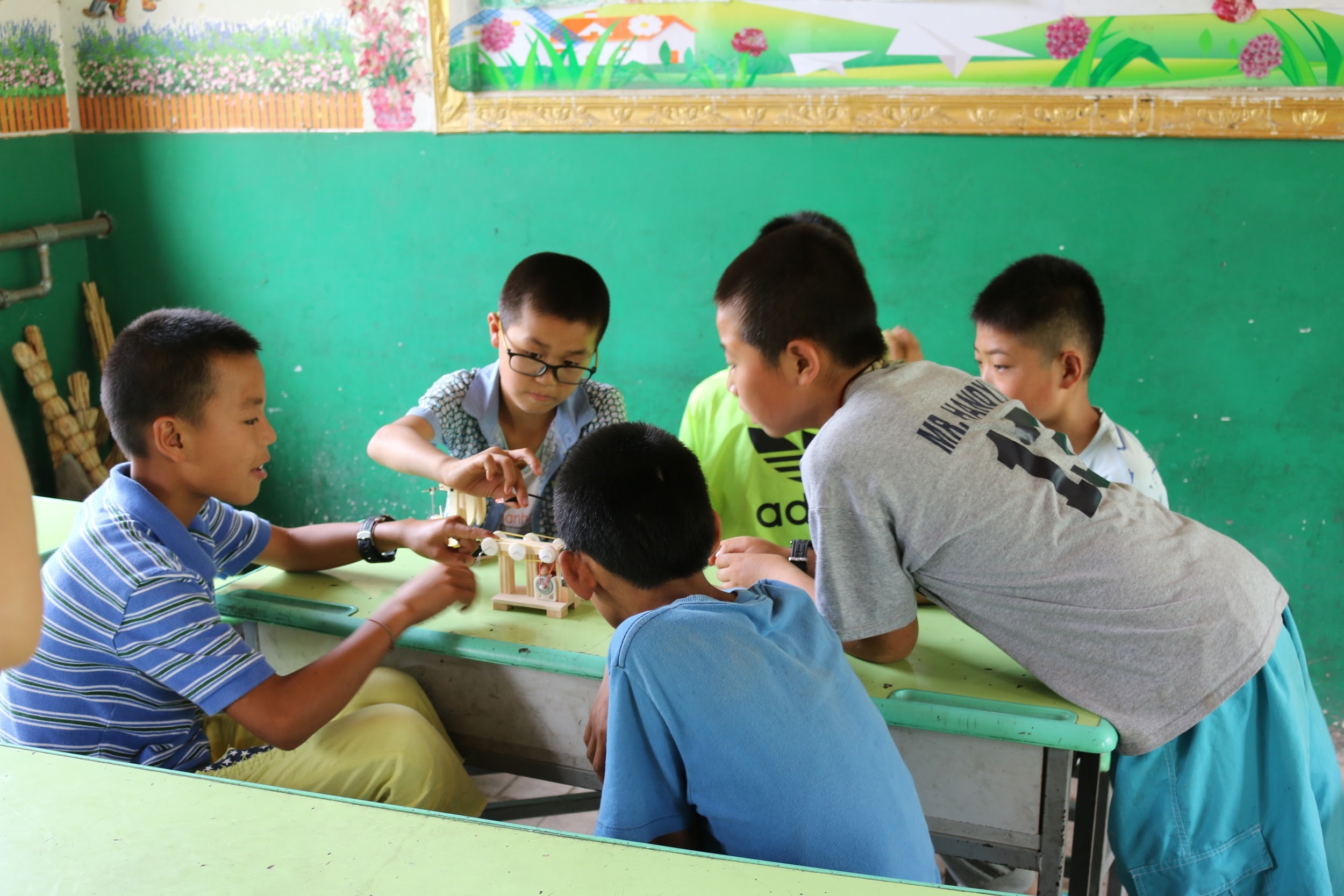 My mom and I began our volunteer teaching trip in 2014. With the help from the local Red Cross Organization in Ning Xia, China, we were able to find a local primary school situated in Xi Ma Yin village. Xi Ma Yin rests at the base of the Helan Mountain where the water supply is scarce. The villagers are mostly immigrants from the other side of the Helan Mountain. The elementary school where I worked is called Xi Ma Yin Immigrant Development Zone Elementary School. (more…)
Race in Hurston’s Their Eyes Were Watching God: an Infographic
By Haley Dion, IV Form
Race in Hurston’s Their Eyes Were Watching God: an Infographic
We were given a project that instructed us to create an infographic on a key theme from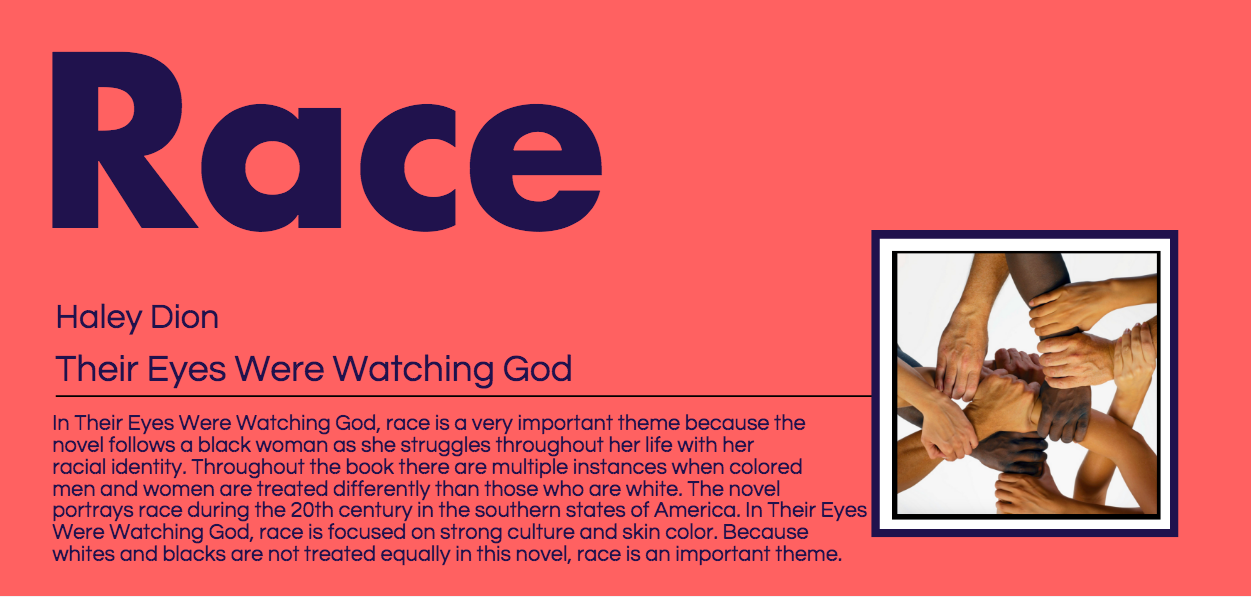 Their Eyes Were Watching God. My infographic focuses on the theme of race in the novel. It discusses the characters’ connections to race, the relationship between race with other themes in the book, and the presence of race throughout the chapters. I enjoyed creating this infographic because I got to look at the importance of a modern day issue in the 1920s/1930s time setting of the novel. The elements of the infographic are below or you can access the full infographic by clicking here. (more…)

Global Connections of Media and Skin
By June Seong, IV Form
Global Connections of Media and Skin
Amidst the chaos that is my life – including the future I must decide upon, the necessity to be “special,” and my attempt to make this post somewhat grammatically correct – I am struck by my simultaneous privilege and ignorance. This privilege and ignorance is exhibited through myriad ways at this very moment: 1) this dull MacBook Air that I am communicating through and that was probably configured by an underpaid or unpaid laborer; 2) the whizzing air conditioning that is breathing on my neck so that I might not die from heatstroke whilst the world scales up a few sweltering Centigrades; 3) the immensity of the world that is within computer click’s reach via Facebook. (more…)
On Defining a Nation in The Global Seminar
By Laura Sabino, III Form
On Defining a Nation in The Global Seminar
A nation does not need to have a large number of members or consist of one piece of land. A nation is a group of people that are connected to each other because there is something that unites them, such as a common leader or government.
Different nations can be defined by politics. Politically, a nation is a group of people that live in the same certain country, follow the government of said country, and live together as a community. In politics, a nation is a country’s land and all that is in it. However, different types of nations can share something in common that is unrelated to politics. This is like a music artist who has a nation of fans because those fans are brought together by something they all have in common: a love for the performer. (more…)

Stories From the Soil: Three Months on Joe’s Brook Farm
Henry Hirschfeld, VI Form
Stories From the Soil: Three Months on Joe’s Brook Farm
For the past four summers, I have had the opportunity to learn, live, and work on a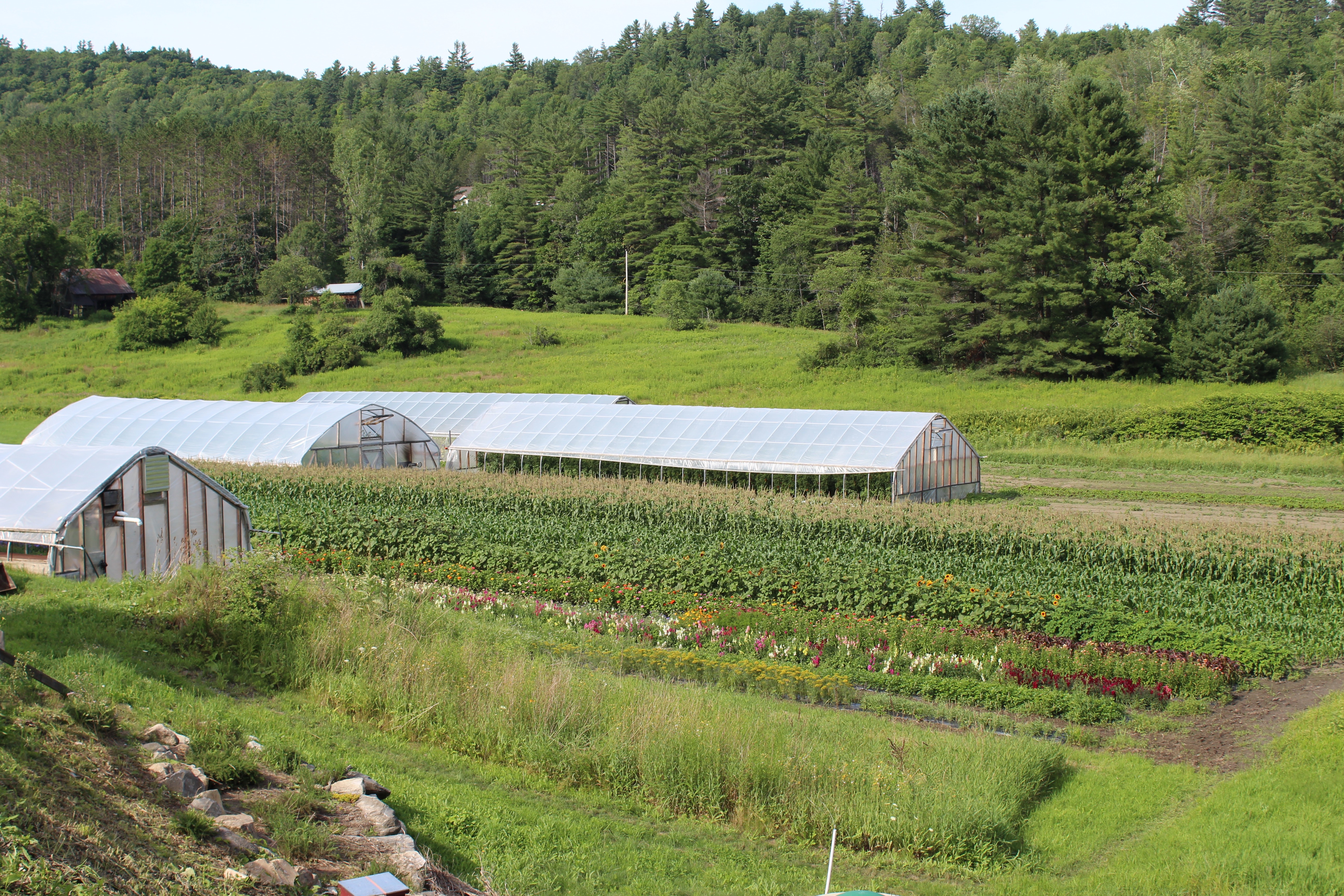 twelve-acre organic vegetable farm in the Northeast Kingdom of Vermont. With five of the most honest, loving, and hardworking young adults I know, I grew, weeded, and harvested over fifty varieties of produces for nine hours, six days a week. This past summer, I was able to spend nearly my entire vacation working at Joe’s Brook Farm with my older sister Cora. With the generous Class of 1968 Fellowship, I went to the farm hoping to document my experience in order to share with family, friends, and St. Mark’s. (more…)

Sketches Under the Hot Sun
By Kennedy Petties, IV Form
Sketches Under the Hot Sun
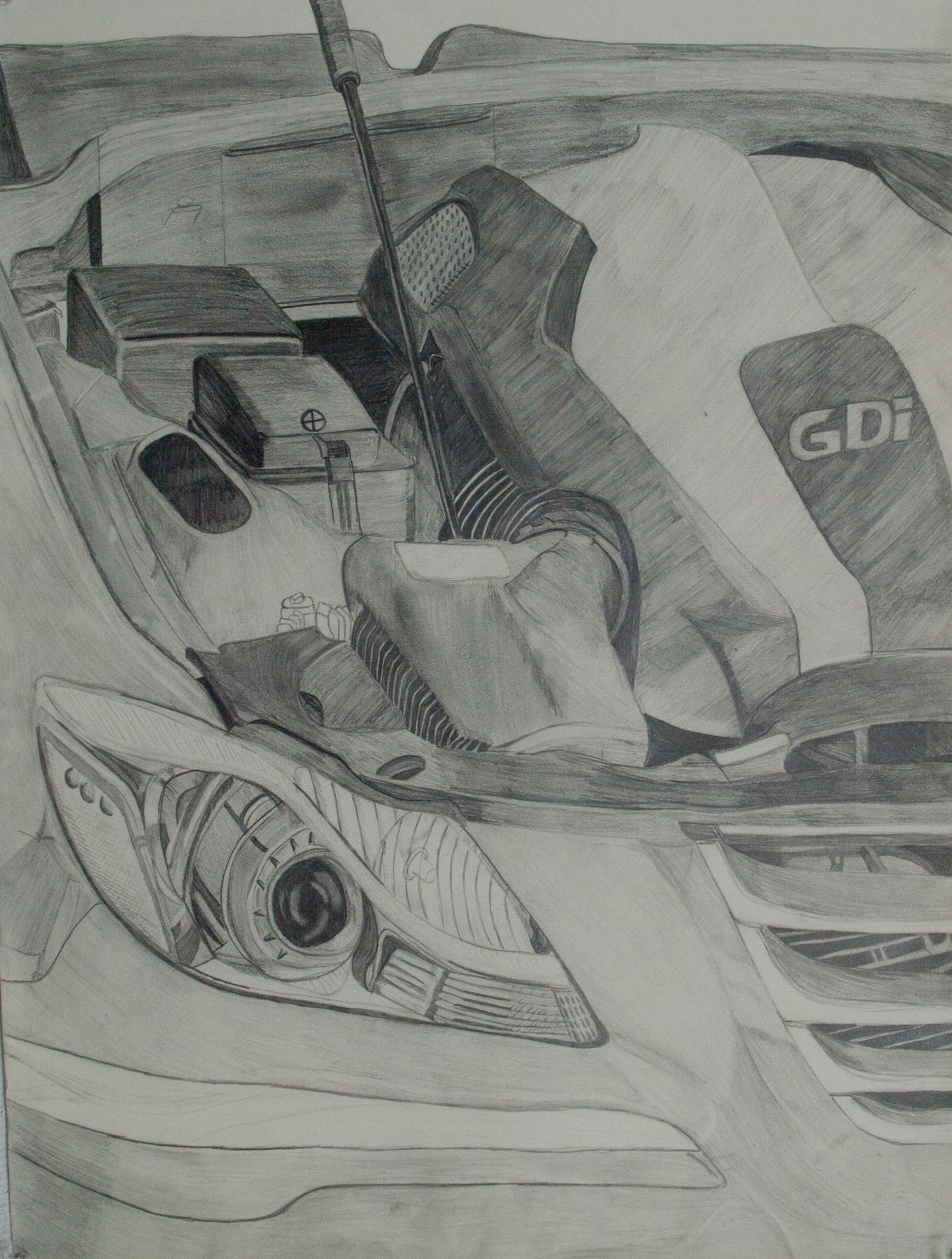
I completed four sketches this summer on 18 by 24 paper, with 2 on black paper in color and 2 on white paper in shaded pencil. I worked on it for Studio 3 this year as a IVth Former. It was a concentration on globalization and how I defined it. I define globalization as the interconnection of ideas, people, and places. It’s like social networking for beliefs and worldly progress and history. I took things from my everyday life, in this case automobiles and their breakdown, and had to express them within the parameters of the assignment. The structure of a car, and how each part is from somewhere else and then put together to create something to take you anywhere else, is amazing to me.

Brantwood Camp: The Toughest Yet Most Rewarding Summer Challenge
By Lauren Menjivar, V Form
Brantwood Camp: The Toughest Yet Most Rewarding Summer Challenge
Have you ever imagined being a teenager and escaping from the world for sixteen days to take care of ten girls (or boys), live in a shack with them, and have your devices taken away in order to better connect with the people around you? The situation may seem unfathomable for some, if not, most millennials, but I decided to stow away my laptop and phone in exchange for books and a flashlight at the Brantwood Camp. (more…)



 LEO
LEO 