

Social Justice and Why Every Life Matters
By Laquan McKever, VI Form
Social Justice and Why Every Life Matters
My unwavering pursuit of social justice for all has left me isolated from one of the very communities that I vigorously fight every day to progress: the black community. I am President of SHADES (Students Heightening Awareness of Diversity through Service), and I helped to facilitate a national Student Diversity Leadership Conference; still, though, I invest a significant amount of time supporting other communities. Upon learning that I support and defend the LGBTQ community, a student of color told me, “You spend too much time worrying about others while you need to be worried about the injustices we face.” In that moment, I began to realize my actions are neither understood nor taken lightly by those who think they are more invested in social justice for black individuals than I am. What most people do not know about me is that through horrid experiences from my childhood, I have developed a feeling of obligation to genuinely support anyone hidden in the shadows of oppression — including people outside of the black community. (more…)

On Being American, Latina…On Being Me
By Lauren Menjivar, VI Form
On Being American, Latina…On Being Me
I am a first-generation American. I am Latina. I am a child of a mother and a father who each came to America for unique reasons. I am Lauren Menjivar.
Being first-generation American is a trait I value dearly, but it also has been a challenge. Because I am the eldest child and a native English speaker, I have acquired a huge responsibility to attend to important matters for myself and my family. At the start of my education, my parents helped me learn the alphabet and count, but as I progressed through school, my parents’ ability to assist me dwindled until they never checked if I completed my work. They fully trusted that I finished each assignment to my best capability. When my younger brother enrolled in school, my parents relied on me to assist him with his homework because I had completed that grade. I have become their “secretaria” in completing paperwork and translating conversations. When my father took the American citizenship test, I was the one to help him study and quiz him on questions. When my mother does the same in three years, I will take on the same role. Whenever the school sent papers for my parents to fill out and sign, I would fill them out. I never complained about it once; in fact, I actually enjoyed filling out forms, and I understood at that point that I was the only person capable of doing it. I learned to handle responsibility, by doing things on my own, and through that I gained independence from my parents. (more…)

My Quest: Uphold the Values of Martial Arts and Xing Yi
By Tianyu Zhao, VI Form
My Quest: Uphold the Values of Martial Arts and Xing Yi
My grandfather’s bungalow in my hometown hides many secrets, including a sword behind a towering closet in the storeroom. When I was only seven, I felt its weight when my grandfather first placed it in my small hands. It had belonged to Liu Qilan, my ancestor from the Qing Dynasty, a martial arts master who later became of great importance to me.
And yet, my interest in martial arts didn’t come from him. Like many of my peers, I was sent to a kungfu studio by my mom at an early age. Years later, I began to watch Bruce Lee’s films and gradually grew obsessed, spending hours every night exercising my strength and flexibility. I looked for more professional and systematic training in kickboxing classes and made my neighbors suffer the noise of my punches after my uncle fixed a huge standing sandbag for me outside the door. (more…)

A Lesson from Fish Fillet
By Nikole Klodowska, VI Form
A Lesson from Fish Fillet
I am afraid of fish. No one can remember what childhood trauma could have caused me to physically shake in the presence of these scaly creatures. Over the years, I have slowly made progress – from being unable to be in the mere vicinity of fish, to tolerating a walk past the seafood section at supermarkets, to interning at a one star Michelin restaurant where I spent the day working up close with my biggest fear.
During my internship at Warsaw’s Amber Room, I worked every section of the kitchen, including what I had dreaded my entire life: seafood. One morning, I was assigned to fillet salmon for a small banquet. I winced as I inserted the knife at an angle between the fish’s skull and fleshy body, my gloved hands trembling. After successfully filleting two fish, my mentor noticed my trepidation and asked me what was wrong. I was determined not to quit, but admitted I felt utterly uncomfortable around fish. He decided to spare me the additional trauma and moved me to another position where I would feel more comfortable: to weigh and prepare the fish for cold storage. I felt an enormous weight lifted off of my shoulders, knowing I would no longer have to feel the bumps of the bones as they scraped against the knife, or see the glossy, lifeless eyes staring back at me. (more…)

Keeping Up with the Komodos
By Leon Shi, VI Form
Keeping Up with the Komodos

For a whole month, I had no running water, no electricity, and no internet connection. I had to prepare for flooding, menacing reptiles, and even medical emergencies. Some days were truly difficult to persist through with only two meals to fuel over six hours of kayaking. A single wave could easily capsize my kayak and leave me helpless in the ocean. I constantly feared for supply shortage or, worse, being stranded. This is my life for a month on the Komodo Islands of Indonesia. Despite the numerous hardships, it was the best trip of my life. Away from the noise of the world, the Komodo Island wilderness allowed me to embark on a journey of growth and self-discovery about what is most important in life: living purposefully. (more…)

The Joy (and Responsibility) of Moving from Camper to Staff
By Julia Danielsen, VI Form
The Joy (and Responsibility) of Moving from Camper to Staff
For six years, arriving at Camp Coniston in New Hampshire meant pure excitement, but this year was different. I was now part of the staff. While still excited, I also felt proud, nervous, and apprehensive because I would be teaching Ecology and Swimming. I knew that I would not have a problem sharing my love of nature with the campers, but how was I going to plan and teach several compelling Ecology classes? I was in what was formerly my safe haven, now nervous because of these new added responsibilities. (more…)

Math Modeling: Protein Bars Ranking Project
By Helynna Lin and Tommy MacNeil, VI Form
Math Modeling: Protein Bars Ranking Project
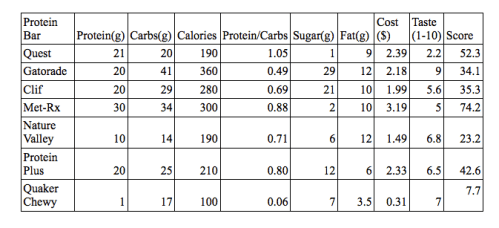
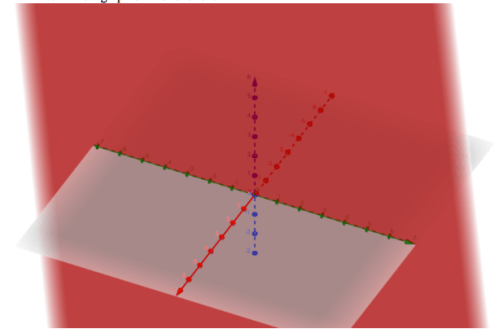
Click HERE to read Tommy and Helynna’s math modeling writeup report and analysis of which protein bars are the best. They considered nutrition facts and developed a formula that “scored” each bar on its ability to help someone effectively gain muscle mass.

Getting LOST in Michael Giacchino’s Soundtrack Compositions
By Riya Shankar, VI Form
Getting LOST in Michael Giacchino’s Soundtrack Compositions
 I’ve always loved exploring music. I can sometimes get lost on YouTube listening to classical music and finding those hidden gems that go on my music bucket list. A piece of classical music is something so deeply intricate and complex. Unraveling the melodies and harmonies by listening is sometimes just as exciting as playing the piece itself. The way a composer writes a piece (instrumentation, volume markings, tempo markings) often tells more of a story than the notes. By getting lost in the mind of a composer, you can discover more about the music than you expected.
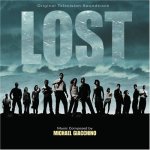
When Mr. Camp asked me to listen to a few pieces that are on the LOST soundtrack and give my opinion as a “musician,” I was thrilled. While being in the class, this unique opportunity combined my love for music with my work in school. When considering classical music, although some pieces have a general storyline, I have never listened to or played music that is specifically written for a television plot line. Knowing that this music was composed for the show gave me a deeper perspective to try and understand what the music aims to convey. The melodies and instruments that composer Michael Giacchino employed to create the soundtrack are so different than what I am used to but somehow also feel so familiar because of my classical music background. Having taken some music theory, I used my knowledge in that area to give insight into how the mechanics of the composition are used to create a mood. Going further, I used what I’ve learned over my years playing ensemble music to understand how specific instruments were used to make the audience feel certain emotions. Classical music has much depth, and each part of a composition is uniquely important and intentional. I wrote a small description for each of four pieces from the LOST soundtrack.
“Life and Death” (Season 1) click here to listen: The changing keys in the chord progression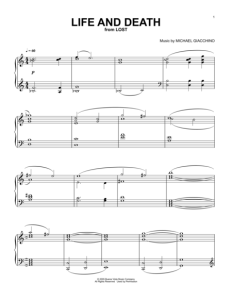 throughout the entire beginning stand out. The switch from major to minor (commonly made by changing just one note!) really evokes emotion because the striking change should hit the audience in (more…)



 LEO
LEO 