

DIYBaseball: Extension Through Contact
By Brett Federico, VI Form
DIYBaseball: Extension Through Contact
During the Spring Semester, I worked alongside Mr. Bauer in Engineering to develop inexpensive alternatives to popular baseball training aids on the market today. Upon completion, I produced an eight minute video that explains my product’s effectiveness and incorporates coaching cues for those using it. This product in particular teaches players how to properly extend their hands after contact, creating more consistent results. Depending on the location of the pitch, the audible “click” of the baseball should come between the shortstop and the second baseman. Mr. Bauer pushed me to develop a universal training aid for this project, as my previous products were developed to suit an athlete my size. My original design incorporated a fence, a rope, a 25lb weight, two rock-climbing clips, and 6 Wiffle balls, so as you can imagine, there was a lot of trial and error to get to the product that you see in the video!

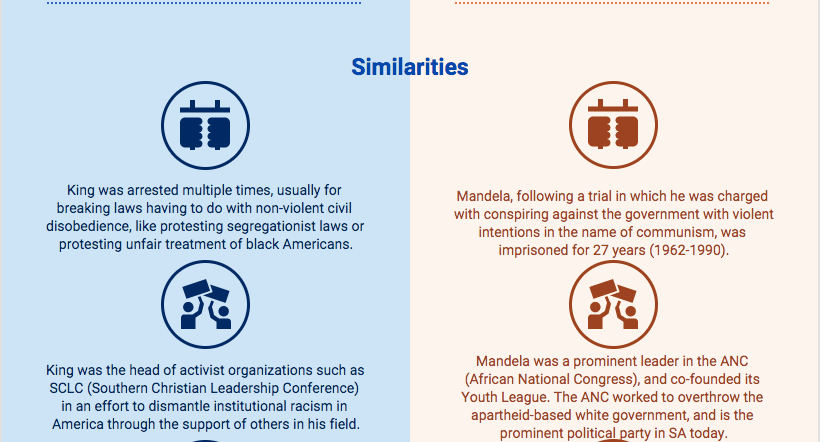
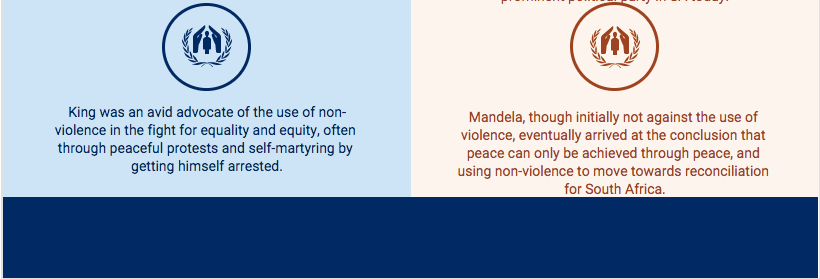
MLK and Nelson Mandela: A Comparative Infographic
By Truman Chamberlin, VI Form
MLK and Nelson Mandela: A Comparative Infographic
Note: This final product was completed for the Lions Roam course, “Race, Racism, and Reconciliation Since 1945: Lions Roam in the American South and South Africa.”



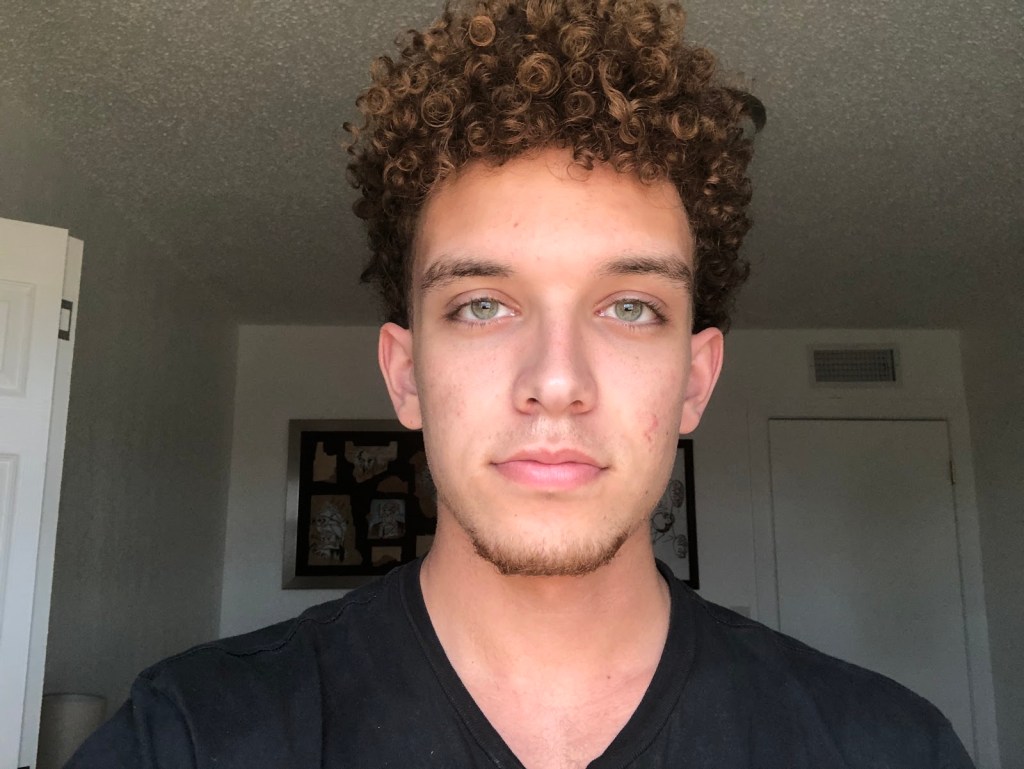
Truman Chamberlin is a VI form boarding student from Chapel Hill, North Carolina. His favorite subjects and pastimes are English and baseball, and he enjoys music, travel, and civil discourse.

How serious is air pollution in worsening the effects and spread of COVID-19?
By Ashley Battiata, VI Form
How serious is air pollution in worsening the effects and spread of COVID-19?
Student Note: For the final two weeks of Remote Learning in Advanced Environmental Science, I chose to learn more about COVID-19. The prompt was broad; therefore, I specifically focused on how air pollution and COVID-19 are related. For example, does air pollution spread COVID-19 faster, and does it worsen the effects of the pandemic? Or do these two environmental problems not impact each other at all? While researching, I expanded into another topic that most people weren’t talking about: how both air pollution and COVID-19 are affecting a specific demographic.
A very specific type of air pollution called fine particulate matter or (PM2.5) is associated with an increased risk of COVID-19 in the United States. PM2.5 is associated with burning things, such as coal in a power plant or gasoline in one’s car. It is dangerous because of how microscopic the matter is, specifically 2.5 micrometers in diameter, which gets into the lungs and bloodstream and causes damage to our health.The smaller the matter is in diameter, the easier it is to penetrate into the lungs and bloodstream and to get past airways designed to cough out irritants. This leads to future problems such as asthma, heart attacks, and other chronic diseases. According to a Harvard study, an increase of only “1 μg/m3 in PM2.5 is associated with a 15% increase in the COVID-19 mortality rate,” which proves that there is a relationship between exposure to air pollution and COVID-19 mortality rates.
(more…)
Space is Physical. Place is Personal.
By Kian Sahani, VI Form
Space is Physical. Place is Personal.
As Thomas Bender says in Making Places Sacred, “the places we make act as mirrors to our lives. They reflect the good or ill, passion or indifference, with which we hold them back on to the people whose lives they touch. Places, as well as people, draw sustenance from how they are held in our hearts. How we feel towards them does strongly affect our lives” (Bender 1991: 321). For the Faith Family Missionary Baptist Church, it is the people and the connections made between them that makes it a place. Monique Azzara stresses this fact throughout her article, Grappling with the Impermanence of Place: A Black Baptist Congregation in South Los Angeles. To Faith Family, finding a sense of place does not require significance associated with a physical space, but rather with other people.
In the article, Azzara describes how Faith Family has no permanent space of worship because of low funding. As a result, members must meet in a different place every time, removing the possibility of a lineal place. Yet, the members are still able to find a sense of place within the community. Azzara provides a strong example of a group of people finding a place within each other, without the need for a physical space, showing how one’s sense of place is relative to their view. The social and spiritual factors of Faith Family are made apparent by Azzara, who argues that “congregants build fellowship by pooling their resources in an attempt to follow the call of God to do good, and to recruit and save the disenfranchised” (Azzara 2019: 77). The members’ sense of place is shaped by these relationships of solidarity. At the same time, their place is challenged when it has no concrete features.
(more…)
No Accidents: A Remote Chapel Talk
By Julian Yang, VI Form
No Accidents: A Remote Chapel Talk
To be perfectly honest, I never thought I would give my chapel talk. I figured that it would be unrealistic for us seniors to be delivering any sort of address in an online or remote nature. However, even though Reverend Talcott told us that chapel talks were, in fact, a “go,” I refused to give a live talk.
Since September, I wanted to make my chapel talk unique. There were so many clever and well-written speeches this year that set the bar high. There was almost no way that I could give one live that could have made my talk memorable, especially given that I really had no life-changing stories to tell. But here, in quarantine, that opportunity presented itself. Armed with time, space, and equipment, I decided to put my own spin on my chapel talk and make it into a movie that could be watched over again forever.
(more…)
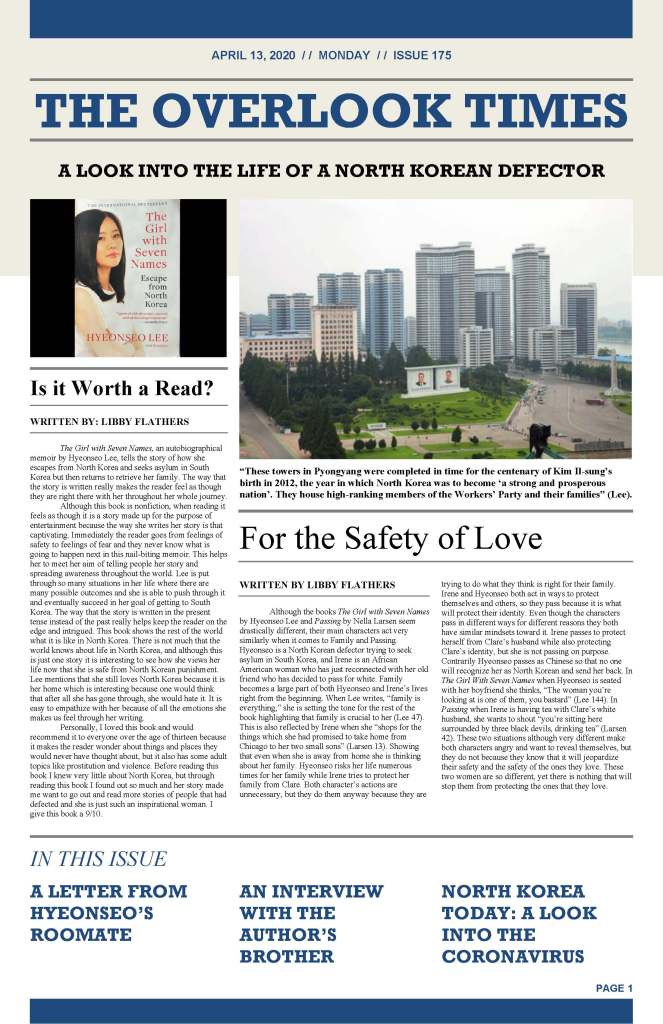
Newspapers and North Korea: “The Girl with Seven Names” Remote Final Project
By Libby Flathers, Celine Ma, and Lina Zhang, V Form
Newspapers and North Korea: “The Girl with Seven Names” Remote Final Project
Editor’s Note: Students crafted these newspapers after reading The Girl with Seven Names: A North Korean Defector’s Story, and each newspaper contains five articles and two visuals. While a book review and a study of North Korea were required elements, students were able to choose from a list of other article types or design their own articles and visuals. Students had to tailor the writing in each article to fit five different nonfiction styles and tones while also presenting the information in a clean, polished final product.
Libby Flathers’ Newspaper

The Virtual Infectious Disease Project
By Ms. Elise Morgan, Faculty; Andria Bao, Shreeya, Sareddy, Madison Hoang, and Maddie Yearout, III Form
The Virtual Infectious Disease Project
Instructor Note from Ms. Morgan:
We have spent the last couple of weeks discussing how to be global citizens within our different communities. Our obligations to these communities change depending on situational factors such as time period, crises, and individual needs. During pandemics, often times our obligations to society and our communities directly oppose our civil liberties. Infectious diseases can easily become epidemics and evolve to pandemics when individuals do not understand the who, what, and why behind the transmission of the disease and when measures have not been put in place to control or to prevent the spread of infectious diseases. It is also important to note that when infectious diseases do become epidemics or pandemics, populations of people and regions of the world are differentially impacted; that is, confounding factors such as access to resources, the density of population, climate change, and women’s health impact how infectious diseases are spread, treated, and prevented in different regions of the world. In this project, you will explore how one confounding factor impacts the spread of a particular infectious disease in a specific region of the world.
Zombie Pathogens
By Andria Bao and Shreeya Sareddy, III Form

Comprehensive Poetry Analysis Video Recordings
By Erin O’Keefe, Caroline Sullivan, and Carmen Tosi, IV Form
Comprehensive Poetry Analysis Video Recordings
Instructor’s Note from Ms. Kelly: After choosing a poem from a list, students were tasked with planning and recording a comprehensive reading, analysis, and annotation as a cumulative poetry task. The analysis had to include some key elements of the poem as well as a selection of more advanced poetic terms and devices for discussion. Students planned and practiced their analysis before filming and uploading their final videos.
Erin O’Keefe’s Analysis Video
Caroline Sullivan’s Analysis Video



 LEO
LEO 