
Dreaming Big: Robotics and Circuits Class
By Chris Roche, STEM Faculty
The Circuit Engineering Stair Master
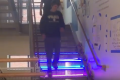
The students in my spring “Robotics and Circuits Engineering with Physical Computing” class did it. They pulled it off!! We now have the “Stair Master” currently installed and running in the stairwell off the first floor of the St. Mark’s STEM building. Students and faculty like the installation, and we are looking forward to a phase two expansion that has music!
The “Stair Master” is an installation that allows a flight of stairs to be interactive with the people walking on them. Here are videos showing the Stair Master in action:
Video 1: Click Here
Video 2: Click Here
Video 3: Click Here
When you step on one of the steps in the “Stair Master”, LED light strips light on the stair you are on. The system uses sensors to know which stair you are on, triggering the appropriate lights. There are versions of interactive stairs already existing, such as the musical staircase at the Museum of Science in Boston. However, the “Stair Master” at St. Mark’s was designed and prototyped exclusively by the “Robots and Circuits” class, using class-built knowhow and our prototyping process. (more…)

Encapsulating Antitumor Nanodrugs
By Michelle Hung, VI Form et al
Encapsulating Antitumor Nanodrugs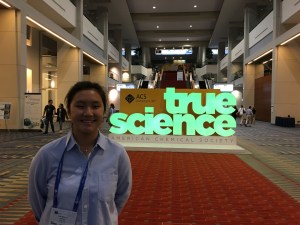
Nano-particulate drugs hold great promise in improving drug efficacy because of their enhanced solubility, prolonged retention time, and higher bioavailability with tissues or cells. Generally, these nanoparticles are encapsulated to keep them well dispersed according to specific particle sizes in the manufacturing process. The additional advantage of encapsulation is that a rationally selected coating agent may tailor the pharmacokinetics and control the release of therapeutic nanoparticles in the targeted tissue, simultaneously reducing the toxicity and side effects of drugs. (more…)

Much More Than Building a Classroom in Tanzania
By Frances Hornbostel, III Form
Much More Than Building a Classroom in Tanzania

Saying goodbye to my friend, Kichiki.
This summer I traveled to Tanzania for two weeks with a group of nineteen other students. We primarily went to build a classroom in the Orbomba community near Arusha, but many reasons motivated me to go. I love to experience different cultures, and the community we visited welcomed our group with open arms as well as fun dances and songs by this community. One of the highlights of my trip was befriending students at the school we helped build. They taught me songs in Swahili, and I taught them hand games from America. The trip also exposed me to different lifestyles. Many in America can be materialistic, wanting the new iPhone or piece of plastic that everyone else owns. The people I met in Tanzania were grateful for even just our presence and passion to help. They were grateful for every new word they learned and every scrap of food they ate. (more…)

Meals On a Shoestring: A Study on Food Insecurity in the U.S.
By Jenny Tang, IV Form
Meals On a Shoestring: A Study On Food Insecurity in the U.S.
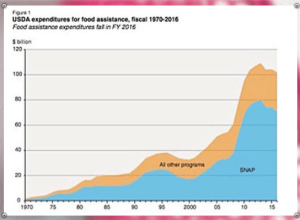 Definition: Food insecurity is officially defined as a condition of a household where there arereports of change in quality or the desirability of diet or even reduced food intake during theyear because of the lack of resources.
You know, when people talk about food insecurity, they think of underdeveloped countries. They think of the “Third World”, overpopulated areas, filthy streets, and corrupted governments.
They don’t think of the U.S.
They don’t think of their very own local communities.
Hungry…for knowledge? Please take a look at my website, based on my study through a grant from the Thomas H. Kean ’53 Fellowship at St. Mark’s School. (more…)

Returning with a Full Heart, a Master’s Degree, and a Fiancé!
By KK Behan, Spanish Faculty
Returning with a Full Heart, a Master’s Degree, and a Fiancé!
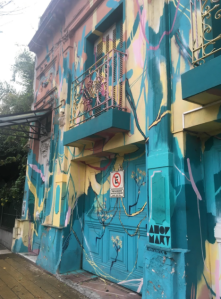
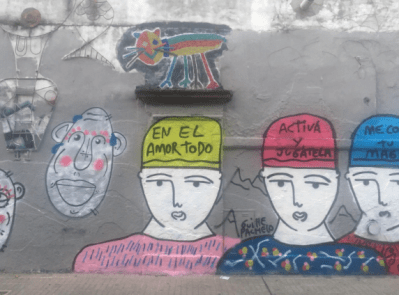
This summer, I traveled to Buenos Aires, Argentina to finish my master’s degree through Middlebury College. The program lasted for six weeks. I lived in Palermo, a trendy neighborhood with an array of awesome restaurants, art, and architecture. One of my favorite parts about the neighborhood was the colorful murals painted by artists involved in the city’s vibrant street-art scene.

ASL Sign Language to Popular Songs
By Samantha Sarafin, VI Form
ASL Sign Language to Popular Songs
In the spring term of St. Mark’s Saturdays, I created and taught this course: “In this course you will learn and practice the foundational elements of American Sign Language, from alphabet-based finger-spelling to more specific signs in vocabulary units. You will learn essential questions and phrases to communicate effectively in ASL and engage with various activities to practice ASL with your peers. You will also learn the history and social contexts of American Sign Language to develop an appreciation for the diversity and cultural richness of the deaf community.”
I designed the final project to be a video performance of an ASL song cover. Each student

Please click image for full video!
found resources and learned the signs to perform one whole song in ASL. Students spent time in and out of class working on the project and presented their videos in the final class. The goals of the assignment were to learn ASL vocabulary, understand how to sign songs, understand ASL word order, and practice sign fluency. This video is a compilation of each of the covers created by the students.

The Rocky Horror Picture Show: a Social Commentary
By Charlotte Wood, VI Form
The Rocky Horror Picture Show: a Social Commentary
Jim Sharman’s The Rocky Horror Picture Show (1975), an absurdist musical comedy that parodies sci-fi B-movies, particularly those of the 1950’s, reveals much about the culture of Vietnam era America. Specifically, the film comments on the conservatism of the previous decades, the Watergate scandal and other governmental matters, the counterculture movement, and questions of sexual and gender politics.
The 1970’s were a complicated and often confusing time in American history. By 1975, the U.S. had finally withdrawn from Vietnam after being entrenched in the anti-Communist conflict for nearly twenty years, and even then the war raged on between North and South Vietnam for two years after the U.S. had removed its troops.[1] America was left divided, economically devastated, and, perhaps worst of all, defeated. These troops were not coming home as heroes. The right saw them as failures or losers, while the left saw them as murderers.[2] Vietnam truly “pierced the myth of American invincibility,”[3] and postwar America has never been the same as a result. (more…)

STEM Fellow: Probing the Semantic Representations of Emotional and Social Concepts in Autism
By Lucy Cao, VI Form
Probing the Semantic Representations of Emotional and Social Concepts in Autism
Abstract
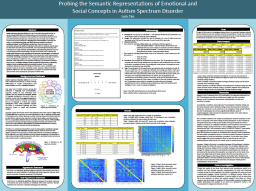
Please Click The Image To Download/See the Poster
Autism Spectrum Disorders (ASD) are a set of neurodevelopmental disorders as shown through difficulties in social interaction and communication as well as repetitive behaviors. Symptoms of ASD manifest at an early age and become most prominent between the ages two to three years old. One major area of defect common among ASD individuals is language and communication, especially the ability to comprehend language and make inferences based on social and emotional context. Recent linguistics studies have shown that there is an association between the ability of individuals with autism to attribute mental states (to themselves and others) and verbal skills. It is found that high-functioning ASD individuals have a less coherent representation of emotional experiences and tend to avoid using emotional terminology. The goal of this study was to examine the relationship between social competence and semantic representation of social and emotional concepts. Knowing that lexical co-occurrences are useful measurements of semantic knowledge, participants of this study were asked to rate pairs of verbs in terms of similarity on a scale from 1 to 5, 1 being very similar and 5 being very dissimilar. Data collected from the typically developing (TD) participants indicates that there is a correlation between social competence and accuracy of similarity ratings of verbs containing social and emotional content. The less socially competent, the less accurate the ratings are. Moreover, such a correlation is not present in verbs of no social or emotional content. However, the investigator failed to identify a significant difference in the ASD population’s perception of emotional and social verbs and the control participants’ perception of these verbs due to reasons of methodology.



 LEO
LEO 