

20th Century Psychiatric Hospitals and the Lasting Impacts of Deinstitutionalization
By Skylar Davis, VI Form
20th Century Psychiatric Hospitals and the Lasting Impacts of Deinstitutionalization
Editor’s Note: This paper was completed as a part of the History Research Fellowship, a one-semester course available to sixth form students.
I. Introduction
Few institutions evoke greater horror than the “insane asylums” of the 19th and 20th centuries. Given the stigmatizing media portrayals of such hospitals, most people believe that they had uniformly poor living conditions, practiced barbaric treatments, and employed abusive staff. As a consequence, society now views historic asylums as torturous and inhumane places. This image, however, hides a more complex truth about the value of state mental hospitals.
Prior to the asylum era, the only hospitals in America were general hospitals. During the early 18th century, most individuals diagnosed with mental illnesses lived at home under their families’ care. At the time, communities were reasonably tolerant of individuals who exhibited mild symptoms of mental illness. Those deemed violent and disorderly were sent to either public almshouses or private hospitals, depending on their family’s finances, for professional medical care. This was the beginning of institutionalized mental health care.
(more…)
The Portrayal of Russian Military Intervention in Ukraine (2014-current) in Russian Media Outlets
By Yevheniia Dubrova, VI Form
The Portrayal of Russian Military Intervention in Ukraine (2014-current) in Russian Media Outlets
Editor’s Note: This paper was completed as a part of the History Research Fellowship, a one-semester course available to sixth form students.
- Introduction
On April 13, 2014, following the Russian occupation of Crimea, pro-Russian activists seized the City Council building in Makiivka, located in the Donetsk region of Eastern Ukraine. They proclaimed the area part of a newly formed proto-state, the Donetsk People’s Republic. Almost immediately, the Republic’s government restricted public access to all Ukrainian and international TV channels and print media. As Dmytro Tkachenko, an adviser at Ukraine’s Ministry of Information Policy, noted, “Russia [was] doing everything it [could] to cut those people off.” Controlling TV towers in the two regions allowed the separatists to broadcast their propaganda, exaggerating Ukraine’s failures and glorifying their self-declared government. From that day forward, the population of occupied Donbas, including Makiivka, received all of their news solely from local Republican or state-owned Russian media outlets.
I remember that day clearly because it marked the beginning of the aggressive attitudes of pro-Russian supporters, who constituted the vast majority of people in my hometown of Makiivka, towards those supporting Ukraine and its reunification with the region. Never before had I witnessed the propaganda machine working so effectively and disinformation campaigns executed so brilliantly. Russia’s state-controlled media outlets unanimously denied the presence of Russian troops in the region and stated that it was ultra-nationalist Ukrainian government financed by Western politicians who started the war in Donbas for its own benefit. Branding the Ukrainian government a “fascist junta,” the Kremlin portrayed it and the Ukrainian state as “purveyors of fascism, xenophobia,” and violent racism. The horrifying tales of the violence of Ukrainian soldiers that appeared in the news, such as the infamous story about the public crucifixion of a three-year-old boy in Slovyansk, removed any traces of sympathy from the local population towards Ukraine, its government, and its army.
(more…)
Decades of Deceit: Bernie Madoff’s Effect on SEC Regulation
By Blake Gattuso, VI Form
Decades of Deceit: Bernie Madoff’s Effect on SEC Regulation
Editor’s Note: This paper was completed as a part of the History Research Fellowship, a one-semester course available to sixth form students.
Seventeen billion dollars lost. Decades of deceit. Bernie Madoff’s fraud forever changed the lives of thousands and impacted the lives of millions.
“It’s a proprietary strategy, I can’t go into great detail,” said Bernie Madoff when he was asked to explain how he made such strong and consistent returns for his investors. This quote from his 2001 interview with Barron’s Magazine held true. Madoff would never go into “great detail” on this topic with anyone. Madoff did not tell investors about the strategy. Not even the Securities and Exchange Commission (SEC) examiners would get “great detail” about Madoff’s multibillion-dollar hedge fund. For more than thirty years, Madoff ran this scheme. And for more than thirty years, Madoff never went into “great detail” with anyone because his hedge fund was a sixty-five billion-dollar Ponzi scheme, not the top-performing hedge fund which it claimed to be.
Trusted capital markets are fundamental to the functioning of the American economy. Stock markets are places where companies raise capital from investors who buy corporate shares. Without these markets, it would be difficult, if not impossible, for the American economy to efficiently allocate capital to productive uses represented in many American, world-leading companies, such as Apple, Google, General Motors, and Boeing. If investors lose faith in these markets and see them as fraudulent, the American economy will suffer.
(more…)
Campaign Finance Deregulation and the Rise of the NRA as a Political Power
By Louis Lyons, VI Form
Campaign Finance Deregulation and the Rise of the NRA as a Political Power
Editor’s Note: This paper was completed as a part of the History Research Fellowship, a one-semester course available to sixth form students.

Gavin Aronsen, Asawin Suebsaeng, and Deanna Pan, “What Happened in the Newtown School Shooting,” Mother Jones, December 14, 2012, accessed January 6, 2020
Twenty young children and six adults lay dead in a Connecticut schoolhouse. The culprit: a 20-year-old, heavily armed man wielding an AR-15, two semi automatic pistols, and a shotgun.
Eight years ago on December 14, Adam Lanza perpetrated the shooting at Sandy Hook Elementary School, which was among the most deadly school massacres in American history. It shook the American public to its core, and many demanded action to curtail gun violence. American politicians, however, did little in response. Such is the power of the National Rifle Association (NRA) and its ability to curtail the United States democratic process during the twenty first century.
(more…)
The Rise of Coca-Cola via Early 20th Century Advertising
By Jack Griffin, VI Form
The Rise of Coca-Cola via Early 20th Century Advertising
Editor’s Note: This paper was completed as a part of the History Research Fellowship, a one-semester course available to sixth form students.
The year was 1950 when America began attacking the French economy. This was by no means a conventional attack, and the United States government played no part in this decision. Instead, the American people were furious with France because it had banned the sale of all Coca-Cola products within its borders. Given that the brand had become a pillar of American identity, the French Parliament passed the ban in order to stop the wave of Americanization sweeping through Europe.
When the French Parliament’s decision reached the U.S. on March 1, 1950, the American press began a vicious assault. “The Washington News complained about ‘the arrogantly superior French habit of snooting at our beverages, soft and hard, as so much dishwater.’” Other media comments ranged from “puzzled amusement” to New York’s Daily News suggesting “cutting off aid under the Marshall Plan.” The Coca Cola corporation played no part in inflaming the nation, but the United States saw an attack on Coca-Cola as an attack on the American way of life.
(more…)
Exploring the Mystery: The Evolution of Colonel Percy Fawcett’s Memory through Time
By Nathaniel (Nate) King, VI Form
Exploring the Mystery: The Evolution of Colonel Percy Fawcett’s Memory through Time
Editor’s Note: This paper was completed as a part of the History Research Fellowship, a one-semester course available to sixth form students.
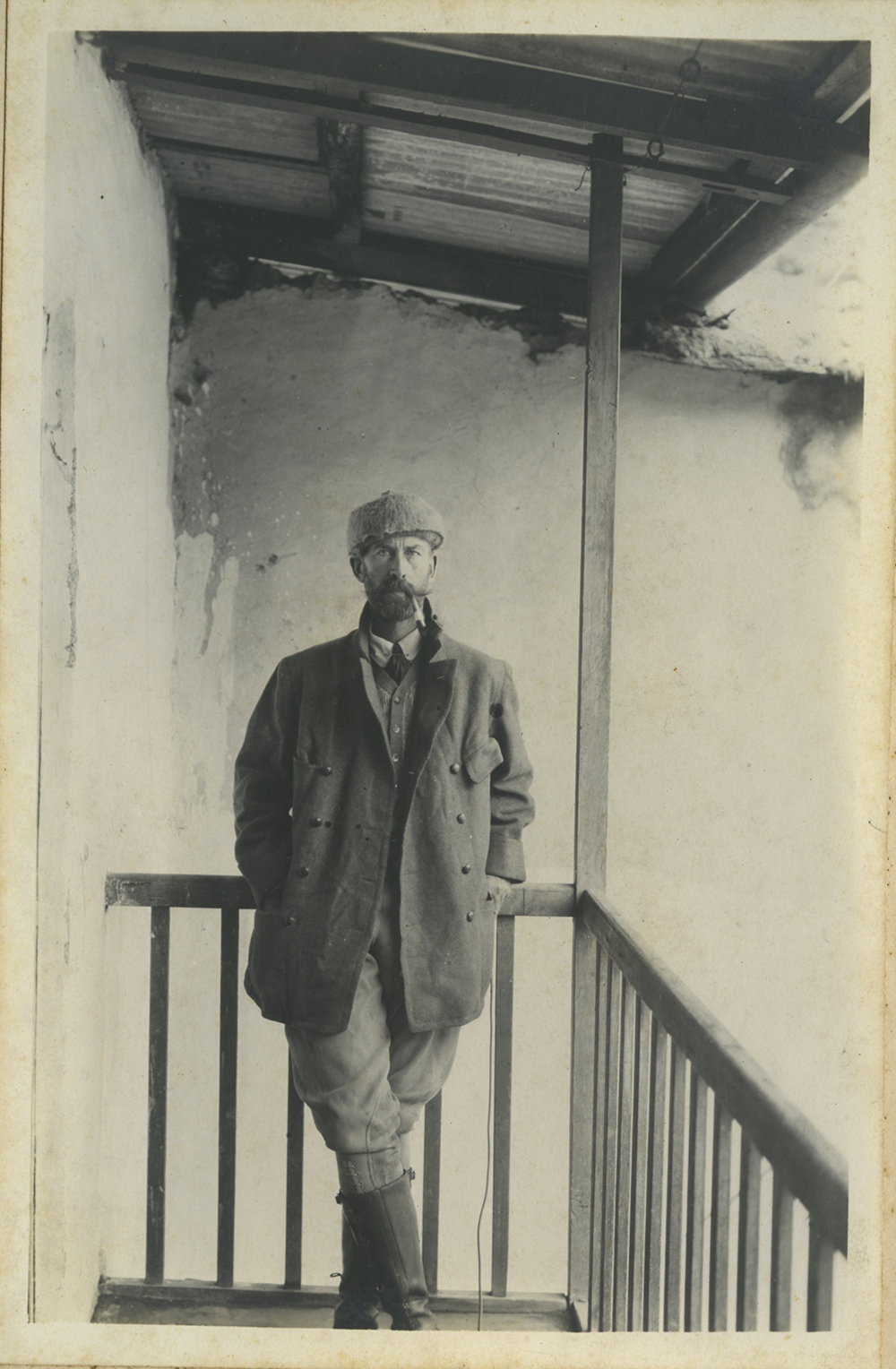
“The Lost City of Z – New Exhibition,” The Bill Douglas Cinema Museum, last modified May 14, 2018, accessed January 8, 2020.
After spending years in the Amazon, Fawcett was one of the world’s most prominent experts on the region. This, alongside his rough and adventurous demeanor, garnered Fawcett many supporters through the printing of his dispatches and reports in popular newspapers. Like athletes at the time, with the maturation of the newspaper, explorers were given a new level of name recognition. In 1925 Fawcett’s fame was at its peak as newspapers looked to cover his next expedition to find what could be one of the biggest discoveries of the century: an ancient city hidden deep in the Amazon jungle. Fawcett’s dispatches from this expedition were filled with detailed accounts of what he had encountered, and the public was voraciously reading each one until they suddenly stopped. Fawcett had predicted that he and his party might go silent for a few months at a time as they traversed difficult terrain under terrible conditions. However, as years began to slowly pass, people began to worry and speculate about what had happened to Fawcett. Several theories were churned out, yet as search parties looking for the truth came back with few answers, the mystery of Fawcett’s fate only became more alluring.
Why has an explorer who did not discover much that was historically significant been given so much attention both during his professional career and long after? Although Fawcett’s greatest accomplishments were mapping out portions of the Amazon rainforest, he has continued to be a figure of fascination today largely because of his disappearance. However, during his time he received just as much coverage by the media, albeit for different reasons.
(more…)
“The Bloody Crown” and “The Bloody Wall”: Two Macbeth Posters
By Katie Mao, IV Form
“The Bloody Crown” and “The Bloody Wall”: Two Macbeth Posters

The Bloody Crown
The first poster with the black background advertises a middle school play. I chose dark colors to emphasize that the play, Macbeth, is a tragedy. Not all middle schoolers know the plot at all, so I used color rather than words to show them what to expect. Middle schoolers might not take the time to read the rating or description of a play, so the bold colors might catch their attention. The colors strike a balance between being spooky and peculiar.
(more…)
The Essence of Luminescence: Light in The Great Gatsby
By Frances Hornbostel, V Form
The Essence of Luminescence: Light in The Great Gatsby
In The Great Gatsby, light is emblematic of the uncanny attraction to Jay Gatsby’s wealth and power, illuminating the warmth and clarity it brings as well as its isolation and superficiality. Light is ever-present throughout the novel, reflecting changes from dark, tempestuous times to brighter, more jubilant ones. These lighting shifts can be controlled by natural forces, immune to man’s intervention, or manipulated through artificial lighting, bought and directed by the buyer. Gatsby’s life, a whirlpool of bright lights ornamenting his extravagant wealth, is overwhelmingly attractive to those around him. He draws them in like moths to a flame as Nick notes early on, witnessing one of Gatsby’s ostentatious parties. Gatsby’s manipulation of light to highlight positive aspects of himself shows his attempts to control how people perceive him, further revealing the powers of isolation and superficiality light can have. Light is particularly revelatory in chapter five, where Gatsby’s manipulation is paramount in fabricating a perfect meeting with Daisy, the woman he has loved for the five years they have been apart.
After Gatsby invites Daisy over to his house, she excitedly brings him over to the window to show him that “the rain was still falling, but the darkness had parted in the west, and there was a pink and golden billow of foamy clouds above the sea” (Fitzgerald 94). Chapter five is set in isolation, away from mistresses, husbands, and reality, allowing Daisy and Gatsby to exist, for this chapter, at least, in a timeless state of idyllic bliss. However, the storm still raged, Tom was still a man bursting out in bouts of anger while was cheating with Myrtle, and their marriage still constricted Daisy at the ring finger. Daisy refuses to face these realities in chapter five as she lets herself float in the almost tangible softness of the pastel-painted clouds above the horizon, existing precariously between a storm and the raging force of the sea. Yet, rain is still falling around them, illustrating gravity’s heavy push on the dark elements outside of the floating oasis of billowing clouds that Daisy envisions, seemingly untouchable by gravity. The fragility of this state that is too perfect to be true alludes to its disintegration as reality hits after chapter five.
(more…)


 LEO
LEO 