
Home » Posts tagged 'STEM' (Page 12)
Tag Archives: STEM
Challenging the World to Decrease Energy Use
By Kristen Upton, V Form, Annette Kang, VI Form, and Kristin Smith, VI Form
Challenging the World to Decrease Energy Use
In our Advanced Environmental Science class, we had the challenge of making a 1-2 minute proposal video that would invite and encourage people around the world to find a solution to our essential question: How much of our energy use is actually necessary? In our video, we challenged our viewers to decrease their unnecessary energy use, with our goal being to prompt conversations and spread awareness of superfluous energy consumption. As we try to accomplish this feat at our school, we hope that this video will spur inspiration in others to take on the same challenge.

The Duality of Science and Religion
The Duality of Science and Religion
By Nia Quinones, VI Form
Science and religion are often times considered to be far apart on the spectrum of academia. Nevertheless, the efforts of Pope Benedict XVI, also known as the “Green Pope,” have effectively linked the Catholic faith with working towards a more energy efficient world.
In 2009, Pope Benedict XVI installed over 1,000 solar panels in the Vatican. Solar (more…)
Oh….Chem: The Power of a Narrative in an Advanced Science Course
By Michael Wirtz, Assistant Head of School/Science Faculty
“Negative finds the positive.” I use this phrase often. If you did not know me, you might think I was a pessimist. In fact, I am quite the opposite: I am a teacher and I believe that optimism lies at the core of any good teacher. I share this phrase, “negative finds the positive,” in my attempt to distill the complexities of organic chemistry[1] into something sticky for my students. While most chemistry students experience limited amounts of organic chemistry in high school, it is a discipline featured prominently in my Advanced Chemistry course at St. Mark’s. In fact, organic chemistry is critical to (more…)
A Math Enthusiast
By Ryan Lee, VI Form
This past summer, I made a set of business cards in preparation for the International Congress of Mathematicians convention, where I hoped to meet world-renowned mathematicians. My card reads “Seung Jae “Ryan” Lee, Math Enthusiast.” The night before the opening ceremony, I couldn’t sleep. I was too excited about the prospect of sitting in actual lectures given by the scholars whom I had only read about and to witness this year’s Fields Medal Award Ceremony in person. I am not exaggerating when I claim to be a math enthusiast. I call myself a math enthusiast (though my friends find my choice of words rather amusing) because no other title better encapsulates my passion for mathematics. I was not always like this (more…)

Modeling H1N1’s Impact on the United States’ Population
By Lucy Cao, IV Form
 The infectious disease, H1N1, that I have modeled, includes six compartments: susceptible 1 (S1), susceptible 2 (S2), pre-infectious, infectious (I), diagnosed and recovered (R).
Susceptible 1 and susceptible 2 refer to the two groups in the susceptible population: S1 is children and the elderly, while S2 is the rest of the population. Children and the elderly are excluded from the total population and placed in a separate compartment because they are more vulnerable to the H1N1 virus and have a greater chance of getting infected. Thus, the rate from S1 to infectious is bigger than the rate from S2 to infectious. I calculated my rates from the susceptible compartments to the infectious compartment with the formula β*S*I/N, in which β is the rate of transmission, S is the population of susceptible, I is the population of infectious and N is the total (more…)

Iran’s Demographic Transition Gone Wrong
By Katie Fuller, VI Form
In order to understand trends in population growth, it helpful to understand the theory of demographic transition. It consists of five stages representing various population growth rates in a particular country. The first stage concerns a pre-industrial country. As you can see in Figure 1, both the birth and death rates are high, which causes the overall population growth to stay low. In Figure 1, each column correlates with a stage in the demographic transition. In stage 2, as the country develops, medical care improves so the death rate decreases. However, the birth rate remains high, causing major population growth, or a population explosion. In stages 3 and 4, the country continues to develop, education improves, women have careers, and urbanization occurs. A combination of these developments causes the birth rate to decrease and the population growth slows. (more…)

Soon To Be On Late Night T.V.? An Infomercial for Peroxisome…
By Liz Swain, VI Form
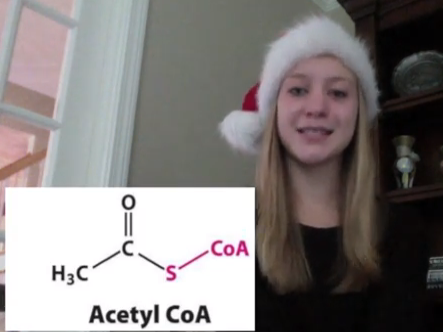 An excerpt from the Advanced Biology assignment in the classes of Ms. Berndt and Ms. Lohwater: “Cells, Inc. has hired us to write and ‘produce’ infomercials to sell its organelles. As the holiday season is coming soon, the company wants to produce a number of commercials to sell their advanced line. They are hoping that many little cells will be asking Santa for one of their organelles this holiday season. They expect that we will be able to identify their audience (plant, animal, eukaryotic, prokaryotic) and that we will be able to come up with the major “selling points” for the specific organelle.” Click this link here for the Peroxisome Commercial! (more…)

Ebola Coverage: In the News, In Our Classroom
By Kimberly Berndt, Science Department Head
Do we have the time? It is the first, last, and interminable question educators ask when considering whether they should divert from their intended plans. This question came to mind immediately when Lindsey Lohwater and I considered pausing midway through our current Advanced Biology unit in order to focus entirely on the Ebola epidemic – not for one day, but for more than one week. But, to this (somewhat) rhetorical question, my mind, or perhaps my gut, immediately responded. No, we don’t have the time– but we can’t NOT do this.
There exists a palpable tension between meeting the expectations of an Advanced curriculum and providing students with unique, relevant, and dynamic learning opportunities. The expectation that our students will be prepared to perform well on pre-designed exams, such as many AP exams, that are devoid of current events often limits the opportunities that we (more…)


 LEO
LEO 