Home » Season 4 (Page 7)
Category Archives: Season 4

(In)Visible: The TV Pitch Project Winner
By Katie Hartigan, Nick Hadlock, and Anderson Fan, VI Form
(In)Visible: The TV Pitch Project Winner
 Logline:
Unified in isolation, six strangers’ morality is put to the test when taking a pill makes them invisible to everyone but each other, but what they don’t know is that they are part of a social experiment and are constantly being watched.
Elevator Pitch:
(In)Visible is a two-season television show falling under the category of sci/fi, drama, and thriller. It is about six main characters that participate in a seemingly risk-free drug trial by Osiris Pharmaceutical that leaves them invisible to everyone except each other. They must cooperate in order to overcome the challenges presented to them and the mystery of what happened to them. Little do they know, they are being watched by six “monitors” behind the operation who are observing the behavior of people who think nobody is watching. Themes of cooperation, isolation, and leadership emerge as the characters find modes of survival and uncover the mystery. Season One ends with the six participants transitioning into monitors, and thus inheriting the responsibilities of monitors. New participants are introduced as the six monitors give them different moral tasks as part of the social study. Season Two ends with the new participants discovering how to escape the cycle: do the right thing.

Math Modeling: Using Math for Flight Path Safety
By Kate Sotir, Cooper Sarafin, Anderson Fan, Shep Green, VI Form and Mo Liu, V Form
Math Modeling: Using Math for Flight Path Safety
Part 1:
The problem at hand is to create a model, a rating system, that would inform potential flyers of the safety of a particular flight. Our solution includes a mathematical equation that gives us a number between 1 and 100, depending on the inputs. Although the values themselves indicate the safety level of flights, we do not want to our audience to read into the numbers: a flight with a safety index of 63 should not be considered a more dangerous flight than a flight with a safety index of 67. Therefore, to make our model directly presentable to our audience, we classified the possible outcomes into ratings. A safety index ranges from 1 to 20 would have a rating of ★, from 20 to 40 would have ★★, 40 to 60 would be ★★★, 60 to 80 ★★★★, and finally, 80 to 100 would have the highest rating of ★★★★★, and flights that fall under this rating would be the safest choice based on our model. (more…)

Optimism About the Power of the Book
By John Warren, Head of School
Optimism About the Power of the Book
Immediately after learning of our impending grandparenthood, our conversations with daughter-in-law and son, Caitlin and Ethan, turned to books—their recollections of favorite childhood books that had been read to them and that they had read to themselves, and our recollections of favorite books that we had read to Ethan and to our daughter, Amanda. From Ethan and Amanda’s infancy right up through much of elementary school, my wife and I had a nightly ritual of reading to them, and memories of those times are among our happiest. We have been pleased to learn that these memories are among Ethan and Amanda’s happiest, too. (more…)

Making a Change, Pint by Pint with a Blood Drive
By Jack Thalmann, V Form
Making a Change, Pint by Pint with a Blood Drive
Approximately every two seconds in the United States, someone needs a blood  transfusion, meaning that more than 36,000 donated pints of red blood cells are needed every day. This statistic surprised me last year when I was working on an assignment for Do The Right Thing, the sophomore core Saturday program. We had been assigned to create a mock advertisement about an organization that we believed was important. I chose to research blood drives, incorporating facts that I researched into an advertisement that I hoped would catch a viewer’s attention. The mere daily amount of blood needed was enough to shock me, because a person is only allowed to donate blood every two months. Therefore, to reach the amount needed daily amount, 13,140,000 donated pints are required every year. This comes out to be the equivalent of 2,190,000 citizens of the United States donating blood every time they are eligible: 6 times a year. (more…)

1-Take Video on Cyanide: The Mystery of the Seven Deaths
By Lindsey Dumond and Sada Nichols-Worley, V Form
1-Take Video on Cyanide: The Mystery of the Seven Deaths (click here)
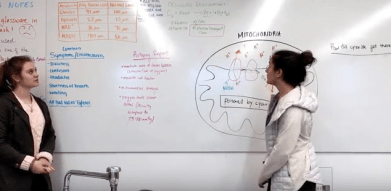
Editor’s Note: After completing a deep examination of the process of Cellular Respiration, Advanced Biology students were randomly assigned to small groups (2-3) students and tasked with tackling a case study. The case of “The Mystery of the Seven Deaths” examined the true story of cyanide poisoning that occurred in the early 1980s. This case study required students to analyze data, make conclusions, and explain mechanisms of action. The students were then required to present the case to a lay person in 3 minutes through a 1-Take Video. A 1-Take Video is exactly what the name implies: a video shot in 1-take. This entire assignment was completed in an 80-minute block.
Click on the image below for the video!

Paul Tillich and Marcus Borg: Responses to the Challenges of Unbelief
By Charlotte Wood, VI Form
Paul Tillich and Marcus Borg: Responses to the Challenges of Unbelief
Paul Tillich and Marcus Borg are Christian Existentialists. They see God and religious life in a radical way. Therefore, they would address the four major challenges to belief (in Philosophy, Psychology, Theodicy, Politics) in thought-provoking ways.
The Challenge from Philosophy is that there is no real “proof” of God’s existence. It is important to note that the “God” most often referenced in this challenge is the God of supernatural theism, that is, the God “out there,” separate from us and our universe. Tillich and Borg would likely agree that there is no proof of this God, however, that is not their God. Tillich describes religion as “asking passionately the question of the meaning of our existence and being willing to receive answers, even if the answers hurt. Such an idea of religion makes religion universally human, but it certainly differs from what is usually called religion. It does not describe religion as the belief in the existence of gods or one God” (Tillich 1). Faith doesn’t necessarily need to involve “God” at all, and definitely does not need to involve the God of supernatural theism or the monarchical God. (more…)
SURREAL: The TV Pitch Project Winner
By Teagan Ladner, Tracy LeBlanc, and Riley Lochhead, VI Form
SURREAL: The TV Pitch Project Winner
Logline:
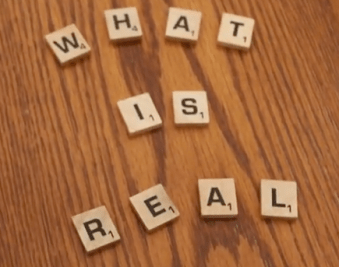
Click Image for Trailer of Surreal
What is real?
Elevator Pitch:
Five adolescents embark on individual journeys to determine what is real, a question that they have been struggling with since early childhood. Surreal will take the viewer through the lives of these characters, bouncing from the “present” to the “future”. All having the connection of a summer camp, the characters experience what seems like an earthquake during their time at camp that leaves them questioning its significance and legitimacy. As they get older, the characters have more visions that are continually perplexing, and for the majority of the show the characters are trying to find meaning with what they see in the visions. These visions are meant to lead them to the ultimate question “What is real?” and causing them to think about some of the common threads of humanity along the way including emotions, beliefs, connections, personal truths, and more. (more…)

Frederick Douglass & The Power of Literacy
By Riya Shankar, V Form
Frederick Douglass & The Power of Literacy
In Frederick Douglass’s autobiographical narrative, he explores the power of education in slavery, one of the most important themes in the narrative. Literacy is initially the beacon of hope that reminds Douglass that there is ultimately freedom from slavery. However, learning to read reveals to Douglass the horrific truth of slavery, transforming his views on the opportunities that are rooted in literacy. He realizes that learning to read has only pushed him further into the depths of slavery rather than helped him fight for liberty. Though the immediate impact of literacy on Douglass reveals the paradox of education in his life as a slave, Douglass’s views on literacy ultimately shift from paradoxical to positive. Douglass finds that education has only led him deeper into the chains of slavery, but he eventually sees the power to be gained from literacy and the potential to use literacy as a tool to fight against slavery. (more…)


 LEO
LEO 