
Home » Season 3 (Page 2)
Category Archives: Season 3

The Early Twentieth Century Irish Boy: A Paradox in Joyce’s “Araby”
By Isabelle Titcomb, IV Form
The Early Twentieth Century Irish Boy: A Paradox in Joyce’s “Araby”
Upon being asked “who is the greatest in the kingdom of heaven?” Jesus replied, “truly I tell you, unless you change and become like little children, you will never enter the kingdom of heaven” (Matthew 18:1-3). Therefore, when a devout child becomes a young adult, he may find that he is no longer welcomed into the kingdom. Such a realization brings confusion and agonizing repression. “Araby” by James Joyce draws upon this notion through the telling of the coming-of-age story of a sheltered Irish Catholic schoolboy harrowed by newfound desire. (more…)

Engaging in 20% Time for Lifelong Learning
By Casey Pickett, English Faculty
Engaging in 20% Time for Lifelong Learning
From the time I was in kindergarten, I knew that I wanted to be a teacher. As a child, I spent  countless hours in my basement forcing my four siblings to be my students while I taught them whatever lessons my teachers had taught me earlier in the day. So, as I entered my Masters in the Arts of Teaching (MAT) program at Northeastern in the Fall of 2013, I couldn’t have been more excited to FINALLY learn my craft. I showed up to my first class ready to write down the formula for becoming a good teacher. I was expecting my professor to tell me EXACTLY what I needed to do in order to teach my students everything there was to know about reading, writing, and analyzing literature. Throughout my 18 months in the MAT program, I never did get that formula. What I did get, however, was a constant reminder that my job as a teacher was to prepare my students to become lifelong learners. So, with lifelong learning in mind, I decided to have my students engage in a 20% Time project (based off of Google’s 20% Time policy). (more…)

Working Together to Launch the Model UN Club
By Isabelle Kim, Jovin Ho, & Rachel Wang, IV Form and Matt Walsh, Stephanie Moon, & Alan Gao, III Form
Working Together to Launch the Model UN Club
To understand what the “Model United Nations Club” is, it is essential to know the concept of the “Model United Nations” or “MUN”. Model United Nations acts as a simulation of United Nations conferences, in which participants act as delegates. Delegates represent various countries and their ideals, and engage in formal debates over global issues as well as international affairs, through which a resolution is achieved that is, ideally, satisfactory for all parties involved. A couple of weeks prior to the conference, the delegates are assigned respective countries, councils, and issues that will be debated upon, thus allowing delegates ample time to research the topic at hand and formulate their arguments. A big part of MUN is the delegates recognizing that they are not representing themselves, but are a part of a larger picture, having to uphold their country’s beliefs. (more…)

A Novel of Reaction: Larsen’s Passing
By Charlotte Wood, V Form
A Novel of Reaction: Larsen’t Passing
W.E.B. Dubois wrote that “all Art is propaganda and ever must be…” He thought that artists and writers should try to make the world a better place through their work. Nella Larsen, the author of Passing, would not agree. Her novel centers on two light-skinned black women, Clare Kendry and Irene Redfield, and their respective decisions to pass as white or not. I believe she wrote this novel not to persuade the reader of something or to convince them to enact change, but rather to reflect the world how she sees it. The book is a reaction to society, not something for society to react to. Passing itself is portrayed as something that simply is, not wholly good or wholly bad. Both characters participate in it, and so the reader is not meant to side with one over the other. The relative passivity of its message is reflected in the passivity of its main character, Irene. Because she is not active, the intention of the novel is not active. Lastly, the ambiguity of the ending leaves the reader, like Irene, with more questions than answers. (more…)

A is NOT for Asian
By Rosanna Zhao, III Form
A is NOT for Asian
What did you get on that test? How did you do on the essay? What’s your average right now?
A for Asian. An A on that test, an A on the essay, and of course, an A for my average. The world accepts nothing less. It has been set into our heads through generations that every single Asian around receives a perfect grade automatically. Displayed through short videos, television shows, books and movies, the “smart Asian” has become one of the most stereotypical stereotypes there is. I am bound between that definition of being an Asian. There was no time where the realization snapped into me – it had always been a looming shadow that followed wherever I went. There were high expectations set for me since the beginning, and as I grew older, those voices of expectations that I heard became the ones echoing in the back of my head. (more…)

On Knowledge and Knowing God
By Natalie Novak, VI Form
On Knowledge and Knowing God
At the heart of any civilization lies a fundamental core centered on religion. Many great empires have risen and fallen, while maintaining their devotion to some kind of transcendent being or reality. Ethics, morality, governing laws, and codes of conduct all stem from some kind of religious or higher rule. However, the being that has created these ideals always comes into question when one is deciding whether to follow these “rules.” This brings about the discussion of God’s existence. Is it possible to know God? Can we prove his validity? Is this knowledge truly sound? What even is it “to know?” The question of God is a complex one, furthered by the complexity of the phrase to know. To fully grasp the notion of knowing god, it is essential to comprehend the notion of knowing. (more…)

The Quest to Improve the Teaching of Electricity in the St. Mark’s Introductory Physics Course
By Jacob Backon, STEM Faculty
The Quest to Improve the Teaching of Electricity in the St. Mark’s Introductory Physics Course
Abstract
In response to research indicating significant conceptual misunderstandings of basic electrical concepts, the physics teachers at St. Mark’s incorporated the CASTLE curriculum into the introductory physics course. Over the past few years this curriculum has met with two significant challenges: delivering efficient feedback in response to student model building, and the time it takes to move through the curriculum. Canvas modules were used to address these challenges, and a concept test was administered before and after instruction to gather data on the effectiveness of these techniques. Preliminary data with a very small sample size indicates the CASTLE curriculum and Canvas modules did result in higher scores on the concept test than data reported from a more traditional style of instruction. (more…)

Development of the Bohr Model of the Atom
By Nathan Cunningham, VI Form
Development of the Bohr Model of the Atom
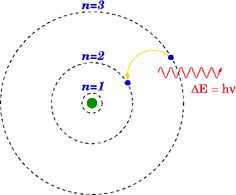 Around the turn of the 20th century, physicists became increasingly focused on examining the most miniscule of physical interactions. The concept of quanta—the smallest piece of something, e.g. the American cent—led into the evolution of quantum mechanics, the fundamental study of the components of matter and light. This piece will explore the various experiments, discoveries, and theories at the quantum level of world interactions which led up to the development of the Bohr model of the atom. (more…)


 LEO
LEO 