
Home » Season 2 (Page 5)
Category Archives: Season 2

The Reality of Health Care (or Lack of It) for America’s Poorest
By Brittany Bing, VI Form
The Reality of Health Care (or Lack of It) for America’s Poorest
The reality of health care in America is rather grim. Compared to our foreign counterparts and prior to the Affordable Care Act, America was one of the few developed countries that lacked a form of universal health care. In Advanced Biology this year, we read Rebecca Skloot’s The Immortal Life of Henrietta Lacks, which showed the complexities between biomedical ethics, race, and access to health care. Henrietta Lacks was a black woman who developed advanced cervical cancer and died in 1951. What followed was one of the biggest injustices in medical (more…)
A Taste of Haiti
By Julie Geng, VI Form
A Taste of Haiti
Haiti, the Country
Haiti occupies the western third of the island of Hispaniola. Haiti has an area of 27,750 square kilometers including several islands[1]. The Haitian population is 10.32 million[2]. The climate is tropical[3]. Coffee, cocoa, coconuts, avocado, orange, lime, and mango grow wild. The most important cash crops are coffee and sugarcane.
Haitian History and Food
Spain, France, the continent of Africa, and the United States were crucial in shaping Haitian (more…)

A Vegan’s Manifesto
By Henry Hirschfeld, IV Form
A Vegan’s Manifesto
“Are you sure you’re getting enough protein?” and “Humans were designed to be omnivores” are common reactions when I tell people I eat vegan. A vegan diet is where one must abstain from all animal products, including meat, dairy products, eggs, and even honey. I became a vegan after working at an organic farm for the first time in the Northeast Kingdom of Vermont. Working in the soil and taking care of the vegetables every day showed me the tremendous amount of work it takes to feed people. At farmer’s markets on the weekends, I was fortunate enough to interact with my customers, and I witnessed first-hand how much they appreciate fresh produce. Mary, my mentor on the farm, helped me realize that 75% of today’s farms are polluted with harmful chemicals which affect the soil quality as well as the (more…)

The Global Seminar Infectious Disease Project: Cervical Cancer
By Ben Hunnewell, Justin Langway, Helynna Lin, and Oliva White, III Form
Editor’s Note: The Global Seminar teaching team worked with all III Formers on an infectious disease project. This is a complex project that involves group work with other members of the III Form and with V Form biology mentors. The final result was exhibited in a poster session, allowing for visitors to do a conference walk and have questions answered by the poster’s creators.
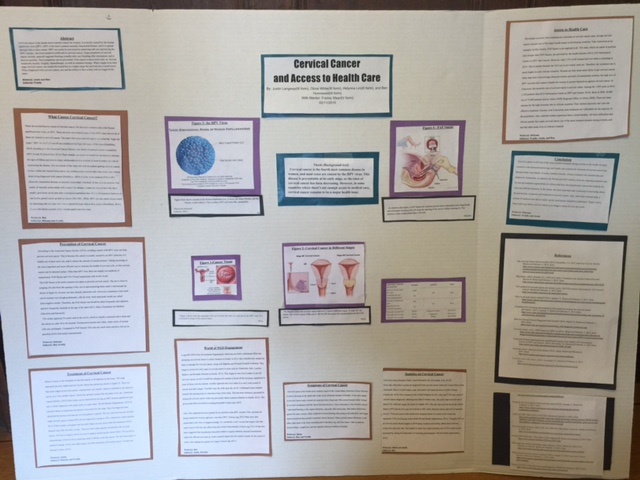 Abstract: Cervical cancer is the fourth most common cancer for women. It is mostly caused by the human papilloma virus (HPV.) HPV is the most common sexually transmitted disease, and it is spread through skin to skin contact. HPV can easily be prevented by practicing safe sex and having the HPV vaccine, but if not treated it could lead to cervical cancer. Some symptoms of cervical cancer include unusual vaginal bleeding (usually after sex), bleeding after menopause, or bleeding between periods. These symptoms can be prevented, if the cancer is discovered early on. (more…)

Advanced French: Two Pieces on Francophone Art
By Candice Wang, VI Form (L’Art Vietnamien et Le Thi Luu) and Chloe Ene, V Form (L’art au Sénégal)
L’Art Vietnamien et Le Thi Luu
L’art du Viêt Nam a une histoire très longue. Il a commencé dans l’âge de pièrre. Les 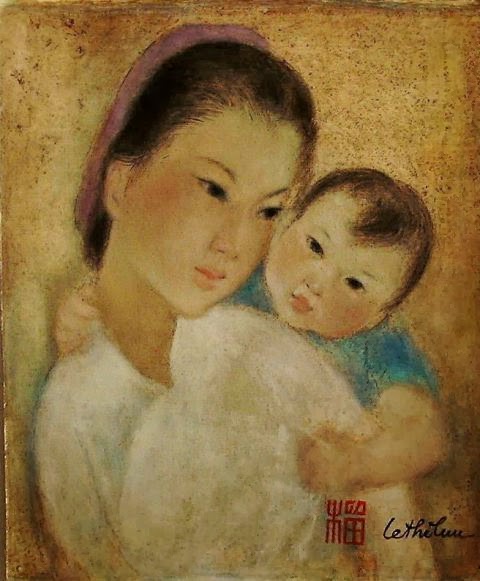 Vietnamiens ont fait de poterie et des tambours décorés avec l’argile et le bronze. Dans le règne chinois du première siècle avant Jésus-Christ jusqu’au dixième siècle, l’art vietnamien a été influencé par l’art chinois pendant une mille années. Les Vietnamiens ont fait des objets en céramique et avec du bois. Les motifs ont compris des thèmes du confucianisme, du bouddhisme, et du taoïsme. Depuis le dix-neuvième siècle, le style français influence l’art vietnamien. Donc, l’art moderne au Viêt Nam ressemble à l’art occidental. Au début du vingtième siècle, les Écoles Supérieures des Beaux Arts ont été fondées dans les grandes villes vietnamiennes comme Hanoi et Saigon. Les étudiants vietnamiens ont suivi les cours d’art occidental avec les professors français. Les artistes ont employé les techniques françaises et (more…)

Advanced French: Two Pieces on European Art
By Allegra Forbes, V Form (Les œuvres surréalistes de l’artiste belge René Magritte) and Kolbe Renkert, VI Form (Claude Monet, Le Père d’Impressionnisme)
Les œuvres surréalistes de l’artiste belge René Magritte
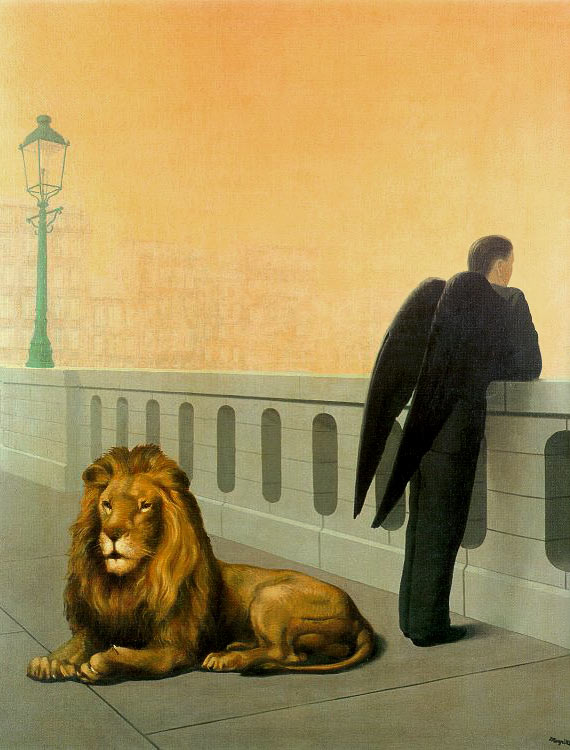 Pourquoi est-ce que une pomme verte couvre le visage d’un homme typique bourgeois ? Est-ce que tout le monde est rendu anonyme par les choses banales dans la vie ? Et pourquoi est-ce que l’homme avec la canne a une cage à oiseaux au lieu d’un torse ? Est-ce que nous avons touts des rêves piégés comme des bêtes dans nos cœurs ?
Celles sont les questions aux quelles les œuvres surréalistes de l’artiste belge René Magritte nous faisons réfléchir. Né en 1898 à Lassines, Magritte est un des peintres surréalistes du 20ieme siècle les plus bien connus. Il est particulièrement célèbre pour ses œuvres qui dépeignent des objets communes dans des contextes inhabituels pour créer des images surprenants et bizarres, mais pleins de symbolisme. (more…)

The S-Word: Meaningful Implementation of Sustainability as a Theme in Curricula
By Lindsey Lohwater, Science Faculty
The S-Word: Meaningful Implementation of Sustainability as a Theme in Curricula
For some, sustainability is a buzzword – a current trend in both popular and educational culture. However, viewing this topic as just the next trend does it a disservice. We are all familiar with those trends that promise to elevate our teaching and help us churn out those elusive well-rounded, critical-thinkers that will change the future of our nation and world. Most of those trends inevitably fizzle out. We cannot allow sustainability to do the same. Inherent in the concept of sustainability (defined as able to last or continue for a long time[1]) is the understanding that it deserves to be methodically infused into our curricula with the (more…)

The Double Entendre of “Shelter Crazy”
By Jessica Hutchinson, VI Form
The Double Entendre of “Shelter Crazy”
Becoming shelter crazy is not a myth. I have seen it happen too many times. Lily remained crouched in the back of her kennel, growling at anyone who came near her. After spending over a year at the shelter, Blitz would lunge at anyone he did not know, and after losing one leg, his other failed him. Goji stayed at the shelter for months before he was adopted but was soon returned. All three dogs were put down because they could not handle the stressful shelter environment. We invested our time and hearts in them, hoping the right person would come along and give them a good home. Unfortunately, all three were euthanized.
While I will remember the sad stories of Lily, Blitz, and Goji, I will also remember my joyous times at the shelter. A man came into the shelter with his two young boys looking for a playful
adult cat; they wanted to simultaneously rescue an animal and welcome a new family member (more…)


 LEO
LEO 