
Home » 2015 (Page 9)
Yearly Archives: 2015

The Global Seminar Infectious Disease Project: Cervical Cancer
By Ben Hunnewell, Justin Langway, Helynna Lin, and Oliva White, III Form
Editor’s Note: The Global Seminar teaching team worked with all III Formers on an infectious disease project. This is a complex project that involves group work with other members of the III Form and with V Form biology mentors. The final result was exhibited in a poster session, allowing for visitors to do a conference walk and have questions answered by the poster’s creators.
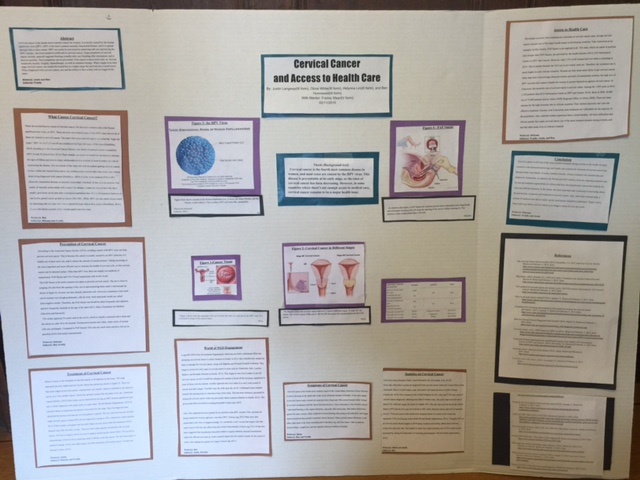 Abstract: Cervical cancer is the fourth most common cancer for women. It is mostly caused by the human papilloma virus (HPV.) HPV is the most common sexually transmitted disease, and it is spread through skin to skin contact. HPV can easily be prevented by practicing safe sex and having the HPV vaccine, but if not treated it could lead to cervical cancer. Some symptoms of cervical cancer include unusual vaginal bleeding (usually after sex), bleeding after menopause, or bleeding between periods. These symptoms can be prevented, if the cancer is discovered early on. (more…)

Advanced French: Two Pieces on Francophone Art
By Candice Wang, VI Form (L’Art Vietnamien et Le Thi Luu) and Chloe Ene, V Form (L’art au Sénégal)
L’Art Vietnamien et Le Thi Luu
L’art du Viêt Nam a une histoire très longue. Il a commencé dans l’âge de pièrre. Les 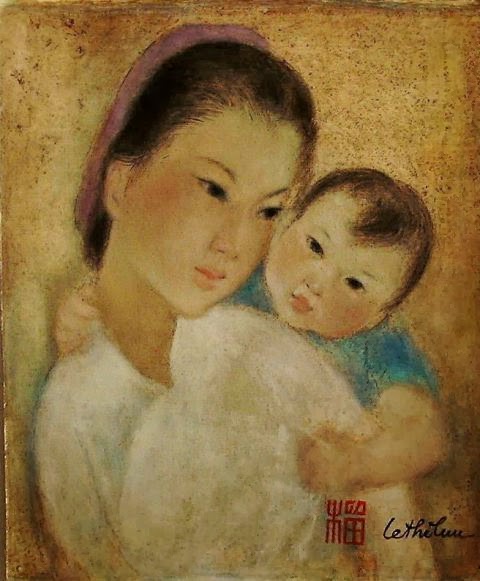 Vietnamiens ont fait de poterie et des tambours décorés avec l’argile et le bronze. Dans le règne chinois du première siècle avant Jésus-Christ jusqu’au dixième siècle, l’art vietnamien a été influencé par l’art chinois pendant une mille années. Les Vietnamiens ont fait des objets en céramique et avec du bois. Les motifs ont compris des thèmes du confucianisme, du bouddhisme, et du taoïsme. Depuis le dix-neuvième siècle, le style français influence l’art vietnamien. Donc, l’art moderne au Viêt Nam ressemble à l’art occidental. Au début du vingtième siècle, les Écoles Supérieures des Beaux Arts ont été fondées dans les grandes villes vietnamiennes comme Hanoi et Saigon. Les étudiants vietnamiens ont suivi les cours d’art occidental avec les professors français. Les artistes ont employé les techniques françaises et (more…)

Advanced French: Two Pieces on European Art
By Allegra Forbes, V Form (Les œuvres surréalistes de l’artiste belge René Magritte) and Kolbe Renkert, VI Form (Claude Monet, Le Père d’Impressionnisme)
Les œuvres surréalistes de l’artiste belge René Magritte
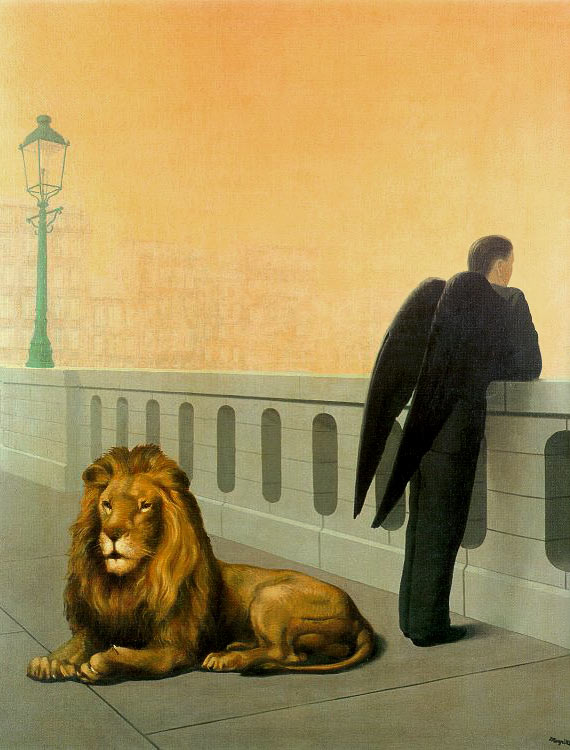 Pourquoi est-ce que une pomme verte couvre le visage d’un homme typique bourgeois ? Est-ce que tout le monde est rendu anonyme par les choses banales dans la vie ? Et pourquoi est-ce que l’homme avec la canne a une cage à oiseaux au lieu d’un torse ? Est-ce que nous avons touts des rêves piégés comme des bêtes dans nos cœurs ?
Celles sont les questions aux quelles les œuvres surréalistes de l’artiste belge René Magritte nous faisons réfléchir. Né en 1898 à Lassines, Magritte est un des peintres surréalistes du 20ieme siècle les plus bien connus. Il est particulièrement célèbre pour ses œuvres qui dépeignent des objets communes dans des contextes inhabituels pour créer des images surprenants et bizarres, mais pleins de symbolisme. (more…)

The S-Word: Meaningful Implementation of Sustainability as a Theme in Curricula
By Lindsey Lohwater, Science Faculty
The S-Word: Meaningful Implementation of Sustainability as a Theme in Curricula
For some, sustainability is a buzzword – a current trend in both popular and educational culture. However, viewing this topic as just the next trend does it a disservice. We are all familiar with those trends that promise to elevate our teaching and help us churn out those elusive well-rounded, critical-thinkers that will change the future of our nation and world. Most of those trends inevitably fizzle out. We cannot allow sustainability to do the same. Inherent in the concept of sustainability (defined as able to last or continue for a long time[1]) is the understanding that it deserves to be methodically infused into our curricula with the (more…)

The Double Entendre of “Shelter Crazy”
By Jessica Hutchinson, VI Form
The Double Entendre of “Shelter Crazy”
Becoming shelter crazy is not a myth. I have seen it happen too many times. Lily remained crouched in the back of her kennel, growling at anyone who came near her. After spending over a year at the shelter, Blitz would lunge at anyone he did not know, and after losing one leg, his other failed him. Goji stayed at the shelter for months before he was adopted but was soon returned. All three dogs were put down because they could not handle the stressful shelter environment. We invested our time and hearts in them, hoping the right person would come along and give them a good home. Unfortunately, all three were euthanized.
While I will remember the sad stories of Lily, Blitz, and Goji, I will also remember my joyous times at the shelter. A man came into the shelter with his two young boys looking for a playful
adult cat; they wanted to simultaneously rescue an animal and welcome a new family member (more…)

One Student, Two Artifacts of Education
EDITOR’S NOTE: Students do not “specialize.” Students take five or six courses simultaneously and are expected to perform at a high level across the curriculum. This LEO post includes two artifacts of work–one from a Latin III Honors course and one from an American Literature course–by Becca Shea, a V Former. This is simply a microcosm that evinces the impressive ability of a student to multi-task academically, which happens in educational realms every day.
By Becca Shea, V Form
Epicurean Somnium Scipionis (Latin III)
The aristocrat class of Rome divided into two philosophical factions known as Stoicism and Epicureanism. Somnium Scipionis is a story based off of the ideals of Stoics, thus if written from the perspective of an Epicurean, many details would be altered. Unlike Stoics, Epicureans did not believe in a heaven after life. Somnium Scipionis is a story of a man visiting his grandfather in heaven in a dream, so the start of the story must be altered slightly. Also dissimilar to Stoic beliefs, Epicureans did not believe the soul lived on: the soul, which was made up of composite atoms, died with the body. However, they did not fear death itself either. (more…)

Faith in the Leap–Religion and Life of Pi
By William D’Angelo, VI Form
Faith in the Leap–Religion and Life of Pi
The “Leap of Faith” scares many, as it has for eons. Everyone fears the fall, the drop into the unknown. Some enjoy the rush of the unknown. The unknown has infinite possibilities, something which is hard to find in a finite life. Faith requires this fear and this rush. Those are the doubts of the leap. Faith is belief in idea regardless of one’s doubt. If there is no doubt, it is not faith–it is fact. The excitement and fear of doubt are the obverse and reverse of the same coin. They sustain each other, building off of one another. As excitement wanes, fears build. As fear ebbs, excitement crashes over one like a tsunami. In Life of Pi, Yann Martel demonstrates on various levels that faith as well as doubt are what keeps Pi alive during his
ordeal. It is not just Pi that is aided by his faith and doubt, but everyone in the world as well. (more…)

A Failed Yankee Revolutionary
By Jackson Foley, V Form
A Failed Yankee Revolutionary
A revolutionary is someone who, in the name of revolution, sparks or is the center of a revolution that changes a whole society in a new and unique way. Hank Morgan, in Twain’s A Connecticut Yankee in King Arthur’s Court, tries to stage a coup and win a revolt, but is not a revolutionary. Hank is not successful in the end. His revolt does not gain major public traction. He is just forcing new inventions and ideals on an uninterested medieval society. Also, Hank’s violent acts on the medieval English people are far beyond and unrelated to the name of revolution. This does not describe a revolution. (more…)


 LEO
LEO 