
Home » Posts tagged 'Teaching' (Page 5)
Tag Archives: Teaching

Like a Rock Star
By Charlie Sellers, Head of the Modern Languages Department
Like a Rock Star
I had a very busy summer vacation. It was also a phenomenal summer full of adventure and self- discovery. A day after finishing my end of the year duties at St. Mark’s –advisee letters, grades, comments, and faculty meetings– I left for China with 10 St. Markers and our former Chinese teacher, Showjean Wu. After two weeks in Beijing at our partner school, I was back in the States. My wife and I were moving from the house across from the thirds’ soccer field to a bigger house at the end of the thirds’ soccer field, and I needed to pack. My wife, Michaela, was busy finishing up classes and end of the year events –she teaches 5th grade at a public school in Sharon, Massachusetts– and we had another big adventure planned for the day after she finished classes. We were about to embark on an 800-kilometer (about 500-miles, a little longer than the distance from (more…)

The World Behind the Curtain
By Yusra Syed, IV Form
The World Behind the Curtain
Over the summer, I was fortunate enough to travel to different parts of India and visit schools, universities, and orphanages for a ten-day service trip with three other girls from the United States. My favorite part of the trip was our first stop, Hyderabad, India, where we visited Challenger Girls Orphanage. (more…)

“I Am” Poetry
By Miss Amanda Hultin, English & Religion Faculty, and Charlie Mosse, Gillian Yue, Cooper Giblin, Hailey Dubose, Peter Ackerman, & Mark Wang, IV Form
“I Am” Poetry
In the first days of school, there is much that I want to learn about my students. I ask them to write, “How can I be a good teacher for you?” “What do you want me to know about you as a student? As a person?” The answers are read only by me.
I also want my students to learn about each other and to begin creating the learning environment unique to each class. I assign the “I am” poem as an exercise in thinking, writing, and talking about (more…)

Optimism About Positive Psychology
By Sarah Eslick, Associate Director of The Center for Innovation in Teaching & Learning
Optimism About Positive Psychology
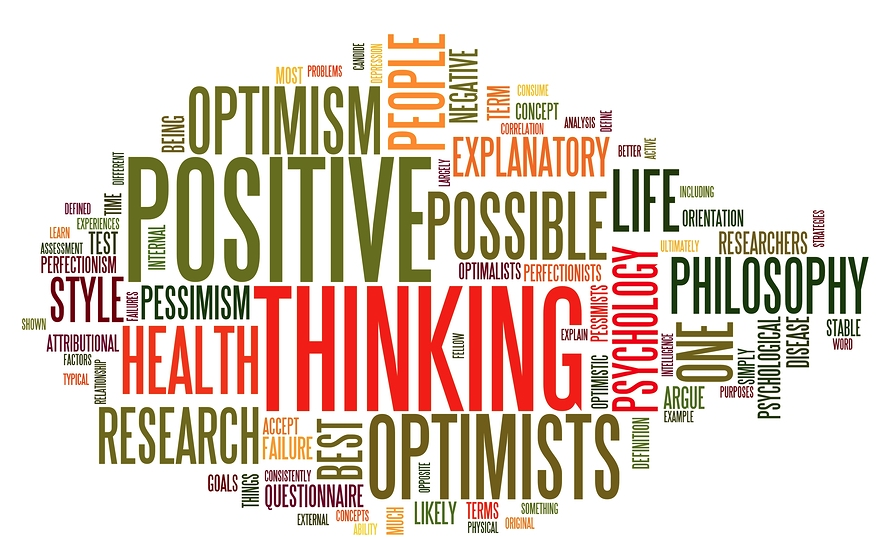 What allows humans to thrive? What conditions, actions, or qualities contribute to well being? How do we help kids become resilient?
Historically, the field of psychology has focused on mental illness. Depression, schizophrenia, and other disorders of the mind carried far more intellectual gravitas than the psycho-emotional characteristics that lead to happiness. Certainly these illnesses are less subtle, easier to categorize, label, and examine. In striking contrast, the field of positive psychology studies how people do well: how we cultivate positive emotions and optimism and how we develop grit and self-regulation. It explores how we benefit from resilience and gratitude while recognizing our (more…)

The Threats Facing Whales

Flipsnacking: Nourishing Food for Thought or Junk Food for the Brain?
By Dr. Heather Harwood, Classics Department Head
Let me begin with a disclaimer: I am not a Luddite. I genuinely like technology. I own a smart phone, a laptop, and an ipad. I have both a Twitter and a Facebook account. I read the New York Times online and love that I can watch the videos that sometimes accompany the stories. I have a Netflix account and I’d be lost without my GPS (literally); I even sometimes Skype with my parents. As an educator, I was an early proponent of using technology to facilitate student learning. In fact, despite its stuffy, antiquated reputation, Classics was one of the first of the Humanities’ disciplines to jump on the technology train, and I have been using it effectively in my classroom for (more…)

Anatomy of a Course: Getting LOST
Anatomy of a Course: Getting LOST
By John Camp, English Department Head
mrcamp@stmarksschool.org
Twitter: @gettinglostcamp
 In September of 2004, commercials ran for a new fall show on ABC called LOST. As a self-ascribed t.v. critic (and an acerbically judgmental one at that), I remember distinctly and succinctly saying to my wife Tara, “That looks stupid.” Interestingly, when Lloyd Braun, then the head of ABC, pitched the idea at a
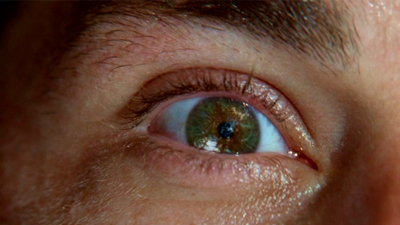
 network retreat, virtually all ABC execs had the same reaction that I had. Senior vice president Thom Sherman, however, was intrigued and pursued the idea with Braun and the writer Jeffrey Lieber. Through a few stages of scripting, Braun’s original idea became LOST–driven by J.J. Abrams and Damon Lindelof, and eventually Lindelof and Carleton Cuse. In the summer of 2006, friends of mine implored me to watch the show, saying that they knew I, specifically, would love it. So, I borrowed the Season 1 box set, and Tara and I sat down to watch at least the pilot episode. From the initial moment of protagonist Jack’s eye-opening and its inherent symbolism (Eye of Horus, the Mind’s I, gateway to the soul), the mythology intrigued me, and binge-watching, of course, ensued. From those origins, LOST became a literal religion for me as well as the inspiration for what I consider to be the magnus opus of my teaching career, my course “Getting LOST.” (more…)
The End of Homework?
By Liz McColloch, French Faculty
The End of Homework?
As St. Mark’s anticipates our new schedule for next year, the question has come up repeatedly: How will we manage homework with only three class meetings a week? This question, in combination with our increased focused on collaborative work, has led us to think carefully about evening hours and how our students spend their time outside of class. For me, the answer lies in redeveloping our understanding of homework rather than the further restructuring of our schedule or manipulation of old curricula into a new timeframe. How do we make the most of our time, be it in or out of class? Have we moved beyond the concept of homework as we have traditionally known it? (more…)


 LEO
LEO 