Home » Posts tagged 'STEM' (Page 8)
Tag Archives: STEM

Optimism About the Power of the Book
By John Warren, Head of School
Optimism About the Power of the Book
Immediately after learning of our impending grandparenthood, our conversations with daughter-in-law and son, Caitlin and Ethan, turned to books—their recollections of favorite childhood books that had been read to them and that they had read to themselves, and our recollections of favorite books that we had read to Ethan and to our daughter, Amanda. From Ethan and Amanda’s infancy right up through much of elementary school, my wife and I had a nightly ritual of reading to them, and memories of those times are among our happiest. We have been pleased to learn that these memories are among Ethan and Amanda’s happiest, too. (more…)
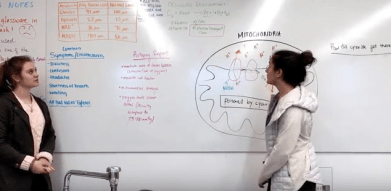
1-Take Video on Cyanide: The Mystery of the Seven Deaths
By Lindsey Dumond and Sada Nichols-Worley, V Form
1-Take Video on Cyanide: The Mystery of the Seven Deaths (click here)
Editor’s Note: After completing a deep examination of the process of Cellular Respiration, Advanced Biology students were randomly assigned to small groups (2-3) students and tasked with tackling a case study. The case of “The Mystery of the Seven Deaths” examined the true story of cyanide poisoning that occurred in the early 1980s. This case study required students to analyze data, make conclusions, and explain mechanisms of action. The students were then required to present the case to a lay person in 3 minutes through a 1-Take Video. A 1-Take Video is exactly what the name implies: a video shot in 1-take. This entire assignment was completed in an 80-minute block.
Click on the image below for the video!
World War I Primary Sources Collection at the Library
By Marion Donovan, Assistant Librarian
World War I Primary Sources Collection at the Library
As a librarian at St. Mark’s this fall, I have begun to “weed” through our history collection and have taken a deep dive into time travel. In the past, I was a history teacher myself, so the primary sources that bring the past to life call out to me. A particular section in the library especially rich in those sources covers World War I. Both of my grandfathers fought in WWI on the Allied side, one as a doctor and the other as an engineer, so I grew up with stories and artifacts of “The Great War,” as it was first known. When I applied to graduate school for history at the University of Chicago, I discovered that La Verne Noyes, an American inventor and manufacturer of agricultural equipment, book holders, and windmills, had left the bulk of his fortune to scholarships for Allied veterans of WWI and their direct descendants. These scholarships have now expanded to include 48 colleges. April 6, 2017 will be the one-hundredth anniversary of the United States’ entry into WWI. The European side of the war began in 1914, so many newspaper and magazine articles have already examined new and old perspectives on those events. More will be coming with April 6 in view. We at St. Mark’s are lucky to have an extensive collection of first-hand material (diaries, letters, memoirs, news reports, propaganda, art, photographs) from marshals and generals to privates and civilians on wide-ranging aspects of this war. (more…)
Competing in the FIRST Robotics Challenge
By Kate Sotir, VI Form
Competing in the FIRST Robotics Challenge
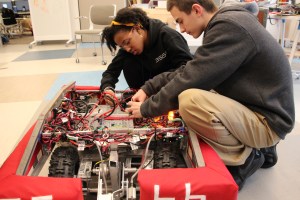
Working in the basement level of the STEM building, using lots of power tools, and occasionally throwing out words like “kickoff,” “drivetrain,” or “STEAMworks,” we are FIRST team 3566, also known as Gone Fishin’.
Gone Fishin’ competes in the FIRST Robotics Competition. FIRST stands for “For Inspiration and Recognition of Science and Technology.” The robotics competition, open to any high school student, was created in order to promote the STEM fields and offer a competitive yet collaborative atmosphere for robotics. In the FIRST Robotics Competition (FRC), teams are given a challenge, in the form of a game, and then have six weeks to build a 120 pound, $10,000 robot to meet this challenge. After those six weeks are up, teams compete in various regional events. The ultimate goal is to go to the world championship, held in St. Louis, where around 800 teams gather to play the game. (more…)
Sea Acidification
By Jiawen (Angela) Li, IV Form
Sea Acidification
Editor’s Note: This is the assignment prompt for a unit on ecology–You will be given one week of class and homework time to investigate a topic of your choosing that relates to ecological or environmental sustainability. The goal will be to research the topic in depth and produce a final product that displays your understanding of the concept. You may choose to produce a video, Prezi, infographic, children’s book, or paper.
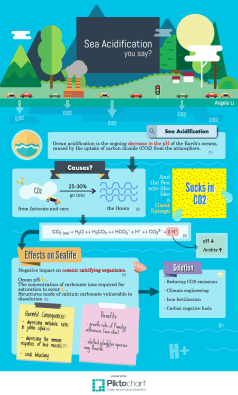 Angela’s pre-reflection: I chose the topic Sea Acidification because I was intrigued by the podcast about how oysters are affected by seawater acidification, and I wanted to know more about how it also affects other species, especially how it affects marine food chain/web. I hope to gain more knowledge on how seawater acidification generally affects marine life and expand my understanding from oysters to a larger variety of organisms. I wish to produce a piece of informative work including the introduction of seawater acidification, explanation of how it works, and details as to what the effects on the sea life are. This is related to these units because it expands on the “Science Friday” podcast on oysters and is connected with food webs, sustainability, and ecosystems. I’ll be working on my own, because I want to work on an infographic and working in pairs really slows the process down and complicates matters unnecessarily, and there could be an uneven distribution of work. My strategy would be to learn from my last experience with making an infographic, dividing my work into clear sections, maybe three to five, before doing research to be more efficient.
See the large infographic below! (more…)
Watching Whales
By U Jin Jo, IV Form
Watching Whales
Editor’s Note: This reflection is from a STEAM field trip (Studio I Art class + Exploratory Sciences: Land and Sea class) to the New England Aquarium.
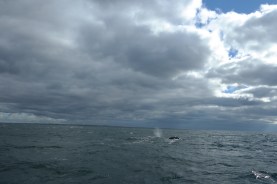
The cold air sprays into our visages as we step on board, the excitement barely hidden under our coats. Buildings are still in sight, and the engine seems to beat along with my heart. Airplanes fly high as we sit in silence. The boat slowly drifts against the water’s will, as if it is right where it is supposed to be. It flows with its own stream, with its own rhythm. The engine’s sound is different from its surroundings – more defined, as if to to
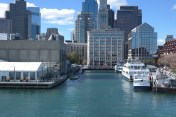
reassure its presence. The air is so strong that it seems like an uncontrollable storm. We bundle up as if the wind has instructed us to do so. The more we push against the water’s will, the more the wind pushes back. Trying to stay balanced, we stare at each other mischievously as if we are about to do something dangerous. Finally, the time that we have been waiting for arrives. After about 30 minutes of the bitter, cold boat ride, we see the first whale. (more…)
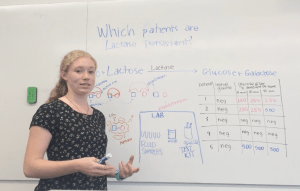
1-Take Video: Lactase Persistence
By Cordelia (Cricket) Dotson, V Form
Editor’s Note: The students were charged with designing an experiment to determine if five individuals were or were not lactose tolerant. After designing and completing the experiment they were given instructions on publishing the results in a 1-take video (instructions at bottom of the article).
Please click here or on the image below to see Cricket’s video on lactase persistence:

Striving for a Cure at the Ben Towne Center for Childhood Cancer Research
By Katie Hartigan, VI Form
Striving for a Cure at the Ben Towne Center for Childhood Cancer Research
As my eyes scanned the people seated at the conference table around me, I admired each one of them immensely. To know that I was sitting in a lab meeting with the faces behind the statistic “93% remission rate for children with acute lymphoblastic leukemia” was astonishing to me. I stared up at the projector screen taking in the jargon that I partially understood, trying to decipher each scientific discovery and hoping that one day my name too would follow some great breakthrough displayed on a similar projector screen.
In the spring of my junior year, I was selected to travel to Seattle that upcoming August to work at the Ben Towne Center for Childhood Cancer Research at the Seattle Children’s Research Institute. (more…)


 LEO
LEO 