
Home » Posts tagged 'Science' (Page 6)
Tag Archives: Science

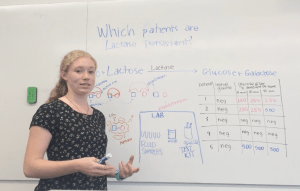
1-Take Video: Lactase Persistence
By Cordelia (Cricket) Dotson, V Form
Editor’s Note: The students were charged with designing an experiment to determine if five individuals were or were not lactose tolerant. After designing and completing the experiment they were given instructions on publishing the results in a 1-take video (instructions at bottom of the article).
Please click here or on the image below to see Cricket’s video on lactase persistence:

Drawing on Our Brains: How Neuroscience and Art Can Teach Us About Learning
By Gabe Brower, VI Form
Drawing on Our Brains: How Neuroscience and Art Can Teach Us About Learning
I have yet to meet a single student at Saint Mark’s that has never crammed for an exam. They fill up their brain temporarily with information for an upcoming test in a vain attempt to not fall flat on their face the next day during their test. To be honest, it sometimes “works”, as defined by a good score, and I can speak from experience in this area. However, that doesn’t mean cramming is effective. It is the result of disengaged students and ineffective teaching methods that culminates in temporary information retention, and over the long run the crammed information isn’t retained. Therefore, no valuable learning takes place. (more…)

Migraine Mania: Exploring the Link Between Disorder and Diet
By Marissa Huggins, VI Form
Migraine Mania: Exploring the Link Between Disorder and Diet
Abstract
Migraine is a debilitating neurological condition associated with symptoms including: intense pressure in the head, nausea, blurred vision, vomiting, and extreme sensitivity to light, sound, touch and smell.11 Migraine disorder, wherein an individual suffers from a migraine episode at a minimum of two times per month, affects approximately 12% of the population of the United States.1 When an individual suffers from a migraine episode, their mental and physical capabilities are inhibited, making daily tasks extraordinarily challenging, if not impossible. Migraines cause normal neurotransmission – communication between neurons – to be disrupted, and the role of the central nervous system becomes compromised. Treatment options are limited and often ineffective thus exploration of new treatment options would greatly benefit migraine sufferers. The goal of this investigation was to explore the potential relationship between migraine disorder and diet using the model organism C. elegans. The Unc-2 C. elegans genotype is known to mimic human migraine disorder; every abrupt directional change in an Unc-2 C. elegans organism is equivalent to a human migraine. C. elegans consume bacteria as their primary source of nutrition, thus two strains of C. elegans, wildtype (N2) and Unc-2, were fed one of three different bacterial strains and their behavior was observed for one minute. This procedure was repeated three times for each organism. Based on the data collected, it can be concluded that Unc-2 C. elegans grown on a diet of either Comamonas testosteroni (C. testosteroni) or Bacillus subtilis (B. subtilis) experienced a decrease in migraine frequency as compared to those grown on Escherichia coli (E. coli). (more…)

Tuskegee Syphilis Study
By Hans Zhou, VI Form
Tuskegee Syphilis Study
The Tuskegee Syphilis Study symbolizes the oppression towards African Americans in the medical field. This inhumane study conducted by the U.S. Public Health Services (USPHS) lasted for 40 years until an Associated Press story revealed it.

Smozaturn D3 — A Home in Alpha Centauri
By Mo Liu, IV Form
Smozaturn D3 — A Home in Alpha Centauri
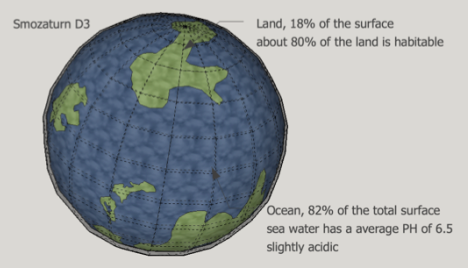 In this Advanced Physics independent study unit, I decided to create a planet that is hypothetically habitable by humans in the nearest star system from our very own Solar System — Alpha Centauri. More specifically, the planet, which I have given the name Smozaturn D3, is rotating in set orbit around Proxima Centauri, the dimmest star among all three stars in the Alpha Centauri system, approximately 4.22 light years away. There are many factors that determine the habitability of a planet, including: the chemicals present on the planet, the construction of its atmosphere, and most importantly its distance from the star. Due to this complexity, there are theories like the Rare Earth Hypothesis that argues that complicated and biological life is a very improbable phenomenon and is likely to be extremely rare. However, there is an alternative view known as the principle of mediocrity that argues that the universe is friendly to complex life, since Earth is a tropical rocky planet in a common planetary system. (more…)
The Quest to Improve the Teaching of Electricity in the St. Mark’s Introductory Physics Course
By Jacob Backon, STEM Faculty
The Quest to Improve the Teaching of Electricity in the St. Mark’s Introductory Physics Course
Abstract
In response to research indicating significant conceptual misunderstandings of basic electrical concepts, the physics teachers at St. Mark’s incorporated the CASTLE curriculum into the introductory physics course. Over the past few years this curriculum has met with two significant challenges: delivering efficient feedback in response to student model building, and the time it takes to move through the curriculum. Canvas modules were used to address these challenges, and a concept test was administered before and after instruction to gather data on the effectiveness of these techniques. Preliminary data with a very small sample size indicates the CASTLE curriculum and Canvas modules did result in higher scores on the concept test than data reported from a more traditional style of instruction. (more…)

Development of the Bohr Model of the Atom
By Nathan Cunningham, VI Form
Development of the Bohr Model of the Atom
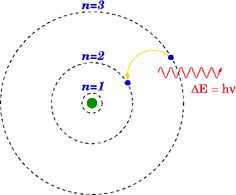 Around the turn of the 20th century, physicists became increasingly focused on examining the most miniscule of physical interactions. The concept of quanta—the smallest piece of something, e.g. the American cent—led into the evolution of quantum mechanics, the fundamental study of the components of matter and light. This piece will explore the various experiments, discoveries, and theories at the quantum level of world interactions which led up to the development of the Bohr model of the atom. (more…)

The European Green Crab
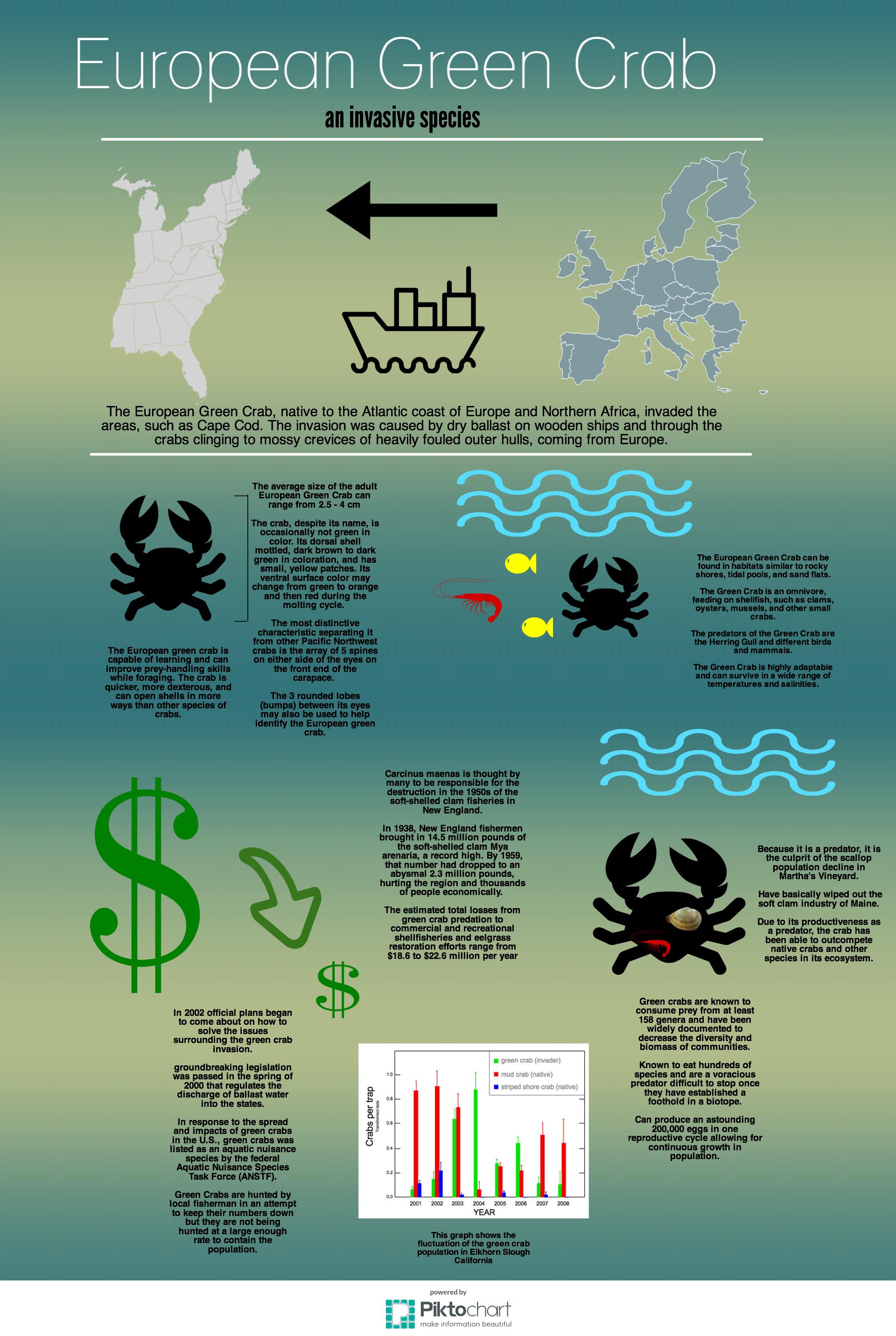
A note from the creators, Ellie Hedison (V Form) and Marcus Permatteo (V Form):
While creating our infographic, we wanted to strike a balance between being informative and visually appealing. The European Green Crab, an invasive species, has transformed ecosystems and communities along the eastern coast of the United States. We hoped to address the main aspects of the Green Crab as an invasive species and how it puts ecosystems in danger through visuals and graphs instead of simply just writing a paper. The European Green Crab was an appealing topic for us because it has a local effect, infiltrating the coasts of Maine and Cape Cod. (more…)


 LEO
LEO 