
Home » Posts tagged 'Learning and the Brain' (Page 4)
Tag Archives: Learning and the Brain

Northern Pacific Seastar Asterias amurensis & My Zone as an Artist
By Mei-Mei Arms, III Form
Northern Pacific Seastar Asterias amurensis & My Zone as an Artist
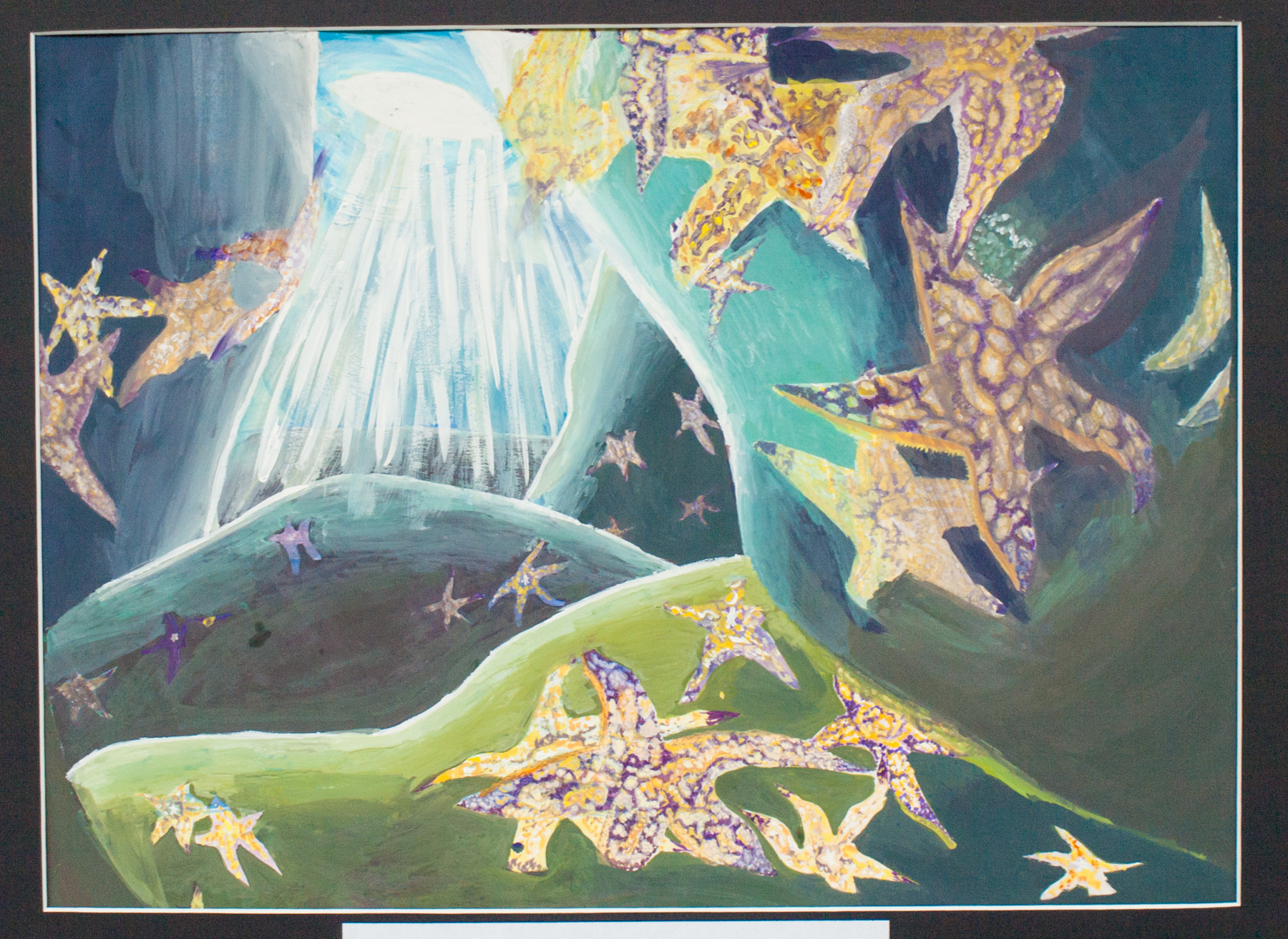
(See larger image below)
This seastar originated in Japan, Korea, China and Russia, about 20-40 metres deep off the coasts of these countries. It was introduced by the ballast waters of cargo ships as they returned from these countries and used ocean water to replace the weight of cargo. They can reproduce without the aid of another sea star and can multiply in the thousands. Due their rough exterior, the Northern Pacific Seastar does not have many natural enemies. Their larvae are so small that we cannot find a way to capture them and nothing appears to eat them at that stage in their life cycle. The Sea stars eat crustaceans and due to their numerous population, when they enter a new area, their numbers can wipe out the whole population of crustaceans. They can break off limbs and these limbs can grow in to new Sea Stars, but this process does take years. (more…)

The Architecture of New England’s Boarding Schools and Its Significance
By Claudia Chung, VI Form
The Architecture of New England Boarding Schools and Its Significance
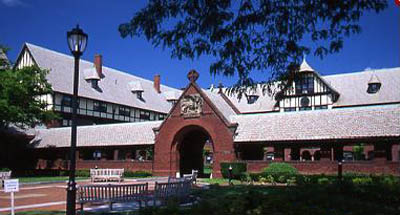
Post Revolutionary War boarding schools focused on educating America’s elites. These schools were products of their time; their values reflect a set of specific principles that their founders deemed admirable. Although these values evolved over time, they often included concepts of leadership, service to the nation, and dedication to one’s family. Schools built in the mid- to late- eighteenth century, the “Academies”, seem to reflect vastly different values than those of their “Episcopal” counterparts founded in the mid- to late- nineteenth century. Following the religious teachings of the Episcopalian tradition, episcopal schools boasted community and family based values; while the academies prided themselves on their focus on classical academics and service. The architecture of these schools closely follows architectural trends of their time and, at the same time, serves as powerful testament to the schools’ founding values. Despite each school founding with different affiliations, purposes, and people, the architectures of these schools deeply reflect the principles valued by the school —from its founding to present day.

La Realidad de la “Democracia Racial” entre Brasil (En Español and English)
By Theo Bartlett, V Form
La Realidad de la “Democracia Racial” entre Brasil (En Español and English)
Our core objective in our Spanish IV class is to study Latin American history in order to understand how and why Latin America has been shaped into the region that it is today. Within our curriculum, we accomplish this task by doing case studies on many different countries in Latin America, in which we study the national history of the country and then connect it to recent publications regarding its modern day situation. Within these case studies, we explore the demographics, economics, politics, and social scene of a country by immersing ourselves in Latin American literature, political debates, documentaries, and movies, and we reflect on what we have learned in both classroom discussions and written responses throughout the studies. Most recently, at the end of our case study on Brazil, we were asked to take the information that we learned in the PBS documentary “Black in Brazil”, which talks (more…)

Willing to Empathize with Another’s “Otherness”
By Hans Zhou, VI Form
Willing to Empathize with Another’s “Otherness”
“Come on, those chicks must be super proud to be portrayed that way,” a boy dismissively interrupted me during a class discussion while I was criticizing the eroticized female images in a magazine that objectifies women for commercial gains. Astonished and silenced, I could not believe what I had just heard. It was my first year in the United States. For a Chinese boy who longed for open-minded conversations in the United States, the all-male school atmosphere was not ideal. Identifying as a feminist only made things worse. I was publicly ridiculed for spreading “stupid feminism” and lacking masculinity. Admittedly frustrated, I was above all baffled. Why would people easily hold on to their prejudices without trying to listen to another perspective? (more…)

Memoirs of a Self-Professed Drama Geek
By Charlotte Wood, V Form
Memoirs of a Self-Professed Drama Geek
 I am a fantastic liar. I lie every day for hours at a time, occasionally to hundreds of people at once. I practice lying in my free time. I never feel bad, I always get caught, and I think it actually makes me a better person. People love my lies, and so do I.
No, I’m not some sort of psychopath, I’m an actor. When you think about it, that’s all acting is, really. Lying. Don’t get me wrong, I hate lying in the conventional sense. Honesty is the best policy, as they say. However, I firmly believe in the value of lying with the consent of the party being lied to, or, in other words, acting. (more…)

To Go Through Hell and Resurface
By Isabella Cruz-Nascimento, V Form
To Go Through Hell and Resurface
Crazy, insane, bipolar, OCD–all terms that have worked their way into colloquial language. Most people use them to describe themselves; “Oh my God, I am so OCD, I can’t handle messy rooms” is a sentence that could be heard regularly among teenagers. However, swap in a teen that genuinely displays compulsive behavior and the declarations turn into murmurs of, “What’s wrong with her?” “She needs to calm down,” “They need to medicate her already”. Mental illness is inconsequential and intriguing, until one sees its effects in person. In a community like St. Mark’s, being diagnosed with a mental illness can be onerous, not only because of the rigorous environment, but also because of the burden of the connotations that come with having a diagnosis. In an environment that demands perfection, I sometimes feel branded as incapable of success because of my diagnosis. For the majority of the past two years I have kept my dishonorable secret closely guarded. I refuse to do that now. (more…)

“I Am” Poetry
By Miss Amanda Hultin, English & Religion Faculty, and Charlie Mosse, Gillian Yue, Cooper Giblin, Hailey Dubose, Peter Ackerman, & Mark Wang, IV Form
“I Am” Poetry
In the first days of school, there is much that I want to learn about my students. I ask them to write, “How can I be a good teacher for you?” “What do you want me to know about you as a student? As a person?” The answers are read only by me.
I also want my students to learn about each other and to begin creating the learning environment unique to each class. I assign the “I am” poem as an exercise in thinking, writing, and talking about (more…)

Optimism About Positive Psychology
By Sarah Eslick, Associate Director of The Center for Innovation in Teaching & Learning
Optimism About Positive Psychology
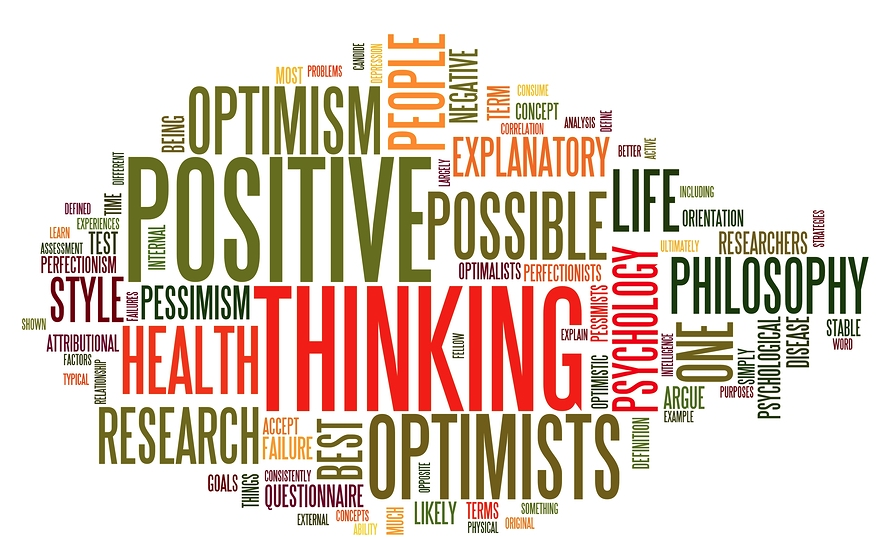 What allows humans to thrive? What conditions, actions, or qualities contribute to well being? How do we help kids become resilient?
Historically, the field of psychology has focused on mental illness. Depression, schizophrenia, and other disorders of the mind carried far more intellectual gravitas than the psycho-emotional characteristics that lead to happiness. Certainly these illnesses are less subtle, easier to categorize, label, and examine. In striking contrast, the field of positive psychology studies how people do well: how we cultivate positive emotions and optimism and how we develop grit and self-regulation. It explores how we benefit from resilience and gratitude while recognizing our (more…)


 LEO
LEO 