
Home » Posts tagged 'Experiential Learning' (Page 8)
Tag Archives: Experiential Learning

Empathy Through Education in China’s Xi Ma Yin Village
By Carrick Zhu, V Form
Empathy Through Education in China’s Xi Ma Yin Village
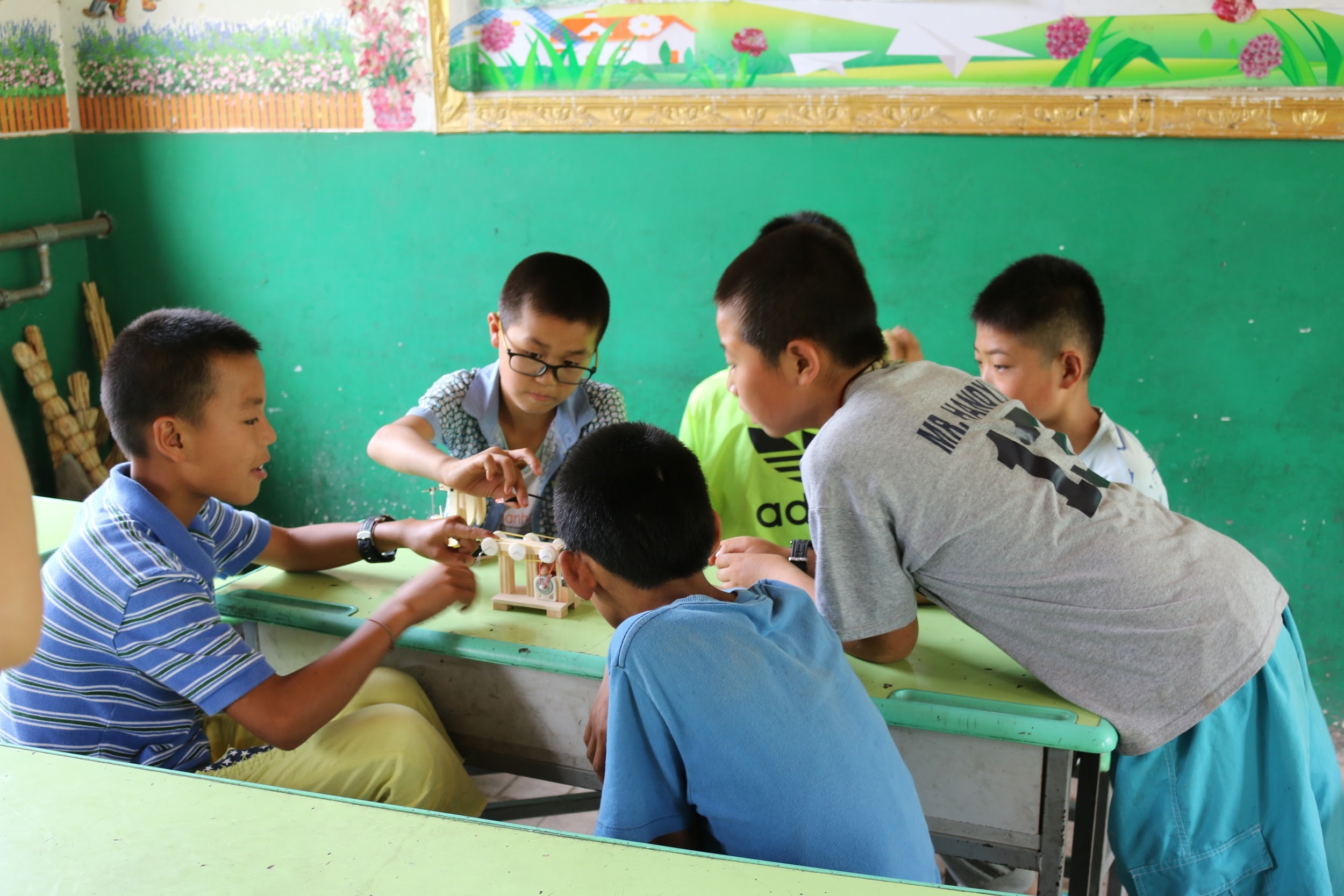 My mom and I began our volunteer teaching trip in 2014. With the help from the local Red Cross Organization in Ning Xia, China, we were able to find a local primary school situated in Xi Ma Yin village. Xi Ma Yin rests at the base of the Helan Mountain where the water supply is scarce. The villagers are mostly immigrants from the other side of the Helan Mountain. The elementary school where I worked is called Xi Ma Yin Immigrant Development Zone Elementary School. (more…)

Global Connections of Media and Skin
By June Seong, IV Form
Global Connections of Media and Skin
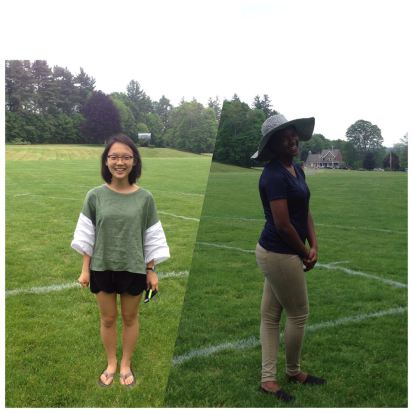
Amidst the chaos that is my life – including the future I must decide upon, the necessity to be “special,” and my attempt to make this post somewhat grammatically correct – I am struck by my simultaneous privilege and ignorance. This privilege and ignorance is exhibited through myriad ways at this very moment: 1) this dull MacBook Air that I am communicating through and that was probably configured by an underpaid or unpaid laborer; 2) the whizzing air conditioning that is breathing on my neck so that I might not die from heatstroke whilst the world scales up a few sweltering Centigrades; 3) the immensity of the world that is within computer click’s reach via Facebook. (more…)

Brantwood Camp: The Toughest Yet Most Rewarding Summer Challenge
By Lauren Menjivar, V Form
Brantwood Camp: The Toughest Yet Most Rewarding Summer Challenge
Have you ever imagined being a teenager and escaping from the world for sixteen days to take care of ten girls (or boys), live in a shack with them, and have your devices taken away in order to better connect with the people around you? The situation may seem unfathomable for some, if not, most millennials, but I decided to stow away my laptop and phone in exchange for books and a flashlight at the Brantwood Camp. (more…)

Make Deep Work Your Superpower: Deep Work and School (Part 1)
By Dr. Colleen Worrell, Director of the Center for Innovation in Teaching and Learning
Make Deep Work Your Superpower: Deep Work and School (Part 1)
Want to learn complicated things quickly, be more productive, and generate higher quality work? Make Deep Work your superpower.
“Deep work” is a term coined by Georgetown University professor Cal Newport to refer to the ability to “focus without distraction on a cognitively demanding task” (“Cal Newport on Deep Work”). In his newest book, Deep Work: Rules for Focused Success in a Distracted World (NY: Grand Central Publishing, 2016), Professor Newport argues persuasively that the ability to do deep work is the superpower of the 21st century. By training your ability to focus and by actively carving out time “for real intense focused work,” Newport argues that we can train our brains and cultivate habits that build a (more…)

Becoming a Musician at Interlochen Arts Camp
By Jason Hwang, V Form
Becoming a Musician at Interlochen Arts Camp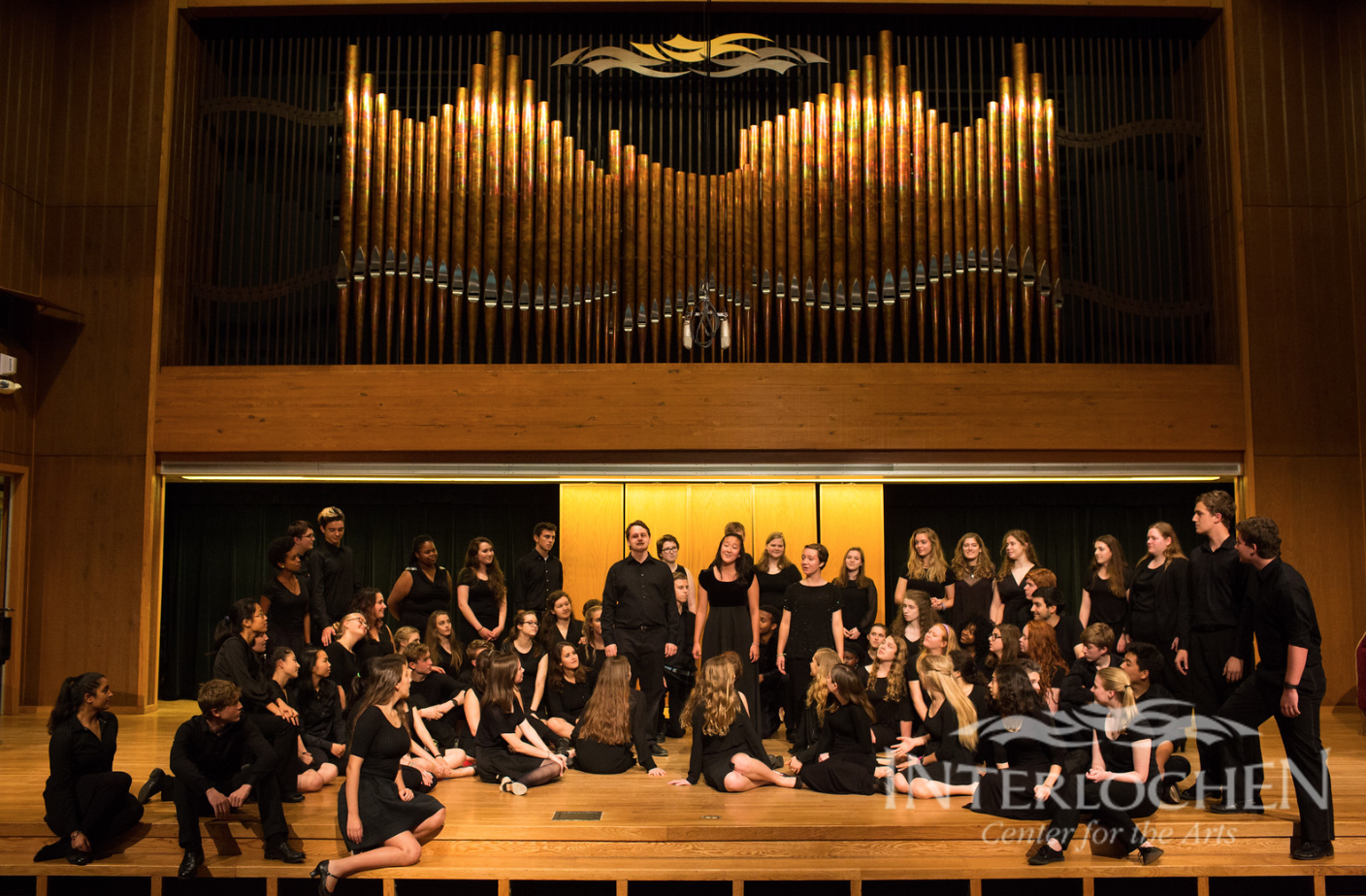
Not many people recognize the beauty of classical music. I might not deserve to say this because I was actually one of them before this summer. Attending Interlochen Arts Camp was by far the most engaging and life changing experience of my life in terms of the depth of what I learned and how I advanced into a better musician. (more…)

Read the Pilot Episode: GASLIGHT–a Sci-Fi T.V. Series
By Sarah Robertson, Chloe Ene, Jasmine Williams, Madison Falzon, Justin Elkinson, Payton Nugent, Penelope Benkard, Aigerim Bishigayeva, Jasen Ripley, Lilly Drohan, Abby Moses, VI Form
Read the Pilot Episode: GASLIGHT–a Sci-Fi T.V. Series
 GASLIGHT is a nine-episode television sci-fi drama written in Getting LOST II: The Writers’ Room during the Spring Semester.

Click here to read the Pilot episode written by Chloe Ene, Sarah Robertson, and Jasmine Williams.
Check out the Official GASLIGHT WEBSITE HERE. (more…)

Migraine Mania: Exploring the Link Between Disorder and Diet
By Marissa Huggins, VI Form
Migraine Mania: Exploring the Link Between Disorder and Diet
Abstract
Migraine is a debilitating neurological condition associated with symptoms including: intense pressure in the head, nausea, blurred vision, vomiting, and extreme sensitivity to light, sound, touch and smell.11 Migraine disorder, wherein an individual suffers from a migraine episode at a minimum of two times per month, affects approximately 12% of the population of the United States.1 When an individual suffers from a migraine episode, their mental and physical capabilities are inhibited, making daily tasks extraordinarily challenging, if not impossible. Migraines cause normal neurotransmission – communication between neurons – to be disrupted, and the role of the central nervous system becomes compromised. Treatment options are limited and often ineffective thus exploration of new treatment options would greatly benefit migraine sufferers. The goal of this investigation was to explore the potential relationship between migraine disorder and diet using the model organism C. elegans. The Unc-2 C. elegans genotype is known to mimic human migraine disorder; every abrupt directional change in an Unc-2 C. elegans organism is equivalent to a human migraine. C. elegans consume bacteria as their primary source of nutrition, thus two strains of C. elegans, wildtype (N2) and Unc-2, were fed one of three different bacterial strains and their behavior was observed for one minute. This procedure was repeated three times for each organism. Based on the data collected, it can be concluded that Unc-2 C. elegans grown on a diet of either Comamonas testosteroni (C. testosteroni) or Bacillus subtilis (B. subtilis) experienced a decrease in migraine frequency as compared to those grown on Escherichia coli (E. coli). (more…)

Defining Chaos
By Sean Kim, VI Form
Defining Chaos
Editors’ Note: As a part of a college dorm application, Sean wrote this essay with Mr. Lubick (English faculty). Sean attempted to answer what chaos might be after several sessions of intense discussion and joint writing/editing together with Mr. Lubick. {The prompt for the application appears after the essay.}
It’s interesting to consider whether chaos can be constructive or deleterious, however, the definition of chaos in the article is insufficient. The problem with defining “chaos” is that the very word represents what we don’t really understand. What appears to us as chaotic may in fact have pattern or cause or order beyond what we understand. Chaos is in the perception of the beholder. In terms of ideas, chaos is intellectual terra incognita. In other words, any positive or negative value that we impose upon the idea of chaos originates from our limited scope of understanding of the universe. (more…)


 LEO
LEO 
