
Home » Posts tagged 'Experiential Learning' (Page 10)
Tag Archives: Experiential Learning

U.S. Historical “I am” Poems
By Samantha Sarafin, John Hart, George Littlefield, and Ginny Walsh, V Form
U.S. Historical “I am” Poems
Each of our United States History courses revolves around eight major themes prevalent throughout history. One of those themes is the question of “Who is an American” at any given time in the nation’s history. In keeping with our work and also trying to connect what we do inside our classroom to the broader St. Mark’s community and world at large, each class took their Community and Equity Day “I am” poems and looked at them from a historical angle. Each student was asked to look at an “I am” poem from the perspective of a figure from history. Some students were asked to be someone as specific as Alexander Hamilton, while others were (more…)

The Quest: An Original Composition for a Life Philosophy
By Helena Lin, IV Form
The Quest: An Original Composition for a Life Philosophy
At the end of my fall Roman Religion and Philosophy class, Dr Harwood assigned us a free-swim 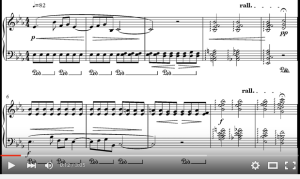 final project that asked for a creative presentation, in any desired form, of something we found interesting and meaningful in what we learned in class. After several conferences with Dr Harwood, I decided to produce my first music composition, which aims to demonstrate my understanding of Epicureanism and Stoicism, the two Roman philosophies that we studied. (Click right image!) (more…)

Northern Pacific Seastar Asterias amurensis & My Zone as an Artist
By Mei-Mei Arms, III Form
Northern Pacific Seastar Asterias amurensis & My Zone as an Artist
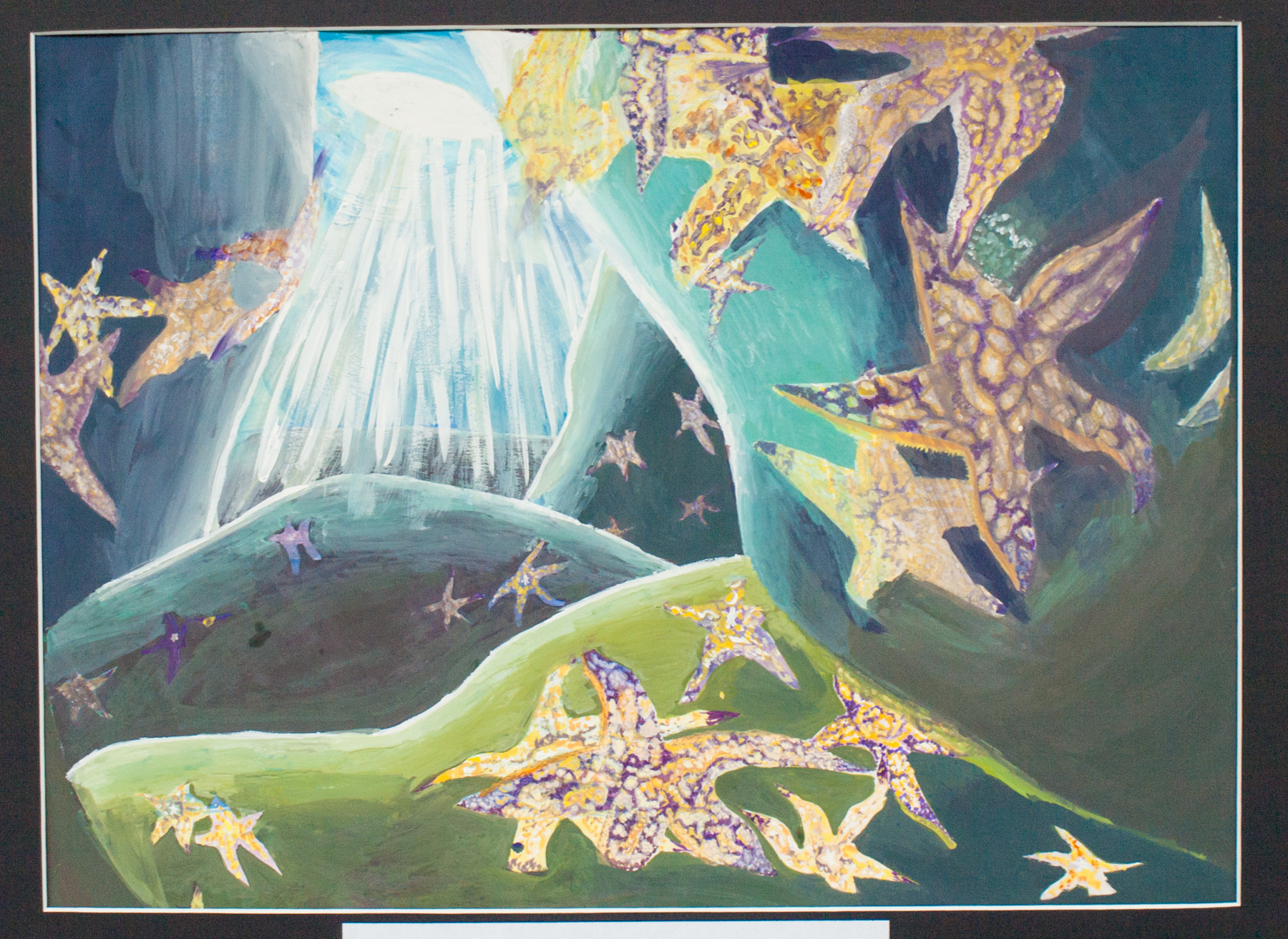
(See larger image below)
This seastar originated in Japan, Korea, China and Russia, about 20-40 metres deep off the coasts of these countries. It was introduced by the ballast waters of cargo ships as they returned from these countries and used ocean water to replace the weight of cargo. They can reproduce without the aid of another sea star and can multiply in the thousands. Due their rough exterior, the Northern Pacific Seastar does not have many natural enemies. Their larvae are so small that we cannot find a way to capture them and nothing appears to eat them at that stage in their life cycle. The Sea stars eat crustaceans and due to their numerous population, when they enter a new area, their numbers can wipe out the whole population of crustaceans. They can break off limbs and these limbs can grow in to new Sea Stars, but this process does take years. (more…)

The European Green Crab
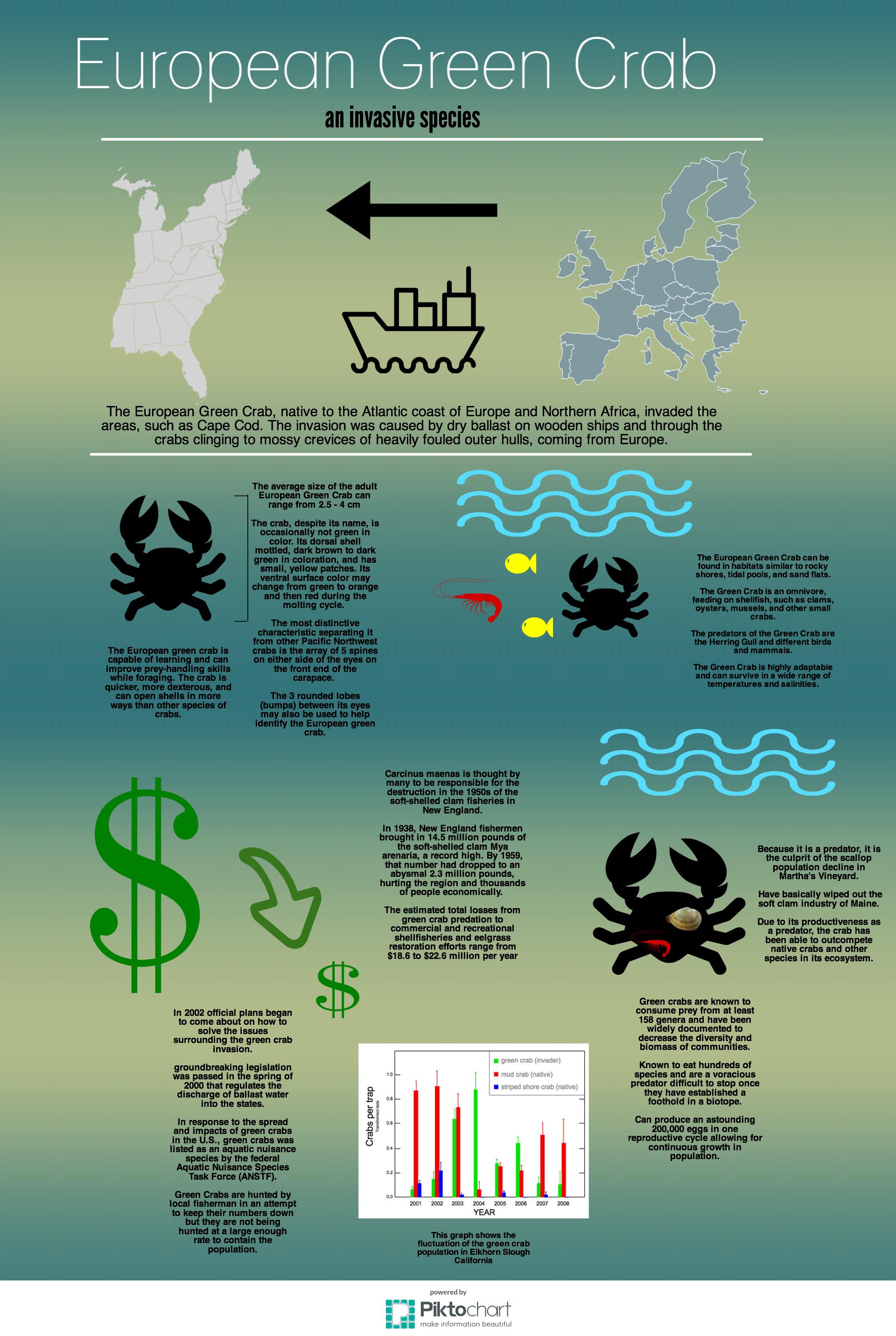
A note from the creators, Ellie Hedison (V Form) and Marcus Permatteo (V Form):
While creating our infographic, we wanted to strike a balance between being informative and visually appealing. The European Green Crab, an invasive species, has transformed ecosystems and communities along the eastern coast of the United States. We hoped to address the main aspects of the Green Crab as an invasive species and how it puts ecosystems in danger through visuals and graphs instead of simply just writing a paper. The European Green Crab was an appealing topic for us because it has a local effect, infiltrating the coasts of Maine and Cape Cod. (more…)

The Architecture of New England’s Boarding Schools and Its Significance
By Claudia Chung, VI Form
The Architecture of New England Boarding Schools and Its Significance
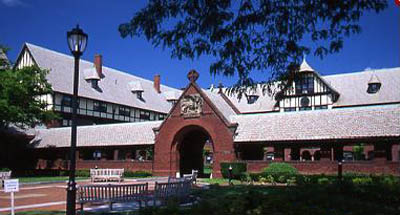
Post Revolutionary War boarding schools focused on educating America’s elites. These schools were products of their time; their values reflect a set of specific principles that their founders deemed admirable. Although these values evolved over time, they often included concepts of leadership, service to the nation, and dedication to one’s family. Schools built in the mid- to late- eighteenth century, the “Academies”, seem to reflect vastly different values than those of their “Episcopal” counterparts founded in the mid- to late- nineteenth century. Following the religious teachings of the Episcopalian tradition, episcopal schools boasted community and family based values; while the academies prided themselves on their focus on classical academics and service. The architecture of these schools closely follows architectural trends of their time and, at the same time, serves as powerful testament to the schools’ founding values. Despite each school founding with different affiliations, purposes, and people, the architectures of these schools deeply reflect the principles valued by the school —from its founding to present day.

La Realidad de la “Democracia Racial” entre Brasil (En Español and English)
By Theo Bartlett, V Form
La Realidad de la “Democracia Racial” entre Brasil (En Español and English)
Our core objective in our Spanish IV class is to study Latin American history in order to understand how and why Latin America has been shaped into the region that it is today. Within our curriculum, we accomplish this task by doing case studies on many different countries in Latin America, in which we study the national history of the country and then connect it to recent publications regarding its modern day situation. Within these case studies, we explore the demographics, economics, politics, and social scene of a country by immersing ourselves in Latin American literature, political debates, documentaries, and movies, and we reflect on what we have learned in both classroom discussions and written responses throughout the studies. Most recently, at the end of our case study on Brazil, we were asked to take the information that we learned in the PBS documentary “Black in Brazil”, which talks (more…)

Willing to Empathize with Another’s “Otherness”
By Hans Zhou, VI Form
Willing to Empathize with Another’s “Otherness”
“Come on, those chicks must be super proud to be portrayed that way,” a boy dismissively interrupted me during a class discussion while I was criticizing the eroticized female images in a magazine that objectifies women for commercial gains. Astonished and silenced, I could not believe what I had just heard. It was my first year in the United States. For a Chinese boy who longed for open-minded conversations in the United States, the all-male school atmosphere was not ideal. Identifying as a feminist only made things worse. I was publicly ridiculed for spreading “stupid feminism” and lacking masculinity. Admittedly frustrated, I was above all baffled. Why would people easily hold on to their prejudices without trying to listen to another perspective? (more…)

Remembering Through the Kids’ Toothy Smiles
By Sarah Robertson, VI Form
Remembering Through the Kids’ Toothy Smiles
There are few places in the world that astound me. Places where I look around and am suddenly filled with every emotion, yet I am incapable of mustering words to describe them. My heart pounds with joy, my mind is ablaze, and my entire world is suddenly filled with life. I first felt this feeling peering out the towering glass windows of the CN tower, my mother tracing a map of her life for me along the panes. I felt it as I stepped onto the streets of New York City for the first time, breathing in the passion, life, and movement all around me, contrary to the aura of my sleepy town. Most recently, these inexpressible emotions were blazing on my trip to Haiti. (more…)


 LEO
LEO 