
Home » Posts tagged 'English' (Page 12)
Tag Archives: English

Comic Books and The Profound Effect of Pleasant Surprises
By Sean Kim, VI Form
Comic Books and The Profound Effect of Pleasant Surprises
As I was signing up for my VI Form English elective course, I knew exactly which class I wanted to take: the “comic book class.” Erroneously assuming that I would simply be reading comic books and answering shallow questions, I made a fool out of myself by hoping that the class would boost my GPA. After all, it was a senior elective. However, from Hamlet to Watchmen, the material of the class prompted us to explore thoroughly what it meant to be heroic or anti-heroic in both literature and contemporary society. Most of the class time was spent discussing heroic and anti-heroic qualities of characters. Simply put, the class was not what I initially expected it to be. It was so much more profound.

U.S. Historical “I am” Poems
By Samantha Sarafin, John Hart, George Littlefield, and Ginny Walsh, V Form
U.S. Historical “I am” Poems
Each of our United States History courses revolves around eight major themes prevalent throughout history. One of those themes is the question of “Who is an American” at any given time in the nation’s history. In keeping with our work and also trying to connect what we do inside our classroom to the broader St. Mark’s community and world at large, each class took their Community and Equity Day “I am” poems and looked at them from a historical angle. Each student was asked to look at an “I am” poem from the perspective of a figure from history. Some students were asked to be someone as specific as Alexander Hamilton, while others were (more…)

Northern Pacific Seastar Asterias amurensis & My Zone as an Artist
By Mei-Mei Arms, III Form
Northern Pacific Seastar Asterias amurensis & My Zone as an Artist
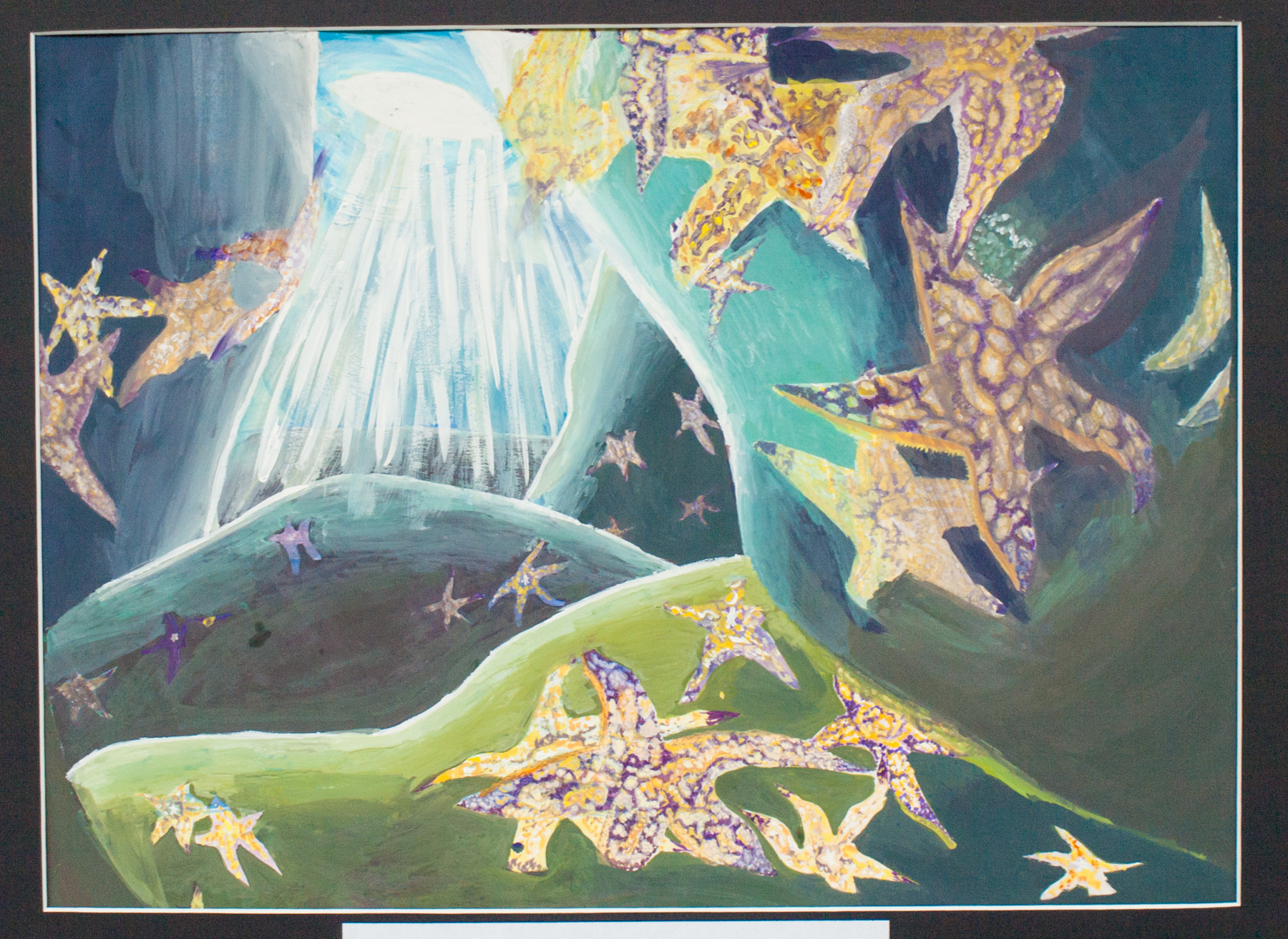
(See larger image below)
This seastar originated in Japan, Korea, China and Russia, about 20-40 metres deep off the coasts of these countries. It was introduced by the ballast waters of cargo ships as they returned from these countries and used ocean water to replace the weight of cargo. They can reproduce without the aid of another sea star and can multiply in the thousands. Due their rough exterior, the Northern Pacific Seastar does not have many natural enemies. Their larvae are so small that we cannot find a way to capture them and nothing appears to eat them at that stage in their life cycle. The Sea stars eat crustaceans and due to their numerous population, when they enter a new area, their numbers can wipe out the whole population of crustaceans. They can break off limbs and these limbs can grow in to new Sea Stars, but this process does take years. (more…)

The Architecture of New England’s Boarding Schools and Its Significance
By Claudia Chung, VI Form
The Architecture of New England Boarding Schools and Its Significance
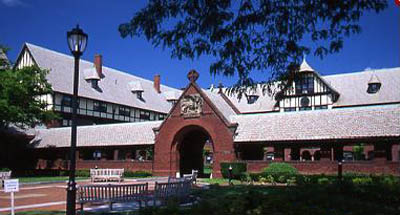
Post Revolutionary War boarding schools focused on educating America’s elites. These schools were products of their time; their values reflect a set of specific principles that their founders deemed admirable. Although these values evolved over time, they often included concepts of leadership, service to the nation, and dedication to one’s family. Schools built in the mid- to late- eighteenth century, the “Academies”, seem to reflect vastly different values than those of their “Episcopal” counterparts founded in the mid- to late- nineteenth century. Following the religious teachings of the Episcopalian tradition, episcopal schools boasted community and family based values; while the academies prided themselves on their focus on classical academics and service. The architecture of these schools closely follows architectural trends of their time and, at the same time, serves as powerful testament to the schools’ founding values. Despite each school founding with different affiliations, purposes, and people, the architectures of these schools deeply reflect the principles valued by the school —from its founding to present day.

Reviving Ophelia’s Song
By Sam Sarafin, V Form
Reviving Ophelia’s Song
What happens to a life so battered and bruised under the gift wrap of perfection? What happens to a life
 whose opportunities have been seized by another, whose ideals and self-importance are plucked out of fingertips before they even left a print? In the play Hamlet by William Shakespeare, Ophelia is often depicted as well-composed and sophisticated. When Ophelia sings a song before her death, she can attribute the meaning of the lyrics to one feeling or event – most often, this meaning is madness or grief. While Ophelia sang this song to convey her distress, there are many hidden meanings in the lyrics. Ophelia’s song is not an expression of one event or one feeling – it is the verbalization of grief over Polonius and Hamlet and a scrutiny of Gertrude’s portrayal of love. In it, Ophelia laments about patriarchal society and the way she had been controlled and used. (more…)

La Realidad de la “Democracia Racial” entre Brasil (En Español and English)
By Theo Bartlett, V Form
La Realidad de la “Democracia Racial” entre Brasil (En Español and English)
Our core objective in our Spanish IV class is to study Latin American history in order to understand how and why Latin America has been shaped into the region that it is today. Within our curriculum, we accomplish this task by doing case studies on many different countries in Latin America, in which we study the national history of the country and then connect it to recent publications regarding its modern day situation. Within these case studies, we explore the demographics, economics, politics, and social scene of a country by immersing ourselves in Latin American literature, political debates, documentaries, and movies, and we reflect on what we have learned in both classroom discussions and written responses throughout the studies. Most recently, at the end of our case study on Brazil, we were asked to take the information that we learned in the PBS documentary “Black in Brazil”, which talks (more…)

Advice to a “Girl”–What I Wish I Knew
By Mary Hoffman, IV Form
Advice to a “Girl”–What I Wish I Knew
(Based on Jamaica Kincaid’s short story)
Always be aware of your surroundings; never ignore your gut feeling; when you don’t feel comfortable in a situation- leave; the police are always there to help; nothing good happens after midnight; learn from your mistakes; you deserve what you tolerate; treat people how you want to be treated; make your bed every morning, it teaches smart habits; clean your room; dress to impress, people will treat you better when you look nice whether that’s right or not; never slut shame- girls are supposed to support each other; friends and family are more important than romantic relationships; don’t gossip; don’t burn (more…)

Literature Review: Creating Value in US Health Care Industry
By David Baek, VI Form
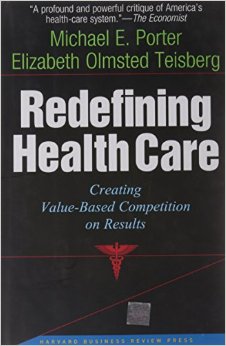
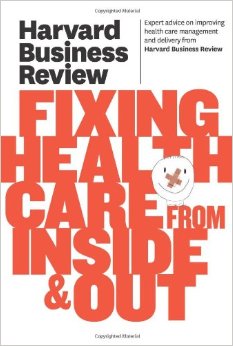
Literature Review: Creating Value in US Health Care Industry
Redefining Health Care, by Michael Porter, and Fixing Health Care From Inside & Out, by several Harvard Business School professors, will be the foundation upon which this review will be built. The two books differ in that the former centers its content on a general, abstract principle that can be applied to the whole industry while the latter provides practical business solutions to problems occurring inside each component of the industry. Many health care leaders today are provided with far too many solutions, such as these two, to decide which one is the best option. This review serves to combine the two seemingly complementary solutions to better the health care leaders’ vision for moving US health care forward.
The status quo of the health care industry is looking very dim. There have been reports of unhelpful pharmaceutical mergers, doctors charging patients unnecessary amounts, a decline in employer-based (more…)


 LEO
LEO 