
Home » 2019 (Page 3)
Yearly Archives: 2019

Listen to the Echo of Silence: Sound in Salinger’s Nine Stories
By Sam Wang, V Form
Listen to the Echo of Silence: Sound in Salinger’s Nine Stories
J.D. Salinger’s Nine Stories opens with a Zen koan: “We know the sound of two hands clapping. But what is the sound of one hand clapping?” Reading through the book, the audience may find the unusual plots and characters do not make sense when interpreted logically. The only breakthrough to these unresolved and thought-provoking endings of Salinger’s stories is through reflecting on “the sound of one hand clapping,” to break the logic and hear the impossible sound.
In the first story, “A Perfect Day for Bananafish,” the conversation between Seymour, a veteran of the war, and the little girl Sybil seems random but profound. For instance, Seymour talks to Sybil in a nonsensical way. When asking where is Sybil from, Seymour playfully annoys her by asking, “Is that anywhere near Whirly Wood, Connecticut, by any chance” (Salinger 21). Seymour suggests to Sybil what they can do after going to the water: “we’ll see if we can catch a bananafish,” and when Sybil mentions another child, Sharon Lipschutz, Seymour says to himself, “how the name comes up. Mixing memory and desire” (Salinger 19). The audience may find Seymour strange at first sight. However, looking back to his interaction with Sybil after knowing about Seymour’s suicide at the end, these words may intrigue the audience to think about their connotations. Seymour implies his suffering in the postwar society by bananafish, and he longs for spiritual salvation by Sybil, an innocent child, when almost everyone around him is acting like a bananafish.
(more…)
Visual Representations of the Relationship Between Oral and Written History in Atlantic World
By Tess Barrett, Levi McAllister, and Daniella Pozo, IV Form
Visual Representations of the Relationship Between Oral and Written History in Atlantic World
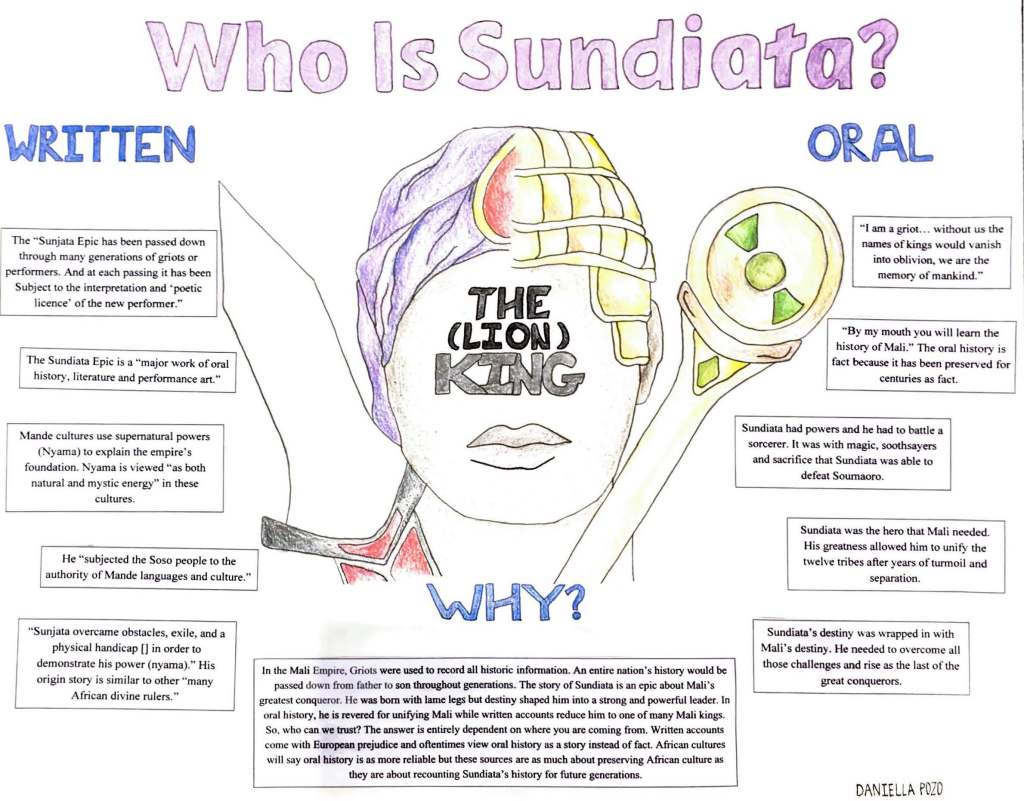
Instructor’s Note from Ms. Killeen: Atlantic World, a history elective, recently explored the story of Sundiata. This epic of a Western African king from the 1200s was relayed orally for hundreds of years because Ancient Mali was a non-literate society. In the modern Western world, we tend to trust the written word more than traditional storytelling, but Mali’s griots (historians and storytellers) would argue that oral history, which is kept closer to the heart and is therefore connected to people, is more truthful. After reading Sundiata and some Western secondary sources, students were asked to create a visual display describing the history of Ancient Mali. With a few guiding questions—Can we know what really happened? Which parts of the story are true in detail, and which are true in spirit? Does the African story have a different emphasis than the Western ones? What is important to each culture and why?—and the requirement that the project be “visual,” each student was given the freedom to demonstrate their learning in their own way.
Tess, Daniella and Levi said that they liked having the freedom to express their ideas while they were challenged by the task of representing both sides fairly and equally. Ultimately, they came to recognize the value of oral history in its own right, and to question our predisposition to automatically trust the written word.
Daniella’s Poster
Newspapers and North Korea: “The Girl with Seven Names” Final Project
By Samantha Leslie, Phoebe Macleod, Bobby Sommers, Emma Viens, and Julian Yang, VI Form
Newspapers and North Korea: The Girl with Seven Names Final Project
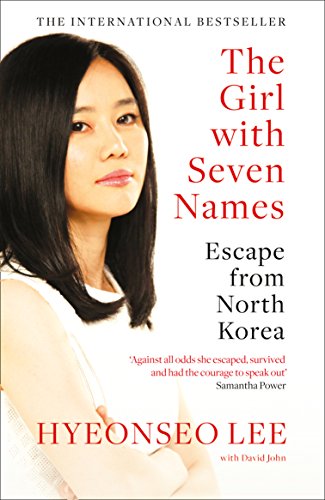
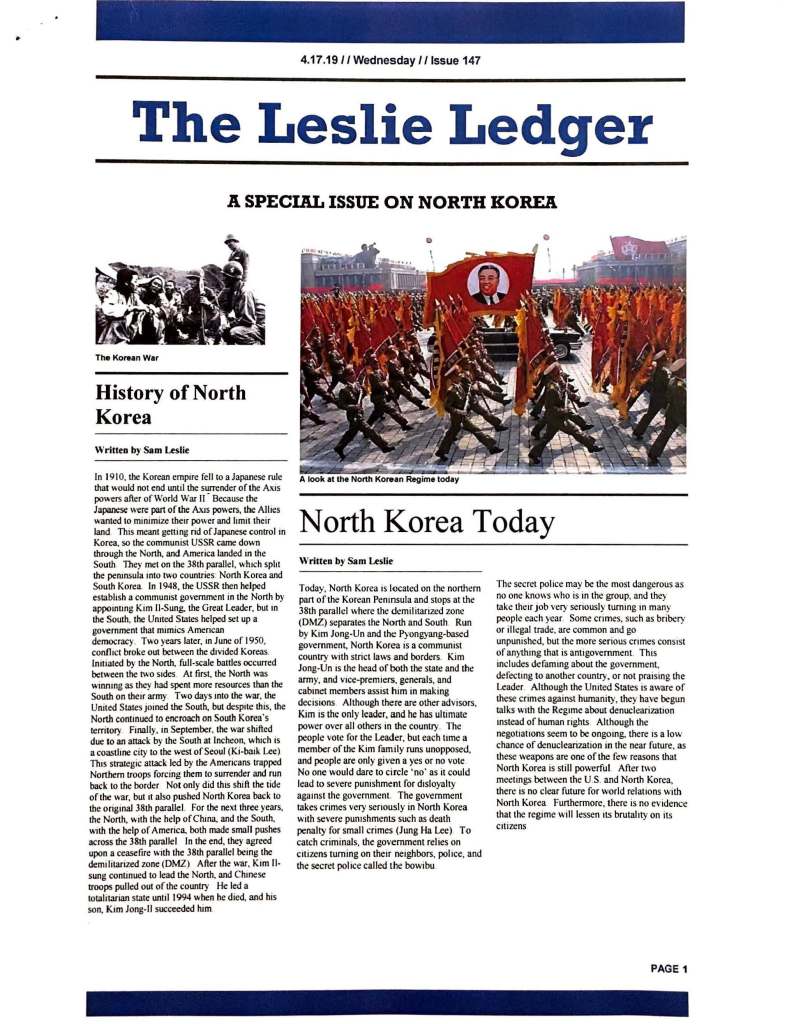
Editor’s Note: Students crafted these newspapers after reading The Girl with Seven Names: A North Korean Defector’s Story, and each newspaper contains five articles and two visuals. While a book review and a study of North Korea were required elements, students were able to choose from a list of other article types or design their own articles and visuals. Students had to tailor the writing in each article to fit five different nonfiction styles and tones while also presenting the information in a clean, polished final product.
Samantha Leslie’s Newspaper

My Summer of Shoshin: Applying Beginner’s Mind to Learning Ancient Greek
By Dr. Heather Harwood, Classics Faculty
My Summer of Shoshin: Applying Beginner’s Mind to Learning Ancient Greek
Imagine this. You fly across the ocean to a different continent to go to school. You miss a connection and your plane is delayed, so you arrive a day late. You make your way from the airport to the campus of the school where you meet your roommate (someone you have never met before) and several other “ new” students. Most of the students you soon realize are returning for their third or fourth year to the school. These students know the campus, they know each other, and they know the teachers. At the opening night ceremony and for the remainder of your time at the school, the teachers and many of the returning students all converse in a language which, while you have studied it in books your whole life, you have never really heard spoken or spoken yourself. You go to bed a jumble of conflicting feelings: brain-numbing exhaustion from your journey, excitement and eagerness to start learning, uncertainty about whether you should even be here, homesickness for your dog, and total fear.
Sound familiar?
While this is the experience of many students coming to St. Mark’s for the first time from abroad, it was also my experience this past summer when I traveled to Greece to participate in Paediea Institute’s Living Greek in Greece program. I now have a much better understanding of what many of you who come to St. Mark’s from another country experience. The “school” I attended, however, was actually only a two week workshop held in a small coastal town called Selianitika where students, professors and high school teachers of Ancient Greek gathered to learn how to understand and speak Ancient Greek.
(more…)
How Do Candles Burn? A Chemistry Annotated Diagram
By Catie Summers, V Form
How Do Candles Burn? A Chemistry Annotated Diagram
Teacher’s Note: In 1848, physicist Michael Faraday delivered a series of holiday lectures at the Royal Institution in London on the topic of “The Chemical History of a Candle.” During the lectures, Faraday used his observations of a burning candle as inspiration for relating, to a lay audience, a veritable encyclopedia of fundamental principles of physics and chemistry. In Honors Chemistry at St. Mark’s, we strive to recreate Faraday’s sense of wonder by performing simple experiments on a candle and interpreting the results in light, based on what we have learned about atoms, molecules, and chemical reactions. Students are challenged to determine the nature of a candle’s fuel and describe the process by which a candle’s flame perpetuates itself. In particular, Catie Summers’s eye-catching visual summary of this process reflects her efforts to link macro-scale observations with molecule-level interpretations.


The Use of “Battle Hymn of the Republic” and “Dixie” as Anthems in United States History
By Domenic Mongillo, VI Form
The Use of “Battle Hymn of the Republic” and “Dixie” as Anthems in United States History
Contributor’s Note: For this assignment, the task was to examine a Civil War or Reconstruction monument as a type of miniature research project. The resulting project would be able to tell a compelling story about the monument while also explaining the creation of the monument and the context around its creation. The most important part of this project, however, was to explore the monument’s importance to historical memory and how it has reflected the context of its creation throughout history. The projects were able to take on any media that would have helped to explain these facets of the monument; some students chose to make databases, posters, presentations, or videos. While “monuments,” constituted the official topic of inquiry, students were free to choose anything that had contributed to the memory of the Civil War era.
In my video, I chose to address the two songs: “Battle Hymn of the Republic” and “Dixie.” Originally, I was going to focus solely on “Dixie,” but further research prompted me to realize that juxtaposition with an opposing song from the northern side of the Civil War would lead to a compelling comparison that I was eager to explore. I was fascinated by how these songs not only clashed during the Civil War, but have also been anthems of opposing sides leading up to the present. I looked at a few individual monuments that I could have possibly explored, but choosing a topic that carried significant weight to people in both past and present seemed much more interesting to me.

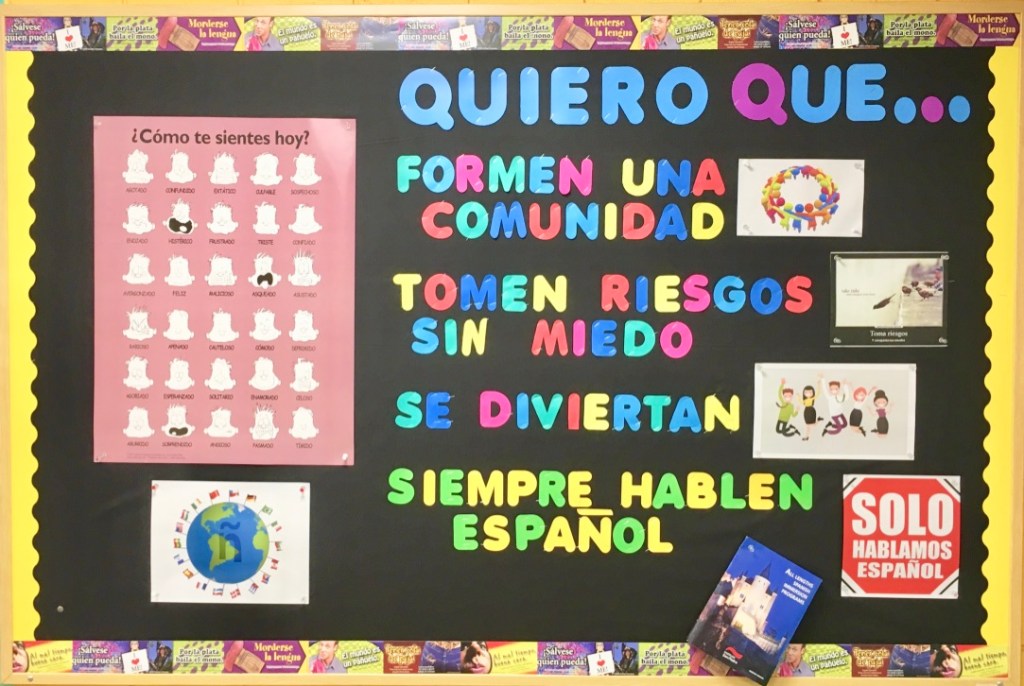
A Community of Language Learners
By Mr. Charlie Sellers, Modern Languages Faculty
A Community of Language Learners
“¡Manos con manos, dedos con dedos, puños, palmas, pulgares, dedos índices, dedos meñiques… descanso!” I orchestrate these commands while the class stands in a circle giving each other high fives and joining fingers, fists, palms, thumbs, index fingers, then they wait for the next direction. “Espaldas con espaldas.” Everyone goes back to back. “¡Cinco, cinco, diez, diez, codos, codos, pies, pies!” The students face their conversation partners, and again give high fives, tens, and knock elbow, elbow, foot, foot. They wait for the prompt to respond to an attention-grabbing hook about a brief, animated short film about Día de los muertos. On my cue in groups of two, the students start listing elements that we have studied from Día de los muertos that they saw in the video, which is a novice skill (ACTFL). “¡Díez al revés!” The kids give backwards high fives to their classmates who are standing behind them in the circle, turn to face each other, and, again, responding to another prompt, and they start narrating using the past tenses to recount what happened in the video, addressing Intermediate-High Level discourse (ACTFL).

Summer Photography: A Study Funded by the Class of 1968 V Form Fellowship
By Alie Hyland, VI Form
Summer Photography: A Study Funded by the Class of 1968 V Form Fellowship
Editor’s Note: At their 25th reunion, the Class of 1968 created a fund to provide grants to V Form students for independent study during the school year or, more commonly, during the summer between V and VI Forms. Their intent in establishing this fund was to reward independent thinking, ingenuity, and planning and to encourage the student exploring non-traditional fields of inquiry or using non-traditional methods of investigation.
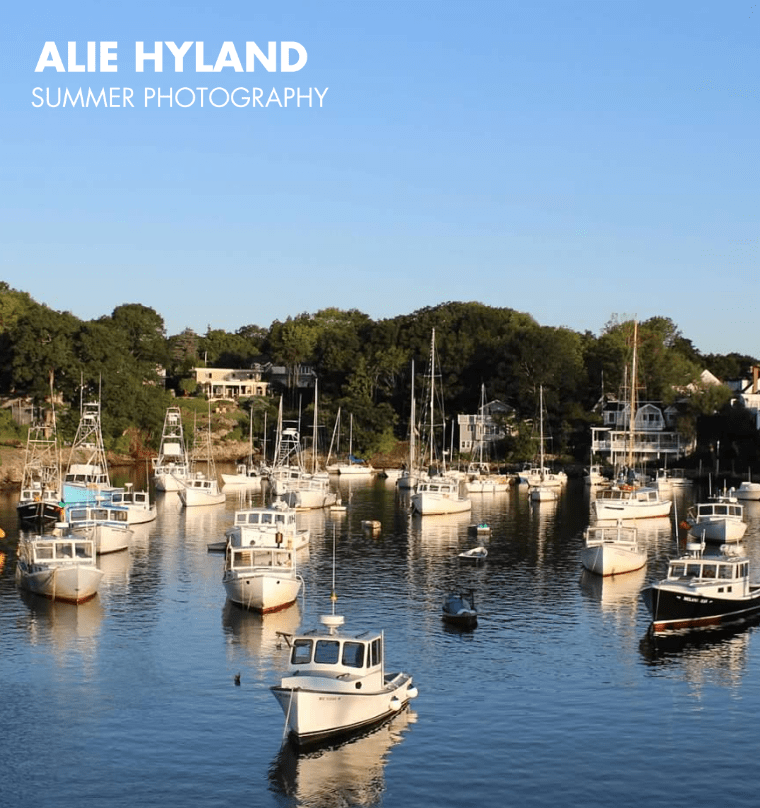
Photography has been a passion of mine for years and has only grown during my time at St. Mark’s due to the numerous opportunities to explore and learn more about this art form. When I took the “Art and Science of Photography” Saturday class, I learned the key elements of what makes a photo visually appealing and how to operate the DSLR camera that I borrowed from the St. Mark’s library. Turning in the camera at the end of the Saturday class term was painful, for I was losing a powerful tool that gave me the opportunity to freely express myself and capture the precious moments of life in outstanding quality. In the years following this educational experience, I captured random moments of life’s beauty with my iPhone camera; however, I was always craving a higher image quality and level of professionalism. When I learned about the Class of 1968 V Form Fellowship, I saw my opportunity to obtain a DSLR camera. I filled out the application as soon as it became available and, after weeks of anticipation, I was thrilled when I found out that I had been awarded the grant and would finally own a professional camera.
(more…)

 LEO
LEO 