
Home » 2017 (Page 7)
Yearly Archives: 2017

Redesigning Learning Spaces & Flexible Seating
By John Camp, English Department Head
Redesigning Learning Spaces & Flexible Seating

from The Space: A Guide for Educators (Hare & Dillon, 2016)
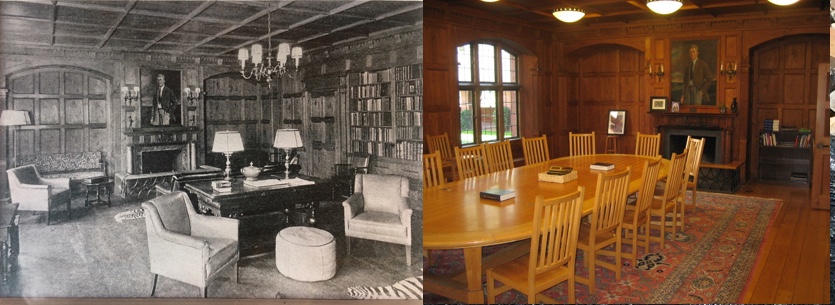
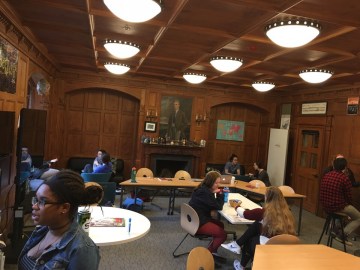
As difficult as it may sometimes be to relinquish the manacles of some tradition(s) in education, I have focused on a main mantra when considering change: what is best for students and learning. Thus, driven by this guiding principle and my teaching methods, I decided to pursue a critical trend in 21st-century teaching and learning: the importance of space, flexible seating, and classroom design. The rub, however, was my particular classroom; since I arrived at St. Mark’s in 2008, I have been fortunate to teach in Room 8/Room 136, which historically had been the “Sixth Form Room” until 1995 (read the partner piece to this article on the history of this room here). Hence, making changes to the “seminar” classroom would be bold, as the beginning move would be removing the large, classic seminar classroom table that has been a fixture since 1995. When I teach, I do not often lecture (if at all), and while seminar-esque discussion is a crucial element of my classes, it certainly is not the only element. In all of my classes (VI Form electives “Getting LOST,” “Getting LOST II: The Writers’ Room,” “Rebels with a Cause,” and V Form English class “Books Without Borders”), students work in small and medium groups, write on their own, present to the class, do activities that include movement and interaction, utilize media, collaborate on writing and projects, watch videos/films, brainstorm and note take on the whiteboards, and conference one-on-one with me (see images below for most of these activities in action!). The large oval table was not conducive to quality student learning in these endeavors. My first stop en route to change was John Warren. (more…)

Before it was LOST: The Sixth Form Room at St. Mark’s
By Nick Noble ’76, Communications Manager, Editor, and School Historian
Before it was LOST: The Sixth Form Room at St. Mark’s
In 1890, when the Main Building was first occupied, Headmaster William E. Peck set aside a small room along the Chapel corridor exclusively for the Sixth Form. A small narrow room, it had a fireplace, mailboxes for the Sixth Form (there were 27 Sixth Formers in 1893, the largest senior class up to that time), and Sixth Formers took to marking the window frame/sill area with Groton game results. That space is currently room 132, where Dr. Glomset teaches. That original Sixth Form Room was under the direct supervision and authority of the Monitors. (more…)
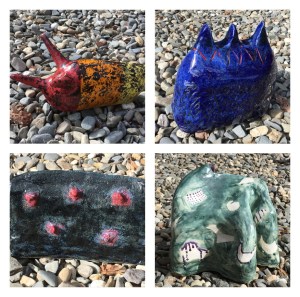
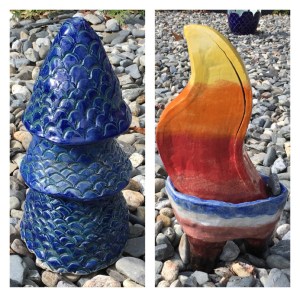
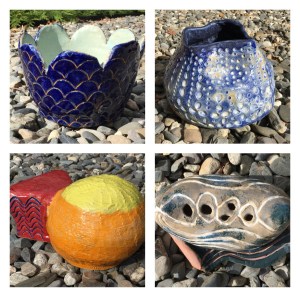
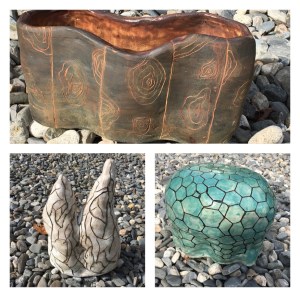
Ceramics: “Patterns From Nature” Sculpture Garden {Pictures!}
By Ashley Lee, VI Form; Tony Banson and Darren Pike, V Form; Ashley Battiata, Charlotte Galusza, Lillie Harrison, Tucker Hartmann, Sam Leslie, Phoebe Macleod, Noah Robb, Cam Rubin, Bobby Sommers, and Tyler Young, III Form
Ceramics: “Patterns From Nature” Sculpture Garden {Pictures!}
Editor’s Note: The Patterns from Nature project began with exploring Biomimicry and 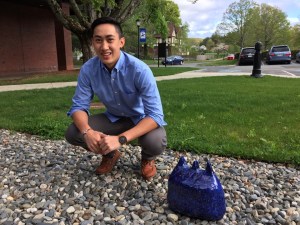 EcoArt. Students then researched nature on a microscopic scale. This involved studying the most finite details in structures to find intriguing patterns, forms, and textures. Inspiration could be found in very obscure places: whether a human cell, rock crystal, or a plant stem. Gathering these designs from nature, students then sketched combinations of patterns and forms to arrive at unique clay module sculptures. This year’s Sculpture class decided to display their work outdoors in the Taft Sculpture garden.

Trump’s Reform on Immigration Policies, Pros and Cons
By Jenny Shan, IV Form
Trump’s Reform on Immigration Policies, Pros and Cons
Editor’s Note: For this module in Social Justice class, students worked individually and/or collaboratively on a specific topic related to immigration policy or the refugee crisis. A Final Artifact of Learning (FAoL) should demonstrate understanding of the topic and “answer” the driving question in a comprehensive way. It should synthesize learning by organizing and applying understanding on the topic/question.

Click Image To Play Video

Gun Control in America: A Nonpartisan Investigation
By Sam Lauten, VI Form
Gun Control in America: A Nonpartisan Investigation
 For the entirety of my life, I have been taught that there are good politicians and evil politicians. I have been taught that there is only Democrat and Republican. I grew up in a firmly liberal household, in a liberal state, and attended liberal private schools from kindergarten to my senior year of high school. This is not a criticism of my family, nor is it a criticism of liberal education, rather a recognition of the fact that I have been exposed to very few people that are significantly different than I am. However, this year as I began to look onward to studying political science at college in the fall, there was something that I found deeply troubling about experiencing eighteen years of life without having my own political views truly challenged. Even so, I have always had firm opinions about nearly every issue, even those which I have not necessarily experienced the effects of first hand. An example of one of these issues is gun regulation. (more…)

STEM Fellow: Mitochondrial Disease in C. elegans
By Katherine Hartigan, VI Form
Mitochondrial Disease in C. elegans
Abstract
Mitochondrial disease refers to a class of hundreds of disorders related to the mitochondria that are caused by mutations in either mitochondrial DNA (mtDNA) or nuclear DNA
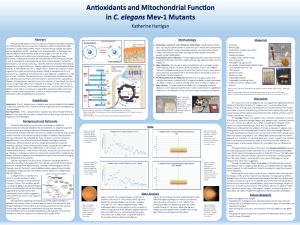
Please Click The Image To Download/See the Poster
(nDNA). These mutations disrupt cellular respiration and the production of ATP, resulting in the overproduction of damaging free radicals. Mitochondrial diseases were once thought to be rare, but links between mitochondrial defects and many diseases of aging have been discovered, making these diseases far more prevalent than previously thought. A cure is nonexistent, and treatments are often individualized or ineffective. Antioxidants, such as Coenzyme Q10, have the ability to neutralize free radicals, making them a logical choice as a dietary supplement for mitochondrial disease patients. In this experiment, the C. elegans mev-1 mutant was used as a model organism for human mitochondrial disease. MitoQ, a reengineered form of Coenzyme Q10 targeted to the mitochondria, was added as a supplement to the diet of mev-1 mutants. The groups of mev-1 mutants were observed and data was collected every 12 hours until their death to determine their approximate lifespan. Following experimentation and data collection, it was found that there was not a significant difference in between the lifespans of the control mev-1 mutants without MitoQ, and the experimental mev-1 mutants with the MitoQ added to their diet. It is necessary to repeat this experiment while collecting data in shorter time intervals than 12 hours in order to draw more accurate conclusions when completing future research. (more…)

Carbon Dioxide vs. The Ocean
By Laura Drepanos, IV Form
Carbon Dioxide vs. The Ocean: What I learned at the High School Marine Science Symposium
Are the ocean’s problems really my problems?
This was the only question going through my head as I pulled up to front circle two days before March break at 6:50 in the morning.
The short answer: yes.
When Ms. Lohwater announced at school meeting that there was an opportunity to go to the High School Marine Science Symposium (HSMSS) at Northeastern University, I immediately took it. I have always loved learning about the ocean and visiting the Wood’s Hole Oceanographic Institution since I was young. Missing a day of classes for this at the end of the academic window required an overwhelming amount of planning ahead: I had to take tests on my own time and finish all of my assignments. However, I left the HSMSS with many takeaways that made it all worth it.
My first takeaway: Sea Acidification is very real. (more…)

Something Less Depressing –– A 10-Minute Play
By Cooper Sarafin, VI Form
Something Less Depressing –– A 10-Minute Play
Editor’s Note: In the VI Form elective “Writing for Actors,” the assignment called for students to write a stageable one act play, beginning with a dramatic problem. Cooper workshopped his play several times in class, culminating in a staged reading at the end of the third window. He then took it upon himself to revise it once more before sending it out to a national forum, “Trade a Play Tuesday” , where another writer read his play and provided feedback.
SOMETHING LESS DEPRESSING
By Cooper Sarafin
Cast of Characters
James: Individual who prefers the company of himself as opposed to that of others. Doesn’t care what others think of him.
Lily: A friendly girl who likes to get to know many people.
Amy: Stereotypical popular student, superficial and self-obsessed.
Opens with a Lone Figure sitting at a lunch table in thought. In the corner is a vending machine.
Scene 1
James begins talking into a tape recorder
James:
Such a stigma around this, sitting alone. Why must it be regarded as entirely wrong? As something to be undesired? I see them all sitting together, absorbed in mindless conversation, unstimulating, quite boring in fact. Not to say I haven’t been counted part of them, for that’d be inaccurate. Such times as I have attempted to interact with them I joined only to have been left feeling more alone than I do now. It’s my opinion that sitting here alone, my mind to roam free, is much less lonely than to be trapped in your own head with nothing to say. Isn’t it rather lonely to be the only person who doesn’t seem to care? To be an irrelevant bystander, in close proximity, yet so far removed. For me, to exculpate myself is not a decision, but the only reasonable course of action. For alone by choice is far better than alone by force. (more…)


 LEO
LEO 