
Home » 2016 (Page 5)
Yearly Archives: 2016

Migraine Mania: Exploring the Link Between Disorder and Diet
By Marissa Huggins, VI Form
Migraine Mania: Exploring the Link Between Disorder and Diet
Abstract
Migraine is a debilitating neurological condition associated with symptoms including: intense pressure in the head, nausea, blurred vision, vomiting, and extreme sensitivity to light, sound, touch and smell.11 Migraine disorder, wherein an individual suffers from a migraine episode at a minimum of two times per month, affects approximately 12% of the population of the United States.1 When an individual suffers from a migraine episode, their mental and physical capabilities are inhibited, making daily tasks extraordinarily challenging, if not impossible. Migraines cause normal neurotransmission – communication between neurons – to be disrupted, and the role of the central nervous system becomes compromised. Treatment options are limited and often ineffective thus exploration of new treatment options would greatly benefit migraine sufferers. The goal of this investigation was to explore the potential relationship between migraine disorder and diet using the model organism C. elegans. The Unc-2 C. elegans genotype is known to mimic human migraine disorder; every abrupt directional change in an Unc-2 C. elegans organism is equivalent to a human migraine. C. elegans consume bacteria as their primary source of nutrition, thus two strains of C. elegans, wildtype (N2) and Unc-2, were fed one of three different bacterial strains and their behavior was observed for one minute. This procedure was repeated three times for each organism. Based on the data collected, it can be concluded that Unc-2 C. elegans grown on a diet of either Comamonas testosteroni (C. testosteroni) or Bacillus subtilis (B. subtilis) experienced a decrease in migraine frequency as compared to those grown on Escherichia coli (E. coli). (more…)

A Whole Universe Is Out There with Bigger Stuff To Deal With Than My Broken Phone
By Natalie Novak, VI Form
A Whole Universe Is Out There with Bigger Stuff To Deal With Than My Broken Phone
Editors’ Note: This is Natalie’s chapel speech, spoken to the community on 29 January 2016.
Sarah: A reading from Life of Pi by Yann Martel
“I saw my suffering for what it was, finite and insignificant, and I was still. My suffering did not fit anywhere, I realized. And I could accept this. It was all right. It was daylight that brought my protest: No! No! No! My suffering does matter. I want to live! I can’t help but mix my life with that of the universe. Life is a peephole, a single tiny entry onto a vastness – how can I not dwell on this brief, cramped view I have of things? This peephole is all I’ve got!”
Kat: A reading from The Hitchhiker’s Guide to Galaxy by Douglas Adams
“In the beginning, the Universe was created. This has made a lot of people very angry and has been widely regarded as a bad move.”
Good morning.
For those of you who don’t know me, I’m Natalie Novak. Also known as Natalie Novak. And if this still isn’t ringing any bells, I’m also the girl who threw up in chapel her freshman year. For all you freshmen that are afraid you’re gonna embarrass yourselves, I’m here to tell you that people forget about those things fairly quickly. Until they remember a year or so down the road, and then they never forget. So, my advice to you is, if you need to make a quick escape go out that door because this one is harder to open. (more…)

Best Cities to Work and Live
By Nathan Cunningham, Ryan Ferland, and Freddy Masri, VI Form
Best Cities to Work and Live
Summary
We were tasked with creating a ranking function on a subject of our choice. We decided that our equation would rank US cities and would output an index indicating the best cities to work and live in. Our ranking is only intended for cities within the United States and does not include surrounding suburbs. The equation takes into account annual salary, annual cost of living, unemployment rate, and poverty rate giving an index anywhere from 0 up to several hundred. The higher the index, the better the city. (more…)

Tuskegee Syphilis Study
By Hans Zhou, VI Form
Tuskegee Syphilis Study
The Tuskegee Syphilis Study symbolizes the oppression towards African Americans in the medical field. This inhumane study conducted by the U.S. Public Health Services (USPHS) lasted for 40 years until an Associated Press story revealed it.

Defining Chaos
By Sean Kim, VI Form
Defining Chaos
Editors’ Note: As a part of a college dorm application, Sean wrote this essay with Mr. Lubick (English faculty). Sean attempted to answer what chaos might be after several sessions of intense discussion and joint writing/editing together with Mr. Lubick. {The prompt for the application appears after the essay.}
It’s interesting to consider whether chaos can be constructive or deleterious, however, the definition of chaos in the article is insufficient. The problem with defining “chaos” is that the very word represents what we don’t really understand. What appears to us as chaotic may in fact have pattern or cause or order beyond what we understand. Chaos is in the perception of the beholder. In terms of ideas, chaos is intellectual terra incognita. In other words, any positive or negative value that we impose upon the idea of chaos originates from our limited scope of understanding of the universe. (more…)

Smozaturn D3 — A Home in Alpha Centauri
By Mo Liu, IV Form
Smozaturn D3 — A Home in Alpha Centauri
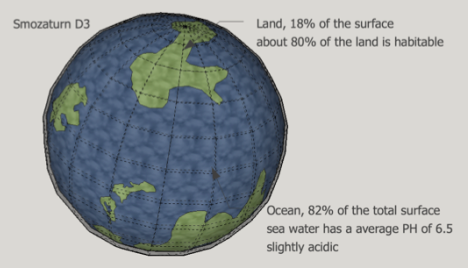 In this Advanced Physics independent study unit, I decided to create a planet that is hypothetically habitable by humans in the nearest star system from our very own Solar System — Alpha Centauri. More specifically, the planet, which I have given the name Smozaturn D3, is rotating in set orbit around Proxima Centauri, the dimmest star among all three stars in the Alpha Centauri system, approximately 4.22 light years away. There are many factors that determine the habitability of a planet, including: the chemicals present on the planet, the construction of its atmosphere, and most importantly its distance from the star. Due to this complexity, there are theories like the Rare Earth Hypothesis that argues that complicated and biological life is a very improbable phenomenon and is likely to be extremely rare. However, there is an alternative view known as the principle of mediocrity that argues that the universe is friendly to complex life, since Earth is a tropical rocky planet in a common planetary system. (more…)

The Early Twentieth Century Irish Boy: A Paradox in Joyce’s “Araby”
By Isabelle Titcomb, IV Form
The Early Twentieth Century Irish Boy: A Paradox in Joyce’s “Araby”
Upon being asked “who is the greatest in the kingdom of heaven?” Jesus replied, “truly I tell you, unless you change and become like little children, you will never enter the kingdom of heaven” (Matthew 18:1-3). Therefore, when a devout child becomes a young adult, he may find that he is no longer welcomed into the kingdom. Such a realization brings confusion and agonizing repression. “Araby” by James Joyce draws upon this notion through the telling of the coming-of-age story of a sheltered Irish Catholic schoolboy harrowed by newfound desire. (more…)

Engaging in 20% Time for Lifelong Learning
By Casey Pickett, English Faculty
Engaging in 20% Time for Lifelong Learning
From the time I was in kindergarten, I knew that I wanted to be a teacher. As a child, I spent 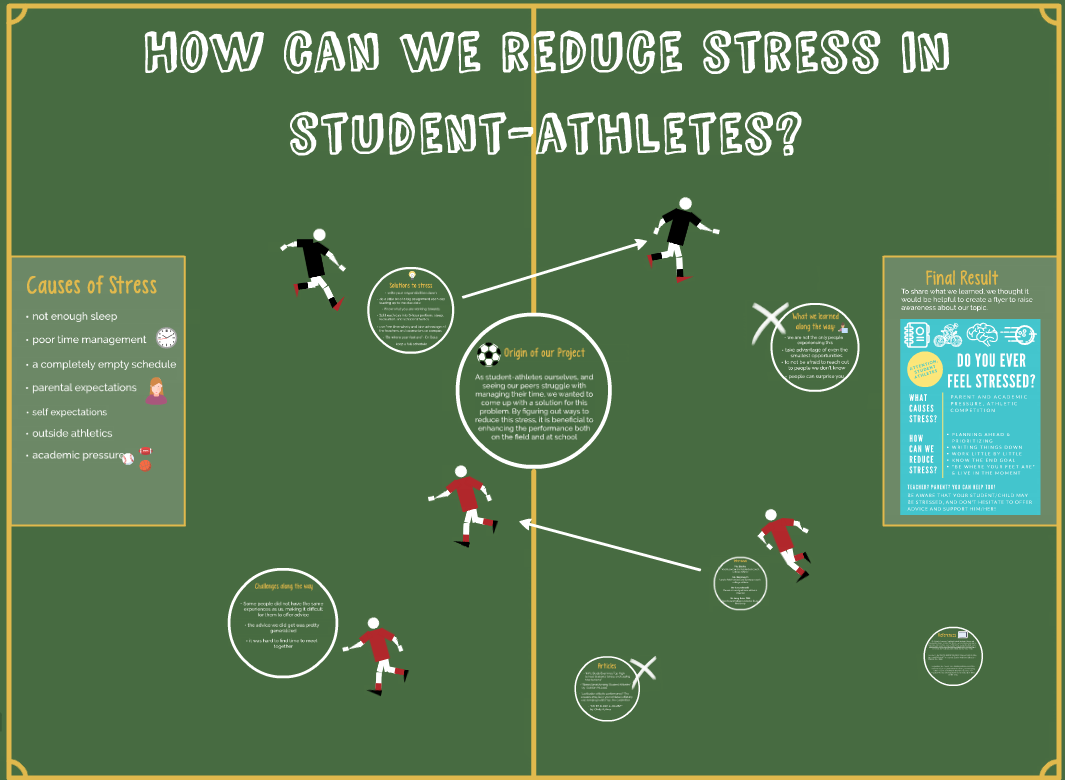 countless hours in my basement forcing my four siblings to be my students while I taught them whatever lessons my teachers had taught me earlier in the day. So, as I entered my Masters in the Arts of Teaching (MAT) program at Northeastern in the Fall of 2013, I couldn’t have been more excited to FINALLY learn my craft. I showed up to my first class ready to write down the formula for becoming a good teacher. I was expecting my professor to tell me EXACTLY what I needed to do in order to teach my students everything there was to know about reading, writing, and analyzing literature. Throughout my 18 months in the MAT program, I never did get that formula. What I did get, however, was a constant reminder that my job as a teacher was to prepare my students to become lifelong learners. So, with lifelong learning in mind, I decided to have my students engage in a 20% Time project (based off of Google’s 20% Time policy). (more…)


 LEO
LEO 