
Home » 2014 (Page 2)
Yearly Archives: 2014

Fighting To Get My Life Back
By Brendan Dawson, VI Form
Cancer tried to defeat me, but I fought back. In the summer of 2011 I became thyroid cancer’s latest victim at the young age of 14. I experienced a wide variety of emotions throughout the next year. An enthusiastic, confident, active eighth grader vanished, and a mortified, timid ninth grader emerged. My uncertain future was now in the hands of the various doctors at Children’s Hospital in Boston. Life as I once knew it had abruptly ended, and I fought the challenge of a lifetime to win it back. (more…)
Sharing the Faith: Religion and Science
By Julie Geng, VI Form
 For many, science and religion are mutually exclusive since science — reliant on the scientific method — can find no proof for Deity. Others think that these two forces coexist without influencing each other. As both a passionate young chemist and a faithful Christian, I have reconciled for myself the purported dichotomy between scientific endeavor and religious awe through understanding their shared element of faith. (more…)

Michael’s Past, Building My Future
By Brittany Andrea, VI Form
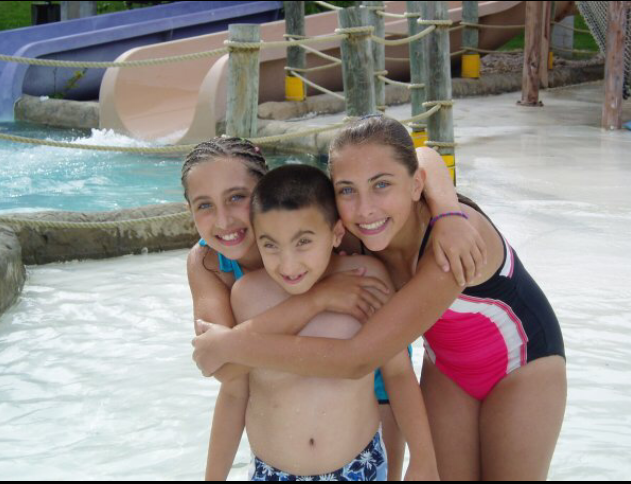 I found myself sitting in yet another doctor’s office, surrounded by white walls. Illuminating the bleak room was a large window and a fluorescent light in the ceiling. My brother’s doctor spoke in a monotonous, fluid voice. Listening to the concepts he described were confusing, amazing, and yet captivating. It was in this moment that I was struck with a passion.
My brother Michael has seen the inside of medical offices all of his life. I typically went with him, my sister, and my mom. He was always different from other kids his age; he learned sign language because he wouldn’t talk until he was four. (more…)
A Math Enthusiast
By Ryan Lee, VI Form
This past summer, I made a set of business cards in preparation for the International Congress of Mathematicians convention, where I hoped to meet world-renowned mathematicians. My card reads “Seung Jae “Ryan” Lee, Math Enthusiast.” The night before the opening ceremony, I couldn’t sleep. I was too excited about the prospect of sitting in actual lectures given by the scholars whom I had only read about and to witness this year’s Fields Medal Award Ceremony in person. I am not exaggerating when I claim to be a math enthusiast. I call myself a math enthusiast (though my friends find my choice of words rather amusing) because no other title better encapsulates my passion for mathematics. I was not always like this (more…)

Intersecting Struggles
By Brittany Bing, VI Form
Feminism: a word so heavy it often feels like an elephant in the room when mentioned amongst a group of people.
Feminism pisses people off. Feminists are supposed to be man haters and bra-burning idealists who think that women are superior to men. As ridiculous as the stereotype sounds, the true modern feminist doesn’t believe that women are inherently better than men. Unlike misogyny, feminism simply refers to one’s belief in the equality of the sexes. Of course, feminist ideals are exponentially more complex than just wanting equality. Over the summer, I explored these concepts in depth at the Independent School Gender Project held at the Hotchkiss School.
As a veteran conference attendee, I knew what to expect. ISGP is a small, all-women’s conference (more…)

Want to Be More Creative? Get Immersed in Nature!
By Hans Zhou, V Form
Today’s children only spend around 20 minutes outside per day. The number of visits in both national parks and nature-based recreation has steadily declined since the 1980s. Social media and technology are taking away opportunities to go out and explore nature. The modernized life we are living now is much better than the one our ancestors had in terms of medical care and living standards, but are we missing out on the benefits and beauty nature might hold for us? A study by Strayer and University of Kansas psychologists Ruth Ann Atchley and Paul Atchley has shown that immersion in natural settings could improve creativity. The study involved 56 people: 30 men and 26 women at an average age of 28. These subjects were divided into eight different groups to participate in hiking trips without any technology from four to six days (more…)

Modeling H1N1’s Impact on the United States’ Population
By Lucy Cao, IV Form
 The infectious disease, H1N1, that I have modeled, includes six compartments: susceptible 1 (S1), susceptible 2 (S2), pre-infectious, infectious (I), diagnosed and recovered (R).
Susceptible 1 and susceptible 2 refer to the two groups in the susceptible population: S1 is children and the elderly, while S2 is the rest of the population. Children and the elderly are excluded from the total population and placed in a separate compartment because they are more vulnerable to the H1N1 virus and have a greater chance of getting infected. Thus, the rate from S1 to infectious is bigger than the rate from S2 to infectious. I calculated my rates from the susceptible compartments to the infectious compartment with the formula β*S*I/N, in which β is the rate of transmission, S is the population of susceptible, I is the population of infectious and N is the total (more…)

“It’s Complicated”: Relationships in “Interpreter of Maladies”
By Marcus Permatteo, IV Form
In the short story “Interpreter of Maladies” by Jhumpa Lahiri, both Mrs. Das and Mr. Kapasi have complicated relationships with their families. Each has a spouse and several children, yet show unfaithful qualities toward their families. Due to these unfaithful traits, their love for their families is questionable. As the characters reveal their feelings in the story, however, it is clear that Mr. Kapasi loves his family more than Mrs. Das because he makes continuous attempts to save his marriage, he is faithful to his wife, and he continues to love his children. Mrs. Das does none of these things. Mr. Kapasi tried to save his relationship with his wife, while Mrs. Das did not. Neither Mr. Kapasi nor Mrs. Das have loving relationships with their spouses. However, it is clear that Mr. Kapasi tried for a long time to make things work (more…)


 LEO
LEO 