
Home » 2014 (Page 11)
Yearly Archives: 2014
AP Bio: Three TED Talk Reviews
TED Talk-Allan Savory:
How to Fight Desertification and Reverse Climate Change
Reviewed By Torie Shakespeare
Why You Should Study or Take Anthropology!
By Dr. Laura Appell-Warren, Director of Global Citizenship
Ever since I graduated from college I have been faced with the challenge of explaining what it is that I do. When I tell people that my field is anthropology, they almost always say something like this: “Wow, that is cool, what do you dig up?” or (and this is even worse) “Oh, just like Margaret Mead.” Now, I am NOT an archeologist so I never dig anything up (well maybe some worms in my new garden in Maine). And, while Margaret Mead may be a well-known female anthropologist, she is very controversial within the field and I would rather not be associated with her. Sometimes when I have energy I say that I am a psychological (more…)
Collaboration Ties Us Together With Haiti
By Liz McColloch, French Faculty
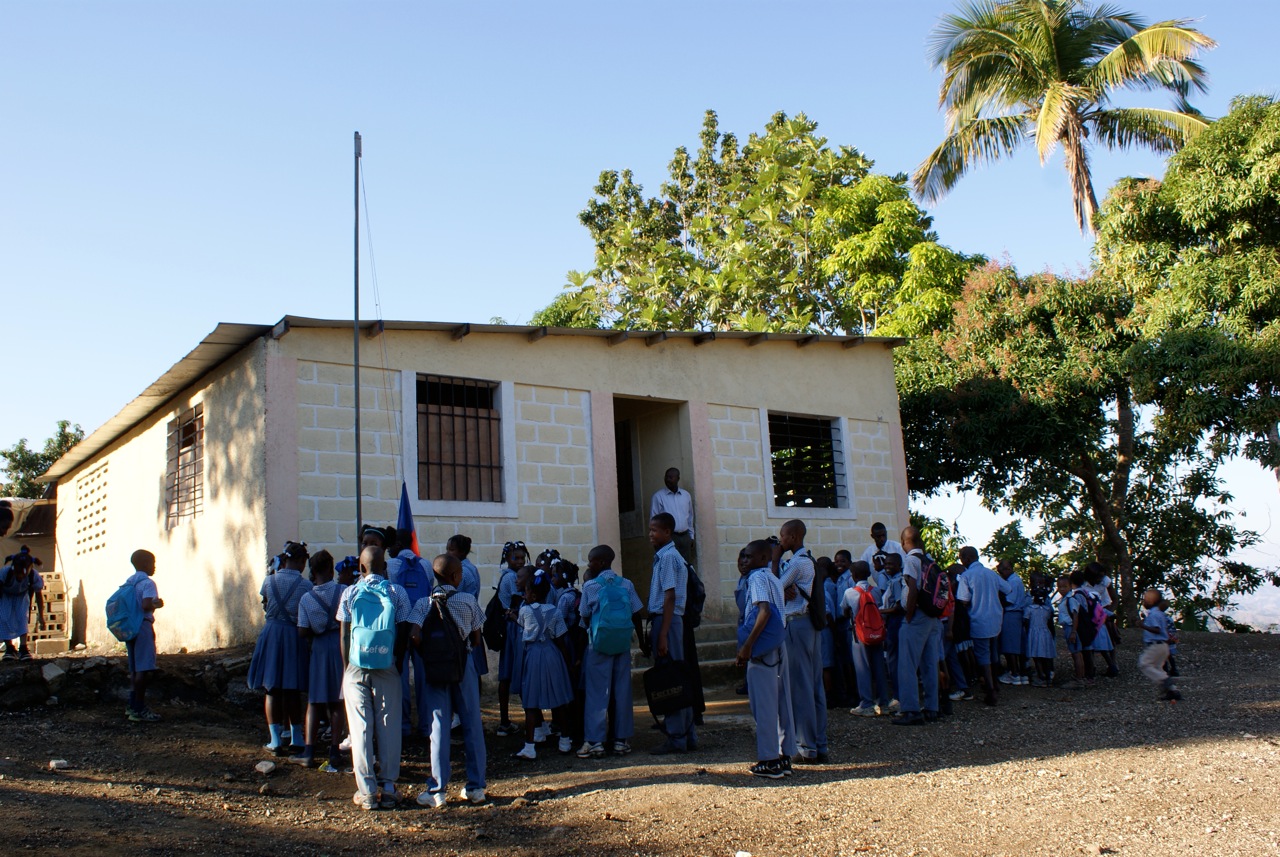 Our partnership with a Haitian school may seem, on the surface, to be about little more than the generosity of a well-to-do New England boarding school and the needs of a small school in a rural community of a disadvantaged nation. This assessment may be true at first glance, but the partnership and the work of the Haiti Partnership Committee (HPC) are about much more than philanthropy or even cultural awareness. For me, the HPC represents a future model of learning, one that will become increasingly relevant as we at St. Mark’s support students who seek to contribute to a globalized world. The students involved with the (more…)
The Scholar, The Doughnut, and The Pear Tree
By Allegra Forbes, IV Form
What do bedroom slippers and doughnuts have in common? Very, very little, unless you are in Italy, where they have a distinct, and often troubling, phonetic resemblance. Indeed, the difference between ciabatta (slipper) and ciambella (doughnut) can be hard to catch when uttered in the typically rapid discourse of Italians. How embarrassing would it be to accidentally ask for a doughnut in a shoe shop and be confused by the salesperson’s amused look? These are not the situations that years of language classes can, or even would think to, prepare you for. In fact, a few years after my family moved to Florence, my (more…)
Stereotypes Are All Bad, and They Always Have Been
By Daniel Kimmick, VI Form
Geoffrey Chaucer wrote The Canterbury Tales in part as a commentary on the Middle Ages and a satire to expose the behavior of society in that period. The way that he made this commentary, because of its blunt attitudes, evinces a lot about the culture of the period. In this way, Chaucer’s work can be easily examined through the lens of modern thought and culture. Chaucer has a number of interesting comparisons which he is able to emphasize easily due to the inclusion of multiple stories and the social dynamic he was able to insert using his general prologue, story prologues, and interjections[i]. One of (more…)
Gone Fishin’…It’s Not What You Think
By Melissa Kok, VI Form
The stadium rumbles with the cheers of FIRST teams, mentors, and parents. If you were thinking stereotypically, you would not expect to find this much excitement at a competition “For Inspiration and Recognition of Science and Technology” (FIRST), but the energy in the stadium is palpable. “Coming all the way from Southborough, Massachusetts, it’s Goooone Fishin’!” the announcer in the cowboy hat bellows over the rising tide of cheers. My teammates and I jump up and add our voices to the chorus of yells reaching the top of America’s Center Convention Complex in St. Louis. Sitting down reluctantly, we (more…)
A Portrait of This Artist’s Memories
By Annie Pease, VI Form
 Over the summer, I was rummaging through some of my old things and opened a box in the attic to find what was left of my old ballet costumes. Sadly, the box had become more of a storage space for mice than a storage space for my precious childhood memories. I began to sort through the remaining bits of tulle and embellished leotards. Aside from one only slightly damaged dress, the jeweled scraps of the five or six others were the only pieces still in tact. I realized that the tattered dresses were a physical representation of the memories I have of that time in my life: the shining moments were still in place, but everything around them was gone. By this time in the (more…)
Global Competence in the Classroom: Reflections on a Week at the Salzburg Global Seminar
By Nat Waters, Associate Dean of Academics
One of the great challenges of living in this intentionally small boarding community is the mythical “St.  Mark’s Bubble”– an all-consuming sense of “dailyness” that insulates residents from the wider world. Most often, I hear folks cite the bubble when explaining away their own limited grasp of world events or geopolitical trends (and occasionally, the latest plot twists from Breaking Bad or Downton Abbey). Modern learning communities like St. Mark’s are wired for connection to issues of global consequence. As St. Mark’s works to become an even more globally-minded community, we’ll (more…)


 LEO
LEO 