
Home » Posts tagged 'STEM' (Page 15)
Tag Archives: STEM
Collaboration Ties Us Together With Haiti
By Liz McColloch, French Faculty
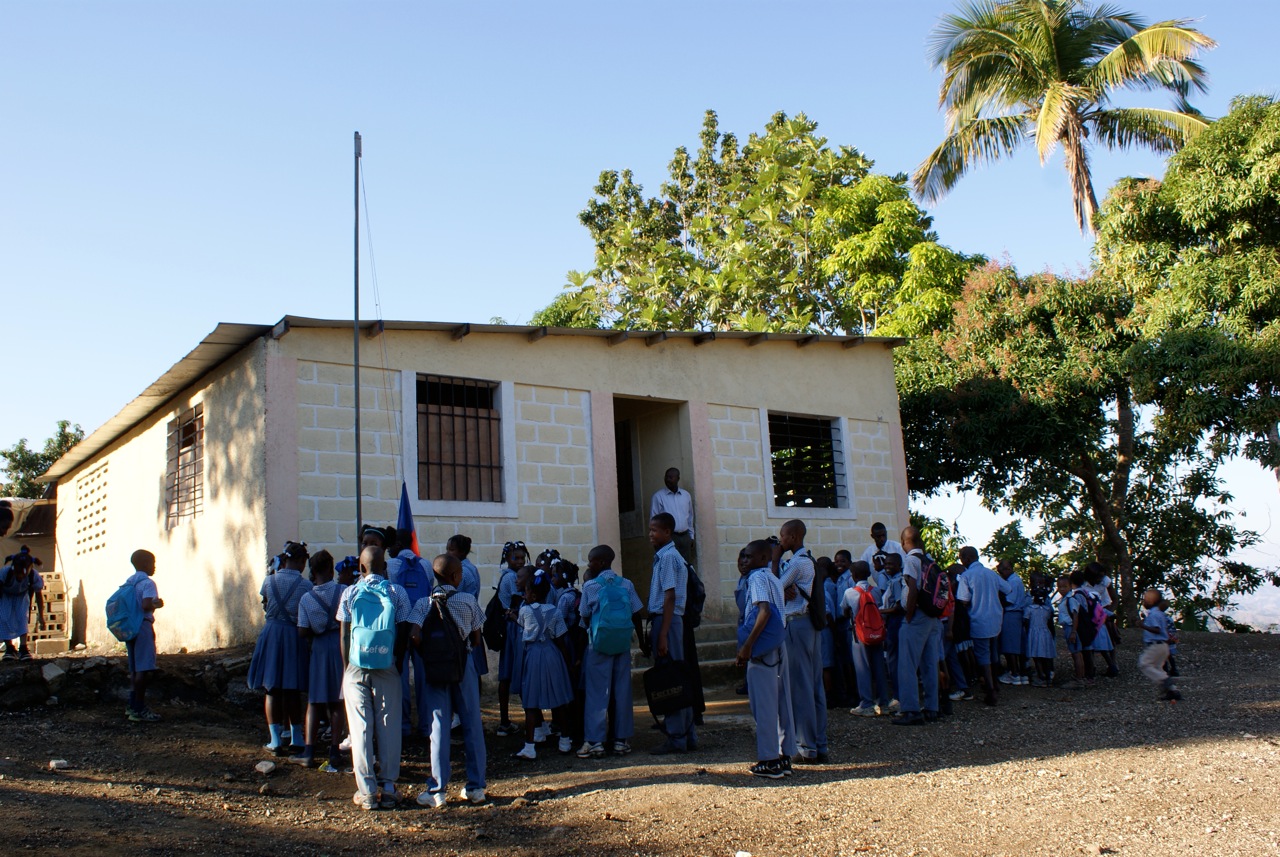 Our partnership with a Haitian school may seem, on the surface, to be about little more than the generosity of a well-to-do New England boarding school and the needs of a small school in a rural community of a disadvantaged nation. This assessment may be true at first glance, but the partnership and the work of the Haiti Partnership Committee (HPC) are about much more than philanthropy or even cultural awareness. For me, the HPC represents a future model of learning, one that will become increasingly relevant as we at St. Mark’s support students who seek to contribute to a globalized world. The students involved with the (more…)
Gone Fishin’…It’s Not What You Think
By Melissa Kok, VI Form
The stadium rumbles with the cheers of FIRST teams, mentors, and parents. If you were thinking stereotypically, you would not expect to find this much excitement at a competition “For Inspiration and Recognition of Science and Technology” (FIRST), but the energy in the stadium is palpable. “Coming all the way from Southborough, Massachusetts, it’s Goooone Fishin’!” the announcer in the cowboy hat bellows over the rising tide of cheers. My teammates and I jump up and add our voices to the chorus of yells reaching the top of America’s Center Convention Complex in St. Louis. Sitting down reluctantly, we (more…)
The Role of STEM in a Liberal Arts Education
By Michael Wirtz, Assistant Head of School and Dean of Faculty
“In my perspective … science and computer science is a liberal art, it’s something everyone should know how to use, at least, and harness in their life. It’s not something that should be relegated to 5 percent of the population over in the corner. It’s something that everybody should be exposed to and everyone should have mastery of to some extent, and that’s how we viewed computation and these computation devices.” – Steve Jobs, from a 1996 interview with NPR’s Terry Gross
At St. Mark’s, a school with a proud and strong liberal arts tradition, there has been a fair share of head scratching and hand wringing about the role of the school’s STEM (science, technology, engineering, and mathematics) education initiative in our future. During the early evolution of this (more…)
A New, Future Cure: RNAi
by Lizzy MacDougall, VI Form
St. Mark’s is in its second year of running the STEM fellowship, a class that allows eleven students the ability to pursue a research project in an area that interests them. The projects range from irrigation systems to plant growth hormones to biological studies. This last area of study is what I am researching for the year. My classmate, Hughie Auchincloss, and I are spending the year experimenting on the possibilities of using RNA interference as a cure to many kinds of diseases, such as cancer, in people who are nutrient deficient. Hopefully, our work will be the first step in helping our sister school in Haiti, St. Marguerite’s, have access to effective and affordable medicine. (more…)
Double Inverted Pendulum in 2D and 3D Space
by Ryan Lee, V Form
 This summer, I went to Mathematica Summer Camp. Mathematica is computer software made by Wolfram Research. This tool is commonly used by mathematicians and scientists. In the camp, each student completes a project through Mathematica.
During the first week, we met our mentors and chose what we would create during the camp. At that time, I was particularly interested in Chaos Theory, a field of study in mathematics that focuses on “chaotic” behaviors that are sensitive to initial conditions, one example of which is the butterfly effect. When I was learning about Chaos Theory, the double inverted pendulum and Swinging Atwood’s Machine interested me. There were a few videos on the internet recording this type of (more…)
Simply Not Sustainable: On Meat Eating
by Hayden McCall, VI Form
For thousands of years, humans have been meat-eaters. Originally, animals were hunted and the livestock and poultry “farms” that we have today did not exist. Before the meat and processed food industries came to be and before supermarkets existed, people did not have much of a choice about what they ate. Therefore, there was an economical advantage to eating meat, as it was almost always available and though people had to hunt, they did not have to trade in valuable crops or currency to acquire meat. Socially, there is no question that eating meat was sustainable; people (more…)
The “Toy” World of St. Mark’s: Tilt-Shifting Effect
by The New Media Class of Mr. Christopher Roche, Computer Science and Physics Faculty
The New Media class (a computer science elective) at St. Mark’s explores digital design and desktop publishing 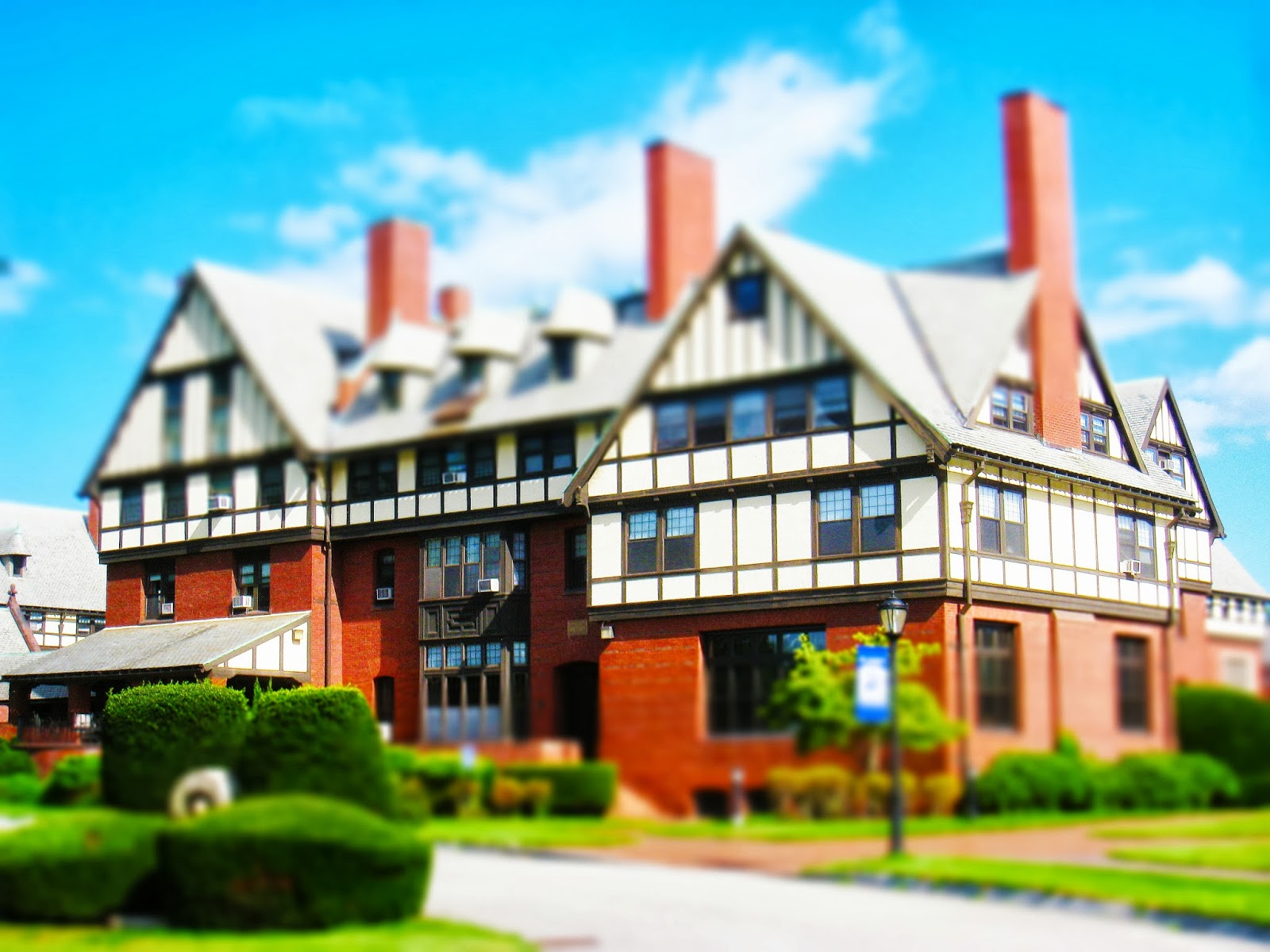 ideas, using 2D and 3D tools like Photoshop, Illustrator, and CAD software. The class seeks to show students the myriad possibilities of design in the digital world. Gabriel Xu, III Form, came to the second class this fall with an amazing image he found that showed the “tilt-shifting” effect (it was his response to a “favorite photo” assignment). When we saw the image, we were so excited to investigate tilt-shifting so we could learn how it works and practice it ourselves. (more…)
Math and Physics as Play
by Jacob Backon, Mathematics and Science Faculty
When I tell people that I teach physics and geometry they usually respond with a grimace or a sound usually reserved for the taste of something rotten. This is almost always followed up with some sort of admission of defeat at the hands of either or both of these subjects. Occasionally, someone will tell me they loved geometry but hated algebra as if the two were competing vacation locales. In many ways, this is like admitting that you love words but hate reading. It seems to me that many people’s opinions of math and physics are negative. (more…)


 LEO
LEO 