
Home » Posts tagged 'Literature' (Page 8)
Tag Archives: Literature

One Student, Two Artifacts of Education
EDITOR’S NOTE: Students do not “specialize.” Students take five or six courses simultaneously and are expected to perform at a high level across the curriculum. This LEO post includes two artifacts of work–one from a Latin III Honors course and one from an American Literature course–by Becca Shea, a V Former. This is simply a microcosm that evinces the impressive ability of a student to multi-task academically, which happens in educational realms every day.
By Becca Shea, V Form
Epicurean Somnium Scipionis (Latin III)
The aristocrat class of Rome divided into two philosophical factions known as Stoicism and Epicureanism. Somnium Scipionis is a story based off of the ideals of Stoics, thus if written from the perspective of an Epicurean, many details would be altered. Unlike Stoics, Epicureans did not believe in a heaven after life. Somnium Scipionis is a story of a man visiting his grandfather in heaven in a dream, so the start of the story must be altered slightly. Also dissimilar to Stoic beliefs, Epicureans did not believe the soul lived on: the soul, which was made up of composite atoms, died with the body. However, they did not fear death itself either. (more…)

Faith in the Leap–Religion and Life of Pi
By William D’Angelo, VI Form
Faith in the Leap–Religion and Life of Pi
The “Leap of Faith” scares many, as it has for eons. Everyone fears the fall, the drop into the unknown. Some enjoy the rush of the unknown. The unknown has infinite possibilities, something which is hard to find in a finite life. Faith requires this fear and this rush. Those are the doubts of the leap. Faith is belief in idea regardless of one’s doubt. If there is no doubt, it is not faith–it is fact. The excitement and fear of doubt are the obverse and reverse of the same coin. They sustain each other, building off of one another. As excitement wanes, fears build. As fear ebbs, excitement crashes over one like a tsunami. In Life of Pi, Yann Martel demonstrates on various levels that faith as well as doubt are what keeps Pi alive during his
ordeal. It is not just Pi that is aided by his faith and doubt, but everyone in the world as well. (more…)

A Failed Yankee Revolutionary
By Jackson Foley, V Form
A Failed Yankee Revolutionary
A revolutionary is someone who, in the name of revolution, sparks or is the center of a revolution that changes a whole society in a new and unique way. Hank Morgan, in Twain’s A Connecticut Yankee in King Arthur’s Court, tries to stage a coup and win a revolt, but is not a revolutionary. Hank is not successful in the end. His revolt does not gain major public traction. He is just forcing new inventions and ideals on an uninterested medieval society. Also, Hank’s violent acts on the medieval English people are far beyond and unrelated to the name of revolution. This does not describe a revolution. (more…)
What The Wedding of Zein Teaches Us About Islam
By Blaire (Ninglin) Zhang, V Form
What The Wedding of Zein Teaches Us About Islam
While The Wedding of Zein by Tayeb Salih portrays the day-to-day life of various seemingly unconnected groups of people in a Sudanese village, it poses important questions about the religion of Islam. In describing events leading up to Zein’s wedding and reactions of the villagers, Salih reveals contrasting interpretations of Islamic faith. One comes to see that under the façade of Zein’s wedding and the author’s use of comic elements exist tensions between those who follow the Sufi tradition and those who prefer the more orthodox, non-Sufi way to Islam. Haneen and The Imam represent individuals who exemplify these two opposing views. (more…)

“It’s Complicated”: Relationships in “Interpreter of Maladies”
By Marcus Permatteo, IV Form
In the short story “Interpreter of Maladies” by Jhumpa Lahiri, both Mrs. Das and Mr. Kapasi have complicated relationships with their families. Each has a spouse and several children, yet show unfaithful qualities toward their families. Due to these unfaithful traits, their love for their families is questionable. As the characters reveal their feelings in the story, however, it is clear that Mr. Kapasi loves his family more than Mrs. Das because he makes continuous attempts to save his marriage, he is faithful to his wife, and he continues to love his children. Mrs. Das does none of these things. Mr. Kapasi tried to save his relationship with his wife, while Mrs. Das did not. Neither Mr. Kapasi nor Mrs. Das have loving relationships with their spouses. However, it is clear that Mr. Kapasi tried for a long time to make things work (more…)

The Top Of My Head Was Taken Off: At The Dodge Poetry Festival
By Sarah McCann, English Faculty
Poet Ezra Pound called poetry “news that stays news.” I subscribe to that. William Carlos Williams admonished:
It is difficult
to get the news from poems
but men and women die every day
for lack
of what is found there.
And Emily Dickinson, one of my favorites, wrote, “If I feel as if the top of my head were taken off, I know that is poetry.” (more…)

Three Weeks in English Teacher Heaven — Shakespeare’s Globe Theatre
By Jeniene Matthews, English Faculty
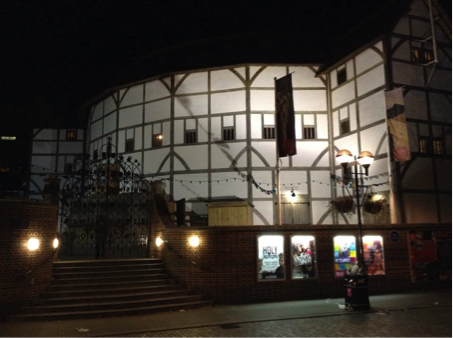 What happens when you bring together 25 passionate, talented, and eager teachers of English and Drama? What happens when that diverse group of people works nonstop in and around The Globe Theatre — one of the most significant performance spaces on the planet? You get magic.
The magic comes from the building itself. Conceived, built, rebuilt, and rebuilt again, the Globe Theatre was the vessel that brought Shakespeare’s genius to the people. Learning its history — and living it and becoming a small part of it — has a way of changing us.

Making a Difference: The Story of Rebecca Skloot and The Immortal Life of Henrietta Lacks
By John Warren, Head of School
Convocation Speech: 5 September 2014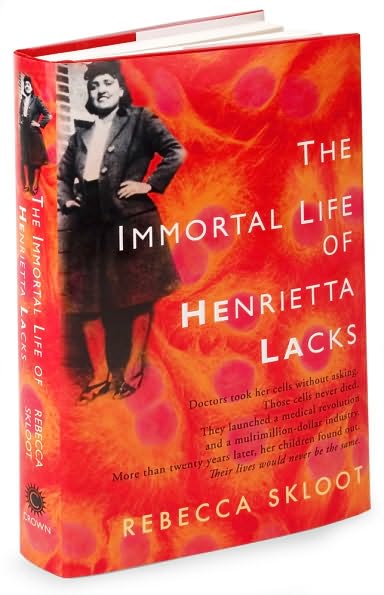
Stories about people who make a difference—who lead lives of consequence—fascinate and inspire me. I hope the same is true for you. These stories provide examples of special qualities that we can learn from and try to employ ourselves. Role models, people we know who live their lives admirably and people we learn about, provide an important standard for us to aspire to and make us think harder about how we can be our best selves. I encourage you to be constantly on the lookout for such people and to take the time to reflect upon what makes them special and how their lives can relate to yours.
An individual who fascinates and inspires me is Rebecca Skloot, a science journalist who wrote the book The Immortal Life of Henrietta Lacks. As you will see, Skloot’s story seems especially relevant as we start our academic year. (more…)


 LEO
LEO 