
Home » Posts tagged 'Literature' (Page 6)
Tag Archives: Literature

A Novel of Reaction: Larsen’s Passing
By Charlotte Wood, V Form
A Novel of Reaction: Larsen’t Passing
W.E.B. Dubois wrote that “all Art is propaganda and ever must be…” He thought that artists and writers should try to make the world a better place through their work. Nella Larsen, the author of Passing, would not agree. Her novel centers on two light-skinned black women, Clare Kendry and Irene Redfield, and their respective decisions to pass as white or not. I believe she wrote this novel not to persuade the reader of something or to convince them to enact change, but rather to reflect the world how she sees it. The book is a reaction to society, not something for society to react to. Passing itself is portrayed as something that simply is, not wholly good or wholly bad. Both characters participate in it, and so the reader is not meant to side with one over the other. The relative passivity of its message is reflected in the passivity of its main character, Irene. Because she is not active, the intention of the novel is not active. Lastly, the ambiguity of the ending leaves the reader, like Irene, with more questions than answers. (more…)

Make Peace With the Day to Enjoy the Evening: Remains of the Day
By Gabriel Xu, V Form
Make Peace With the Day to Enjoy the Evening: Remains of the Day
There’s an old Chinese idiom that roughly translates to, “The person on the spot is baffled, the onlooker sees clearly”. Surely, this applies to the case of Mr. Stevens. As the aged butler in Remains of the Day travels farther away from the house he has been in service of for decades, he starts to see the truth of his former employer more clearly — a truth so dark and ugly that Stevens has tried very hard to escape. Although Mr. Stevens is forced to learn the tragic truth about his former lord and consequently his own small, yet undeniable contribution as butler to the evildoing his master was conducting, the meeting with Ms. Kenton, a former housekeeper, allows him to see value in his decades of service, to make peace with his past, and eventually to move forward into a hopeful future. (more…)

Racial Colorblindness: The Solution to a Delusional Society?
By Sophie Haugen, IV Form
Racial Colorblindness: The Solution to a Delusional Society?
Lois Lowry’s dystopian community of sameness in The Giver appears to be perfect, but this is not true. This world of sameness represses individuality, creating a meaningless world without love. Imagine our world – progressive and controversial – without difference. Upon first glance it seems ideal; no conflict about humanity’s differences or room for judgement. But, would there be any culture or diversity at all? Lowry’s creation of a colorblind society warns our own that while we should strive for equality, “colorblindness” isn’t the answer. Racial colorblindness has been part of discussions around affirmative action in college admissions and the Constitution. Colorblindness is exactly what it sounds like: blindness to skin color, race, and any variety these bring. As an ideal, it’s well-intentioned, but in reality it is a way to pretend race doesn’t exist and to ignore racism as social problem, as well as devalue the importance of culture and difference. (more…)

The Great Gatsby: Chapter 10
By Eric Zhang, V Form
The Great Gatsby: Chapter 10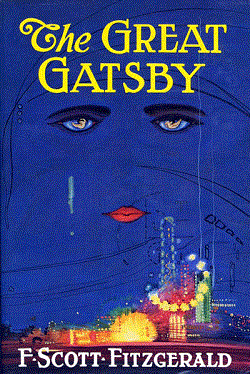
(Editors’ Note: In Ms. Matthews’ American Literature class, this assignment prompted students to create a 10th chapter of Fitzgerald’s The Great Gatsby, utilizing Nick Caraway’s melancholic tone and including some type of closure for the characters)
It had been five years since the funeral, and I finally returned to this city that I once thought was haunted. Everything was so depressing. There were no sounds of the orchestra playing or shimmering sights of the girls wearing fancy dresses with decorations on their shoes. The city of New York had changed since that October in 1929, what was later called Black October. I wandered the streets of New York, and ultimately, I was pulled back to the Eggs and Gatsby’s mansion. What was once a (more…)

American Exceptionalism and The Hunt for Red October
By Conor Brockway, VI Form
American Exceptionalism and The Hunt for Red October
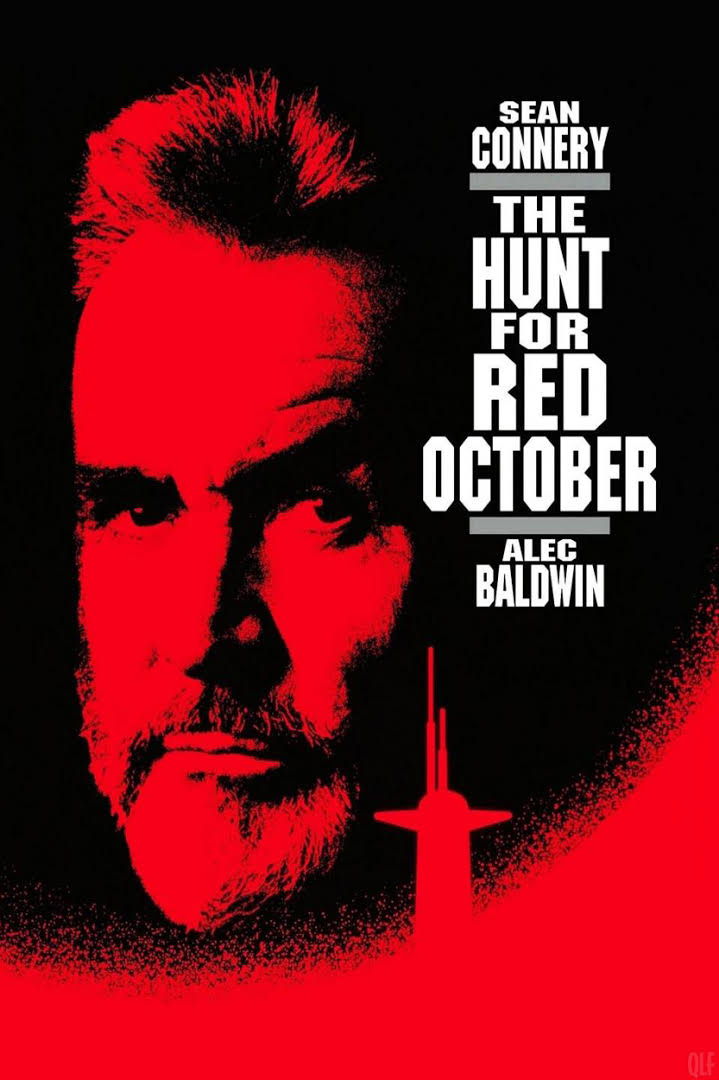 The Cold War was a time period when America and Russia were threatening to attack each other, as both countries wanted to become the most powerful nation in the world. Tensions were heightened within America during the latter part of the Cold War, specifically during the early to mid 1980’s. American Exceptionalism became prevalent in the world, as the Americans were seen as having freedom and power within their country[1]. Also, the concept that Communism was a “virus” and could “infect” Americans and that Communists were a threat to national security within the U.S, as Communists were primitive, sneaky, subversive, and dangerous still lingered in the thoughts of Americans[2]. After World War II (WWII), the U.S. had the blueprint to build an
atomic weapon, which was a powerful weapon no other nation had. The U.S. also started building (more…)

Seamus Heaney: The Pen and The Spade
By Logan King, IV Form
Seamus Heaney: The Pen and The Spade
“The Forge” by Seamus Heaney expands upon the theme of strength that he first established in his poem, “Digging.” However, instead of exploring the similarities between using a pen and a spade like in the latter, in “The Forge”, Heaney examines the craftsmanship and beauty a blacksmith uses despite the force required to do his job. The bluntness of the short words used contrast with their meaning to create the image of a tough, rhythmic job that creates art. He does this similarly in “Digging,” where his word choice creates a non stereotypical image of farmwork, all underscored with the rhythmic act of digging. Linking both poems is not only the sense of wonder and appreciation the author holds for the two jobs, but also regret, because he can only recognize instead of participate in the art of their work. (more…)

Reviving Ophelia’s Song
By Sam Sarafin, V Form
Reviving Ophelia’s Song
What happens to a life so battered and bruised under the gift wrap of perfection? What happens to a life
 whose opportunities have been seized by another, whose ideals and self-importance are plucked out of fingertips before they even left a print? In the play Hamlet by William Shakespeare, Ophelia is often depicted as well-composed and sophisticated. When Ophelia sings a song before her death, she can attribute the meaning of the lyrics to one feeling or event – most often, this meaning is madness or grief. While Ophelia sang this song to convey her distress, there are many hidden meanings in the lyrics. Ophelia’s song is not an expression of one event or one feeling – it is the verbalization of grief over Polonius and Hamlet and a scrutiny of Gertrude’s portrayal of love. In it, Ophelia laments about patriarchal society and the way she had been controlled and used. (more…)

Advice to a “Girl”–What I Wish I Knew
By Mary Hoffman, IV Form
Advice to a “Girl”–What I Wish I Knew
(Based on Jamaica Kincaid’s short story)
Always be aware of your surroundings; never ignore your gut feeling; when you don’t feel comfortable in a situation- leave; the police are always there to help; nothing good happens after midnight; learn from your mistakes; you deserve what you tolerate; treat people how you want to be treated; make your bed every morning, it teaches smart habits; clean your room; dress to impress, people will treat you better when you look nice whether that’s right or not; never slut shame- girls are supposed to support each other; friends and family are more important than romantic relationships; don’t gossip; don’t burn (more…)


 LEO
LEO 