
Home » Posts tagged 'Interdisciplinary' (Page 5)
Tag Archives: Interdisciplinary
Competing in the FIRST Robotics Challenge
By Kate Sotir, VI Form
Competing in the FIRST Robotics Challenge
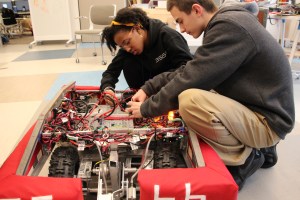
Working in the basement level of the STEM building, using lots of power tools, and occasionally throwing out words like “kickoff,” “drivetrain,” or “STEAMworks,” we are FIRST team 3566, also known as Gone Fishin’.
Gone Fishin’ competes in the FIRST Robotics Competition. FIRST stands for “For Inspiration and Recognition of Science and Technology.” The robotics competition, open to any high school student, was created in order to promote the STEM fields and offer a competitive yet collaborative atmosphere for robotics. In the FIRST Robotics Competition (FRC), teams are given a challenge, in the form of a game, and then have six weeks to build a 120 pound, $10,000 robot to meet this challenge. After those six weeks are up, teams compete in various regional events. The ultimate goal is to go to the world championship, held in St. Louis, where around 800 teams gather to play the game. (more…)

Creating a Three-Minute Film
By Colin Capenito, IV Form
Creating a Three-Minute Film

Click Image for Film
This past fall season, I participated in the“Three-Minute Film Project” course that as part of St. Mark’s Saturday. The goal of the course appears basic: each group of five to six students were to produce a complete three-minute film by the end of the seven-week Saturday course. What was not basic, however, was making a good complete film. Three minutes may like a blip of time; in fact, some might even wonder how seven weeks could be spent working on mere three-minutes of film. It’s challenging. (more…)

Lindsay Nielsen Photography: Remarkable in the Unremarkable and Exceptional in the Unexceptional
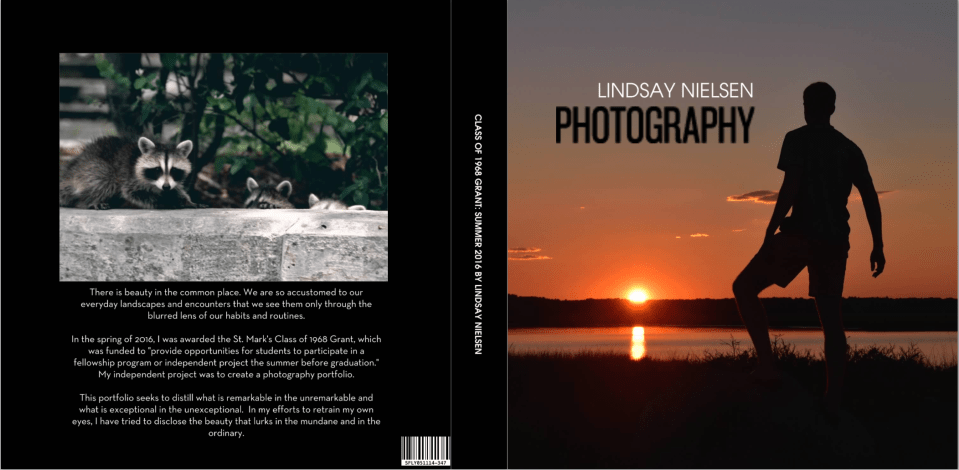 My first camera was a $200 Nikon Coolpix that I bought with all of my babysitting money the summer I turned 13. I had always loved photography and the idea of capturing moments we can’t get back. When I got older, I started watching Youtube videos and teaching myself how to take more advanced pictures. My mom was always asking me where her Canon DSLR was, because I would constantly borrow it to take photos of our two Vizslas. During sophomore year my godfather, Joseph Ratner, gave me his old Nikon D3100 and I was elated. It was my first serious camera, and I had every intention to make the most of it. Photography has always been a passion of mine and it was an amazing moment hearing that I was one of the recipients of the Class of 1968 Grant. I built this portfolio the summer after my junior year and I will continue to use my camera to capture everything around me.
The Mask: Art Inspired By The Loss of My Grandfather
By U Jin Jo, IV Form
The Mask: Art Inspired By The Loss of My Grandfather
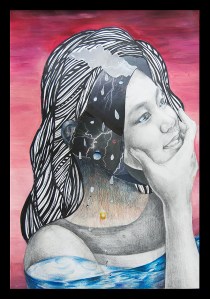 “Do you ever wish you could just take off your mask and show people what is going on inside of you?”
I have been asked this question multiple times before. However, I never really understood what it meant before I experienced the death of someone whom I loved. In fact, his absence is still hard to believe today.
My grandfather – my best friend, my mentor, my everything – passed away two years ago when I was in 7th grade. The pain of the loss was unbearable for my 13-year-old self. However, having to tough through each day of school, I maintained the bright smile on my visage and carried my sadness within me. Day after day, I became more tired of burying my feelings inside. Eventually, I could no longer hold back the tears that flooded inside of me. I needed to show people what was going inside of U Jin Jo.
For this piece of art, I wanted the background to be important without having too much information because I wanted the focus to be on the inside. Hence, I used red acrylic paint and created a gradation behind the person. For the hair, I used a black felt-tip pen for the hair-like patterns. Under the mask of the girl, I wanted the section to express an entirely different feeling than the rest of the page because it is the focus of this piece. I looked through fashion magazines and cut out images of thunderstorms, clouds, and tears to create an ominous collage. Everything else was done in pencil. (more…)

Voice in Guitar and in Literature…and in Me
By Shep Greene, VI Form
Voice in Guitar and in Literature…and in Me
The guitar is an integral part of who I am. As my skill has progressed, I’ve seen my appreciation and understanding of music progress as well. Over this past year, I began to delve into a more abstract form of music in improvisation. Within this form of my guitar playing, I began to find striking similarities between music and literature. Imagine every note as a letter and every note coming together to form a riff, with all of the respective letters coming together as one word. By the end of a piece, just as by the end of a novel, you’ll have a powerful message to send out to your listeners and readers. (more…)

Rebel Without a Cause and Juvenile Delinquency Hysteria
By Harry Kuperstein, VI Form
Rebel Without a Cause and Juvenile Delinquency Hysteria
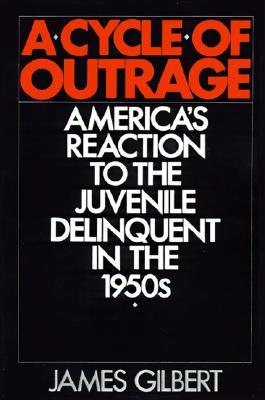 Rebel Without a Cause, starring James Dean, was released in 1955, which was around the peak of the hysteria surrounding juvenile delinquency. Chapter 4 of Gilbert’s A Cycle of Outrage states that from 1953 to 1958, there was a spike in articles about delinquency. The Senate also heard cases of delinquency in 1953, some of which lasted over a decade. And, it soon became evident that movies about teenagers turning towards delinquency, likely propped up by famous icons like James Dean, became wildly popular. Over sixty films centered on the idea of juvenile delinquency were released in the 1950s (Gilbert 85). (more…)

Global Connections of Media and Skin
By June Seong, IV Form
Global Connections of Media and Skin
Amidst the chaos that is my life – including the future I must decide upon, the necessity to be “special,” and my attempt to make this post somewhat grammatically correct – I am struck by my simultaneous privilege and ignorance. This privilege and ignorance is exhibited through myriad ways at this very moment: 1) this dull MacBook Air that I am communicating through and that was probably configured by an underpaid or unpaid laborer; 2) the whizzing air conditioning that is breathing on my neck so that I might not die from heatstroke whilst the world scales up a few sweltering Centigrades; 3) the immensity of the world that is within computer click’s reach via Facebook. (more…)

Make Deep Work Your Superpower: Deep Work and School (Part 1)
By Dr. Colleen Worrell, Director of the Center for Innovation in Teaching and Learning
Make Deep Work Your Superpower: Deep Work and School (Part 1)
Want to learn complicated things quickly, be more productive, and generate higher quality work? Make Deep Work your superpower.
“Deep work” is a term coined by Georgetown University professor Cal Newport to refer to the ability to “focus without distraction on a cognitively demanding task” (“Cal Newport on Deep Work”). In his newest book, Deep Work: Rules for Focused Success in a Distracted World (NY: Grand Central Publishing, 2016), Professor Newport argues persuasively that the ability to do deep work is the superpower of the 21st century. By training your ability to focus and by actively carving out time “for real intense focused work,” Newport argues that we can train our brains and cultivate habits that build a (more…)


 LEO
LEO 