
Home » Posts tagged 'Innovation' (Page 6)
Tag Archives: Innovation

Global Connections of Media and Skin
By June Seong, IV Form
Global Connections of Media and Skin
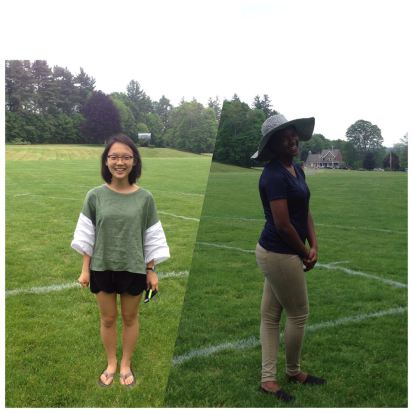
Amidst the chaos that is my life – including the future I must decide upon, the necessity to be “special,” and my attempt to make this post somewhat grammatically correct – I am struck by my simultaneous privilege and ignorance. This privilege and ignorance is exhibited through myriad ways at this very moment: 1) this dull MacBook Air that I am communicating through and that was probably configured by an underpaid or unpaid laborer; 2) the whizzing air conditioning that is breathing on my neck so that I might not die from heatstroke whilst the world scales up a few sweltering Centigrades; 3) the immensity of the world that is within computer click’s reach via Facebook. (more…)

Make Deep Work Your Superpower: Deep Work and School (Part 1)
By Dr. Colleen Worrell, Director of the Center for Innovation in Teaching and Learning
Make Deep Work Your Superpower: Deep Work and School (Part 1)
Want to learn complicated things quickly, be more productive, and generate higher quality work? Make Deep Work your superpower.
“Deep work” is a term coined by Georgetown University professor Cal Newport to refer to the ability to “focus without distraction on a cognitively demanding task” (“Cal Newport on Deep Work”). In his newest book, Deep Work: Rules for Focused Success in a Distracted World (NY: Grand Central Publishing, 2016), Professor Newport argues persuasively that the ability to do deep work is the superpower of the 21st century. By training your ability to focus and by actively carving out time “for real intense focused work,” Newport argues that we can train our brains and cultivate habits that build a (more…)

Read the Pilot Episode: GASLIGHT–a Sci-Fi T.V. Series
By Sarah Robertson, Chloe Ene, Jasmine Williams, Madison Falzon, Justin Elkinson, Payton Nugent, Penelope Benkard, Aigerim Bishigayeva, Jasen Ripley, Lilly Drohan, Abby Moses, VI Form
Read the Pilot Episode: GASLIGHT–a Sci-Fi T.V. Series
 GASLIGHT is a nine-episode television sci-fi drama written in Getting LOST II: The Writers’ Room during the Spring Semester.
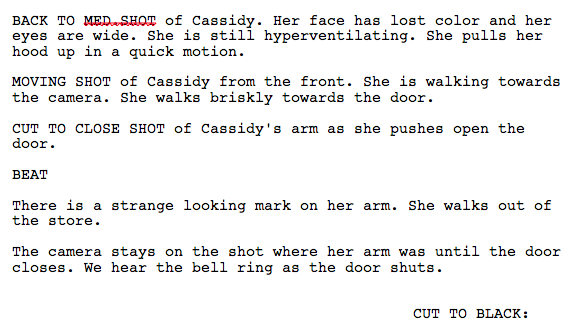
Click here to read the Pilot episode written by Chloe Ene, Sarah Robertson, and Jasmine Williams.
Check out the Official GASLIGHT WEBSITE HERE. (more…)

Engaging in 20% Time for Lifelong Learning
By Casey Pickett, English Faculty
Engaging in 20% Time for Lifelong Learning
From the time I was in kindergarten, I knew that I wanted to be a teacher. As a child, I spent 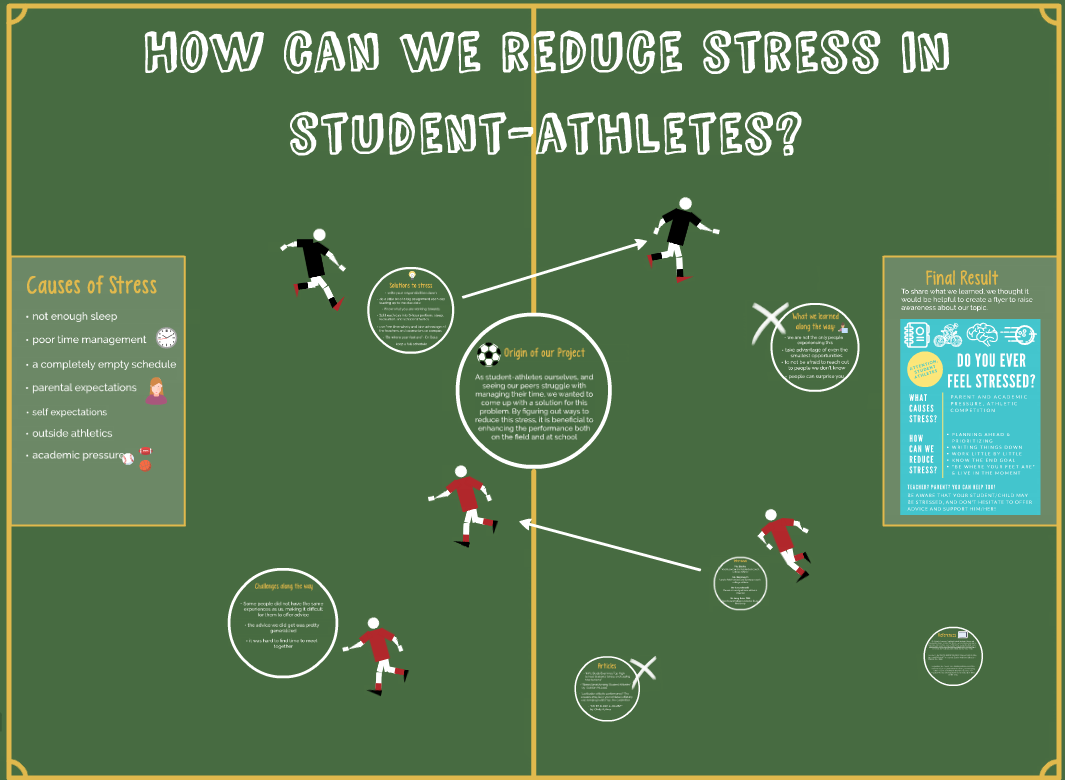 countless hours in my basement forcing my four siblings to be my students while I taught them whatever lessons my teachers had taught me earlier in the day. So, as I entered my Masters in the Arts of Teaching (MAT) program at Northeastern in the Fall of 2013, I couldn’t have been more excited to FINALLY learn my craft. I showed up to my first class ready to write down the formula for becoming a good teacher. I was expecting my professor to tell me EXACTLY what I needed to do in order to teach my students everything there was to know about reading, writing, and analyzing literature. Throughout my 18 months in the MAT program, I never did get that formula. What I did get, however, was a constant reminder that my job as a teacher was to prepare my students to become lifelong learners. So, with lifelong learning in mind, I decided to have my students engage in a 20% Time project (based off of Google’s 20% Time policy). (more…)

A Novel of Reaction: Larsen’s Passing
By Charlotte Wood, V Form
A Novel of Reaction: Larsen’t Passing
W.E.B. Dubois wrote that “all Art is propaganda and ever must be…” He thought that artists and writers should try to make the world a better place through their work. Nella Larsen, the author of Passing, would not agree. Her novel centers on two light-skinned black women, Clare Kendry and Irene Redfield, and their respective decisions to pass as white or not. I believe she wrote this novel not to persuade the reader of something or to convince them to enact change, but rather to reflect the world how she sees it. The book is a reaction to society, not something for society to react to. Passing itself is portrayed as something that simply is, not wholly good or wholly bad. Both characters participate in it, and so the reader is not meant to side with one over the other. The relative passivity of its message is reflected in the passivity of its main character, Irene. Because she is not active, the intention of the novel is not active. Lastly, the ambiguity of the ending leaves the reader, like Irene, with more questions than answers. (more…)

The Quest to Improve the Teaching of Electricity in the St. Mark’s Introductory Physics Course
By Jacob Backon, STEM Faculty
The Quest to Improve the Teaching of Electricity in the St. Mark’s Introductory Physics Course
Abstract
In response to research indicating significant conceptual misunderstandings of basic electrical concepts, the physics teachers at St. Mark’s incorporated the CASTLE curriculum into the introductory physics course. Over the past few years this curriculum has met with two significant challenges: delivering efficient feedback in response to student model building, and the time it takes to move through the curriculum. Canvas modules were used to address these challenges, and a concept test was administered before and after instruction to gather data on the effectiveness of these techniques. Preliminary data with a very small sample size indicates the CASTLE curriculum and Canvas modules did result in higher scores on the concept test than data reported from a more traditional style of instruction. (more…)

Make Peace With the Day to Enjoy the Evening: Remains of the Day
By Gabriel Xu, V Form
Make Peace With the Day to Enjoy the Evening: Remains of the Day
There’s an old Chinese idiom that roughly translates to, “The person on the spot is baffled, the onlooker sees clearly”. Surely, this applies to the case of Mr. Stevens. As the aged butler in Remains of the Day travels farther away from the house he has been in service of for decades, he starts to see the truth of his former employer more clearly — a truth so dark and ugly that Stevens has tried very hard to escape. Although Mr. Stevens is forced to learn the tragic truth about his former lord and consequently his own small, yet undeniable contribution as butler to the evildoing his master was conducting, the meeting with Ms. Kenton, a former housekeeper, allows him to see value in his decades of service, to make peace with his past, and eventually to move forward into a hopeful future. (more…)

Open C Tuning Improvisation with the Guitar (Video)
By Liam Monheim, VI Form
Open C Tuning Improvisation with the Guitar (Video)
During the winter season, I was granted an ACE (Athletic Commitment Exemption, or a season without afternoon sports) in order for me to focus on practicing the guitar. I used this time not only to improve my improvisation skills, but to teach myself a completely new way of approaching the instrument. I learned how to play in an alternative tuning called open C tuning. Standard guitar tuning from lowest string to highest uses pitches EADGBE. In order to make a chord, you must finger the strings with your left hand. However, when you strum the strings in open C tuning without doing any fingering with the left hand, it creates a C Major chord. This means learning new chord fingerings, but it also opens up a sonic richness in the instrument. (Click on picture to play video)
My solo performance (Click here for video) is a structured improvisation using open C tuning. By structured improvisation I mean that I follow a similar structure each time I play it but I decide in the moment what, how, and why I play a certain part.


 LEO
LEO 
