
Home » Posts tagged 'Independent Projects' (Page 9)
Tag Archives: Independent Projects

Akshaya Patra: Addressing Both Hunger and Education in India
By Yusra Syed, IV Form
Akshaya Patra: Addressing Both Hunger and Education in India
India is the world’s largest democracy and the second most populous country in the world – with over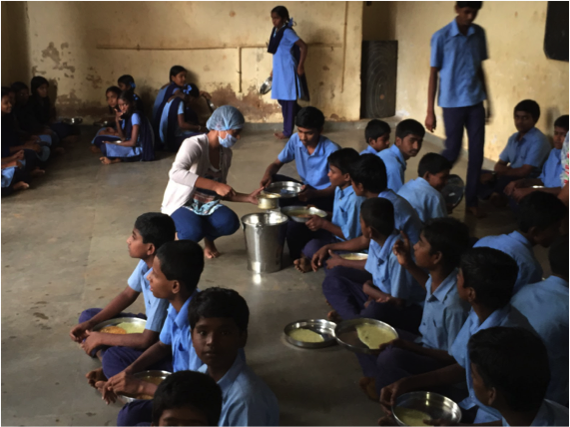 1.2 billion people. It is expected to be the most populated in the world by 2022. India is booming and, by many measures, is the world’s fastest growing big economy. Challenges of urban poverty in India are tied with the challenges of the country’s fast development. Cities are fostering poverty and hunger at a scale and extent unseen before. Nearly 70% of Indians live on less than $2 a day, with 61 million malnourished children – 1/3 of all the malnourished children in the world. This is causing too many children to choose food over education. (more…)

The Great Gatsby: Chapter 10
By Eric Zhang, V Form
The Great Gatsby: Chapter 10
(Editors’ Note: In Ms. Matthews’ American Literature class, this assignment prompted students to create a 10th chapter of Fitzgerald’s The Great Gatsby, utilizing Nick Caraway’s melancholic tone and including some type of closure for the characters)
It had been five years since the funeral, and I finally returned to this city that I once thought was haunted. Everything was so depressing. There were no sounds of the orchestra playing or shimmering sights of the girls wearing fancy dresses with decorations on their shoes. The city of New York had changed since that October in 1929, what was later called Black October. I wandered the streets of New York, and ultimately, I was pulled back to the Eggs and Gatsby’s mansion. What was once a (more…)

Un jour typique
By Kitty Chen V Form, Stephanie Moon III Form, and Rosanna Zhao III Form
Un jour typique
French 2 assessments this year have been largely project-based, and following each project, students submit video reflections through Voicethread. After finishing a video project this fall, their reflections offered three pieces of feedback: 1 – “We’d like to do bigger projects over longer periods of time. Sometimes it feels like we just do one project after the next.” 2 – “Working with others is fun, but sometimes it would be nice to do our own projects.” 3 – “What if we had more choices in HOW we present what we know?” Armed with this information, all 16 students and Ms. McCulloch brainstormed. (more…)

U.S. Historical “I am” Poems
By Samantha Sarafin, John Hart, George Littlefield, and Ginny Walsh, V Form
U.S. Historical “I am” Poems
Each of our United States History courses revolves around eight major themes prevalent throughout history. One of those themes is the question of “Who is an American” at any given time in the nation’s history. In keeping with our work and also trying to connect what we do inside our classroom to the broader St. Mark’s community and world at large, each class took their Community and Equity Day “I am” poems and looked at them from a historical angle. Each student was asked to look at an “I am” poem from the perspective of a figure from history. Some students were asked to be someone as specific as Alexander Hamilton, while others were (more…)

The Quest: An Original Composition for a Life Philosophy
By Helena Lin, IV Form
The Quest: An Original Composition for a Life Philosophy
At the end of my fall Roman Religion and Philosophy class, Dr Harwood assigned us a free-swim 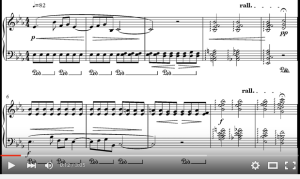 final project that asked for a creative presentation, in any desired form, of something we found interesting and meaningful in what we learned in class. After several conferences with Dr Harwood, I decided to produce my first music composition, which aims to demonstrate my understanding of Epicureanism and Stoicism, the two Roman philosophies that we studied. (Click right image!) (more…)

Northern Pacific Seastar Asterias amurensis & My Zone as an Artist
By Mei-Mei Arms, III Form
Northern Pacific Seastar Asterias amurensis & My Zone as an Artist
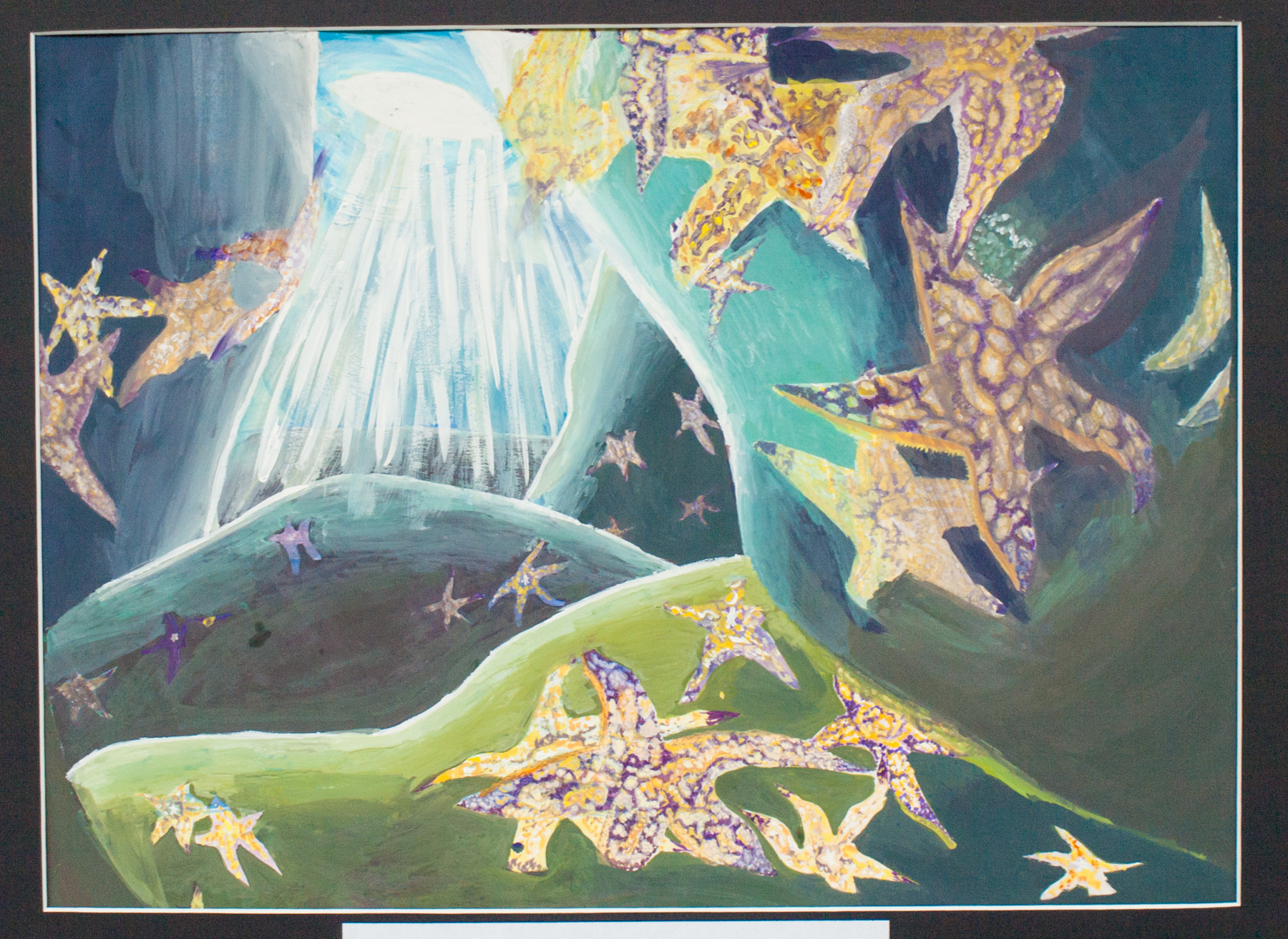
(See larger image below)
This seastar originated in Japan, Korea, China and Russia, about 20-40 metres deep off the coasts of these countries. It was introduced by the ballast waters of cargo ships as they returned from these countries and used ocean water to replace the weight of cargo. They can reproduce without the aid of another sea star and can multiply in the thousands. Due their rough exterior, the Northern Pacific Seastar does not have many natural enemies. Their larvae are so small that we cannot find a way to capture them and nothing appears to eat them at that stage in their life cycle. The Sea stars eat crustaceans and due to their numerous population, when they enter a new area, their numbers can wipe out the whole population of crustaceans. They can break off limbs and these limbs can grow in to new Sea Stars, but this process does take years. (more…)

The Architecture of New England’s Boarding Schools and Its Significance
By Claudia Chung, VI Form
The Architecture of New England Boarding Schools and Its Significance
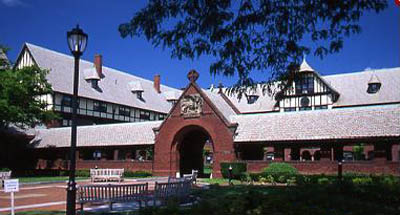
Post Revolutionary War boarding schools focused on educating America’s elites. These schools were products of their time; their values reflect a set of specific principles that their founders deemed admirable. Although these values evolved over time, they often included concepts of leadership, service to the nation, and dedication to one’s family. Schools built in the mid- to late- eighteenth century, the “Academies”, seem to reflect vastly different values than those of their “Episcopal” counterparts founded in the mid- to late- nineteenth century. Following the religious teachings of the Episcopalian tradition, episcopal schools boasted community and family based values; while the academies prided themselves on their focus on classical academics and service. The architecture of these schools closely follows architectural trends of their time and, at the same time, serves as powerful testament to the schools’ founding values. Despite each school founding with different affiliations, purposes, and people, the architectures of these schools deeply reflect the principles valued by the school —from its founding to present day.

La Realidad de la “Democracia Racial” entre Brasil (En Español and English)
By Theo Bartlett, V Form
La Realidad de la “Democracia Racial” entre Brasil (En Español and English)
Our core objective in our Spanish IV class is to study Latin American history in order to understand how and why Latin America has been shaped into the region that it is today. Within our curriculum, we accomplish this task by doing case studies on many different countries in Latin America, in which we study the national history of the country and then connect it to recent publications regarding its modern day situation. Within these case studies, we explore the demographics, economics, politics, and social scene of a country by immersing ourselves in Latin American literature, political debates, documentaries, and movies, and we reflect on what we have learned in both classroom discussions and written responses throughout the studies. Most recently, at the end of our case study on Brazil, we were asked to take the information that we learned in the PBS documentary “Black in Brazil”, which talks (more…)


 LEO
LEO 