
Home » Posts tagged 'History' (Page 10)
Tag Archives: History

Seventh Day Adventists: FAQ for You
By Abby Moses, VI Form
Seventh Day Adventists: FAQ for You
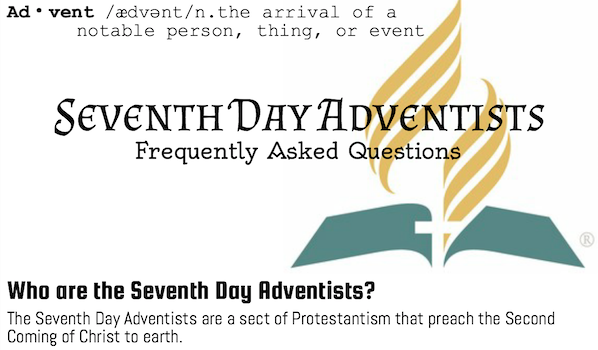
Click here for the full-size version of the Piktochart! Or scroll down.

Modern Day Martins
By Jenny Deveaux, V Form
Modern Day Martins
Much like hip hop music, modern day United States culture is based upon movements for change and the spread of continental ideas.
Hip hop was born in the seventies, and first originated in New York City. The genre was developed largely by African-Americans, but evolved to incorporate nuances from other minority groups such as Latin-Americans. Today, hip hop is a multi-billion dollar franchise that has become a symbol of United States culture because it exemplifies a diverse and influential community that seeks to spread tendentious ideas. Artists like Common, Nelly, Macklemore, and LL Cool J use their prominence in the hip hop genre to address today’s issues. Macklemore did this recently in his song “Same Love,” advocating for marriage equality while producing a track that made the top charts in America. (more…)

The Great Gatsby: Chapter 10
By Eric Zhang, V Form
The Great Gatsby: Chapter 10
(Editors’ Note: In Ms. Matthews’ American Literature class, this assignment prompted students to create a 10th chapter of Fitzgerald’s The Great Gatsby, utilizing Nick Caraway’s melancholic tone and including some type of closure for the characters)
It had been five years since the funeral, and I finally returned to this city that I once thought was haunted. Everything was so depressing. There were no sounds of the orchestra playing or shimmering sights of the girls wearing fancy dresses with decorations on their shoes. The city of New York had changed since that October in 1929, what was later called Black October. I wandered the streets of New York, and ultimately, I was pulled back to the Eggs and Gatsby’s mansion. What was once a (more…)

American Exceptionalism and The Hunt for Red October
By Conor Brockway, VI Form
American Exceptionalism and The Hunt for Red October
 The Cold War was a time period when America and Russia were threatening to attack each other, as both countries wanted to become the most powerful nation in the world. Tensions were heightened within America during the latter part of the Cold War, specifically during the early to mid 1980’s. American Exceptionalism became prevalent in the world, as the Americans were seen as having freedom and power within their country[1]. Also, the concept that Communism was a “virus” and could “infect” Americans and that Communists were a threat to national security within the U.S, as Communists were primitive, sneaky, subversive, and dangerous still lingered in the thoughts of Americans[2]. After World War II (WWII), the U.S. had the blueprint to build an
atomic weapon, which was a powerful weapon no other nation had. The U.S. also started building (more…)

U.S. Historical “I am” Poems
By Samantha Sarafin, John Hart, George Littlefield, and Ginny Walsh, V Form
U.S. Historical “I am” Poems
Each of our United States History courses revolves around eight major themes prevalent throughout history. One of those themes is the question of “Who is an American” at any given time in the nation’s history. In keeping with our work and also trying to connect what we do inside our classroom to the broader St. Mark’s community and world at large, each class took their Community and Equity Day “I am” poems and looked at them from a historical angle. Each student was asked to look at an “I am” poem from the perspective of a figure from history. Some students were asked to be someone as specific as Alexander Hamilton, while others were (more…)

The Syrian Refugee Crisis: Are We Doing Anything?
By Desmond Goodwin, VI Form
The Syrian Refugee Crisis: Are We Doing Anything?
 For centuries, the United States of America has promised hope for millions of people seeking freedom and safety. Our country’s rich history began with families facing perilous journeys in order to escape from religious persecution. Right now, as the United States faces the disastrous effects of the Syrian Refugee Crisis, remembering our history has never been more important. As thousands of people flee from their war torn homes, they desperately search for shelter. For refuge. Is the United States one of those places? (more…)
Racial Integration at St. Mark’s: The Experience and Legacy of Ethan Anthony Loney
By Joey Lyons, VI Form
Racial Integration at St. Mark’s: The Experience and Legacy of Ethan Anthony Loney
On May 17, 1954, the Supreme Court ruled in Brown v. Board of Education that segregation in public schools deprived minority children of equal protection under the Fourteenth Amendment.[1] The Court’s decision in Brown repudiated the “separate but equal” principle, a principle that had prevailed in the United States since Plessy v. Ferguson (1896). In his unanimous opinion, Chief Justice Earl Warren stated that “separate educational facilities are inherently unequal.”[2] After a second decision a year later, in Brown II, the Court demanded that public schools integrate “with all deliberate speed.”[3] However, the desegregation of public schools proceeded slowly, particularly in the South, which engaged in “massive resistance” and passed laws declaring the Brown decision invalid.[4] Unlike southern states, northern states did not reject the Court’s ruling outright. Instead, northern school boards drew school zones that reflected white and black neighborhoods, thus maintaining segregated school systems.[5] (more…)

The Architecture of New England’s Boarding Schools and Its Significance
By Claudia Chung, VI Form
The Architecture of New England Boarding Schools and Its Significance
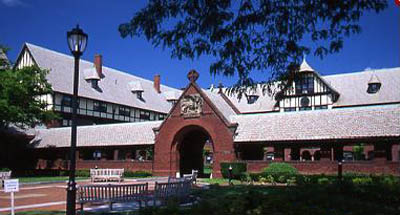
Post Revolutionary War boarding schools focused on educating America’s elites. These schools were products of their time; their values reflect a set of specific principles that their founders deemed admirable. Although these values evolved over time, they often included concepts of leadership, service to the nation, and dedication to one’s family. Schools built in the mid- to late- eighteenth century, the “Academies”, seem to reflect vastly different values than those of their “Episcopal” counterparts founded in the mid- to late- nineteenth century. Following the religious teachings of the Episcopalian tradition, episcopal schools boasted community and family based values; while the academies prided themselves on their focus on classical academics and service. The architecture of these schools closely follows architectural trends of their time and, at the same time, serves as powerful testament to the schools’ founding values. Despite each school founding with different affiliations, purposes, and people, the architectures of these schools deeply reflect the principles valued by the school —from its founding to present day.


 LEO
LEO 