
Home » Posts tagged 'Global' (Page 11)
Tag Archives: Global
Schooling, Inquiry, and the Promise of the “St. Mark’s Saturdays” Program
By Nat Waters, Associate Dean of Academics
Schooling, Inquiry, and the Promise of the “St. Mark’s Saturdays” Program
One of the more transformative developments in my teaching practice in recent years has been the addition in each of my courses of essential questions — formulations that, in the words of Understanding by Design author Grant Wiggins, inspire, “deep thought, lively discussion, sustained inquiry, and new understanding as well as more questions.”
In that same spirit, I’d like to offer an essential question for this LEO piece on the exciting new developments in the St. Mark’s Saturdays program. Begin by thinking of your own high school experience, whether that is as immediate as May 2015, or farther removed than you would care to admit, even in close company:
“Which of the many academic lessons that comprise your high school experience are most memorable, most enduring, and most valuable to life and work in the ‘real world’?” (more…)

Bring Back #BringBackOurGirls
By Lauren Menjivar, III Form
Bring Back #BringBackOurGirls
Remember the campaign #BringBackOurGirls? It was a worldwide trend on Twitter last year between April and May. Maybe you forgot about it because #ALSIceBucketChallenge took over the world during the summer, but what if I told you #BringBackOurGirls still exists. What if I told you that 219 girls out of 276 from Nigeria are still held captive by an Islamic jihadist group named Boko Haram. What would you do? Would you just continue with your life as if everything is fine or will you become one of those special individuals in the world who spread the news to others and say, “It hasn’t ended.” You might be saying, “What does this have anything to do with me? I’m not living there.” Okay, maybe you aren’t living there, but there are other individuals who are living in fear every day because someone is threatening to kill them. Put yourselves in their shoes: Is this how the world should be? They’re humans, too, and they have human rights just like we do. (more…)

Book Club: A Necessary Tool in Partnership
By Desmond Goodwin, V Form & Student Chair of the Haiti Partnership Committee
Book Club: A Necessary Tool in Partnership
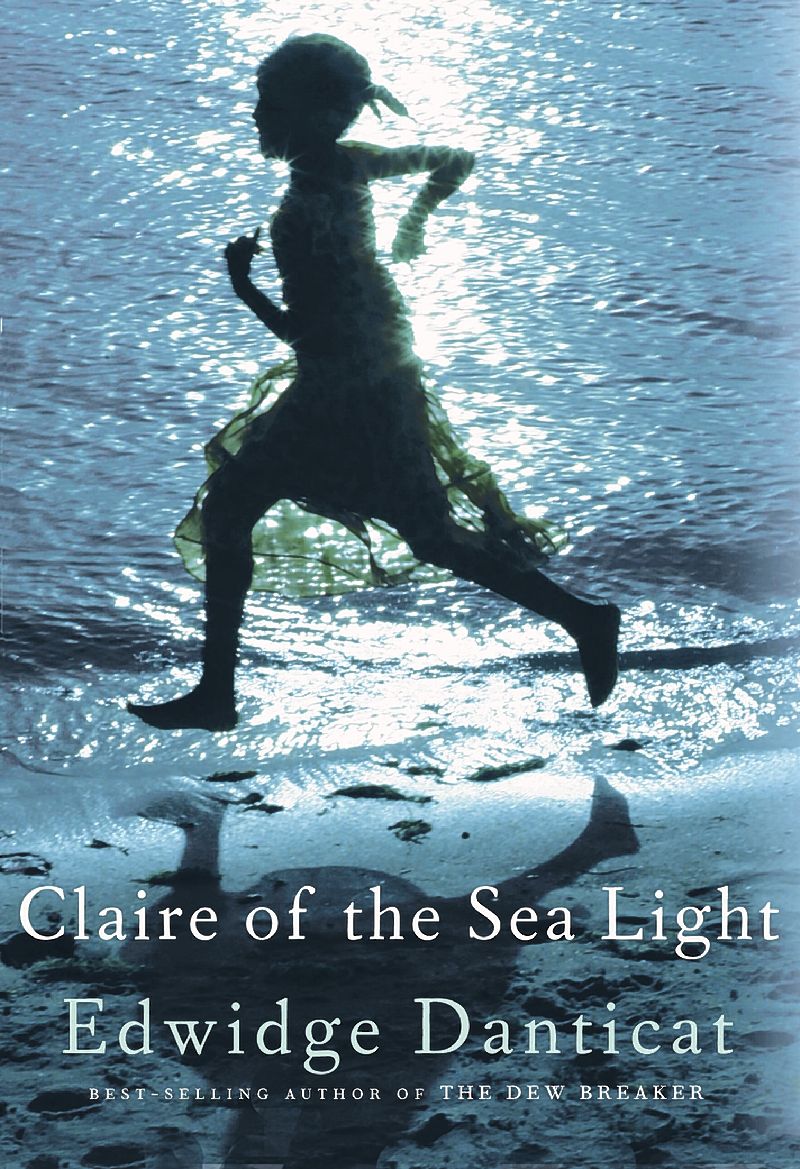 At the end of last year, the Haiti Partnership held a meeting to discuss our goals for the 2014-2015 school year. The committee members agreed that we needed to emphasize to the community that the Haiti Partnership is just that: a partnership. How would we show St. Mark’s that we are benefitting just as much from this relationship as St. Marguerite’s, our partner school in Latournelle, Haiti? We knew that we had to bring Haiti to St. Mark’s. We wanted to bring the beautiful culture to our school and teach our fellow students and faculty about life in Haiti. We wanted to celebrate the country. By creating a “Haiti Book Club,” we hoped to bring a part of Haiti to St. Mark’s and use it to strengthen our partnership with St. Marguerite’s.
The idea was to read three books over the course of the school year; one book would be read over each vacation. Over Thanksgiving vacation, we read Clare of the Sea Light by Edwige Dandicat, a Haitian-American author. Over winter vacation we read The Big Truck That Went By by Jonathan Katz. And over spring vacation, we will read A Wedding in Haiti by Julia (more…)
A Taste of Haiti
By Julie Geng, VI Form
A Taste of Haiti
Haiti, the Country
Haiti occupies the western third of the island of Hispaniola. Haiti has an area of 27,750 square kilometers including several islands[1]. The Haitian population is 10.32 million[2]. The climate is tropical[3]. Coffee, cocoa, coconuts, avocado, orange, lime, and mango grow wild. The most important cash crops are coffee and sugarcane.
Haitian History and Food
Spain, France, the continent of Africa, and the United States were crucial in shaping Haitian (more…)

A Vegan’s Manifesto
By Henry Hirschfeld, IV Form
A Vegan’s Manifesto
“Are you sure you’re getting enough protein?” and “Humans were designed to be omnivores” are common reactions when I tell people I eat vegan. A vegan diet is where one must abstain from all animal products, including meat, dairy products, eggs, and even honey. I became a vegan after working at an organic farm for the first time in the Northeast Kingdom of Vermont. Working in the soil and taking care of the vegetables every day showed me the tremendous amount of work it takes to feed people. At farmer’s markets on the weekends, I was fortunate enough to interact with my customers, and I witnessed first-hand how much they appreciate fresh produce. Mary, my mentor on the farm, helped me realize that 75% of today’s farms are polluted with harmful chemicals which affect the soil quality as well as the (more…)

The Global Seminar Infectious Disease Project: Cervical Cancer
By Ben Hunnewell, Justin Langway, Helynna Lin, and Oliva White, III Form
Editor’s Note: The Global Seminar teaching team worked with all III Formers on an infectious disease project. This is a complex project that involves group work with other members of the III Form and with V Form biology mentors. The final result was exhibited in a poster session, allowing for visitors to do a conference walk and have questions answered by the poster’s creators.
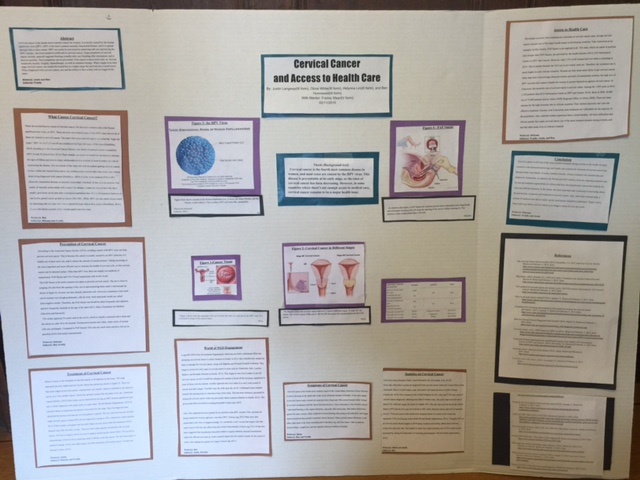 Abstract: Cervical cancer is the fourth most common cancer for women. It is mostly caused by the human papilloma virus (HPV.) HPV is the most common sexually transmitted disease, and it is spread through skin to skin contact. HPV can easily be prevented by practicing safe sex and having the HPV vaccine, but if not treated it could lead to cervical cancer. Some symptoms of cervical cancer include unusual vaginal bleeding (usually after sex), bleeding after menopause, or bleeding between periods. These symptoms can be prevented, if the cancer is discovered early on. (more…)

The S-Word: Meaningful Implementation of Sustainability as a Theme in Curricula
By Lindsey Lohwater, Science Faculty
The S-Word: Meaningful Implementation of Sustainability as a Theme in Curricula
For some, sustainability is a buzzword – a current trend in both popular and educational culture. However, viewing this topic as just the next trend does it a disservice. We are all familiar with those trends that promise to elevate our teaching and help us churn out those elusive well-rounded, critical-thinkers that will change the future of our nation and world. Most of those trends inevitably fizzle out. We cannot allow sustainability to do the same. Inherent in the concept of sustainability (defined as able to last or continue for a long time[1]) is the understanding that it deserves to be methodically infused into our curricula with the (more…)
On The Recent Return from Haiti
An Interview with Mr. Chris Kent (English Faculty) by Julie Geng, VI Form
JG: What made you interested in Haiti initially and decide to go on the first trip?
CK: When Ms. McColloch, and Ms. Berndt and Ms. Lohwater first developed the partnership, she asked me to come along and join the group. I definitely took a backseat approach and wanted to just observe and wasn’t necessarily as active as I could have been purposefully. I just wanted to see what other people thought this was all about and take the time to figure out for myself what interested me. So I’m not really sure other than just being approached and being asked to be part of the group were what really drove me. I don’t think I had early on a connection with Haiti other than the idea that helping the school seemed a great thing to do. I was definitely impacted by the idea of teachers helping teachers. (more…)


 LEO
LEO 