
Home » Posts tagged 'Experiential Learning' (Page 5)
Tag Archives: Experiential Learning

STEM Fellow: Probing the Semantic Representations of Emotional and Social Concepts in Autism
By Lucy Cao, VI Form
Probing the Semantic Representations of Emotional and Social Concepts in Autism
Abstract
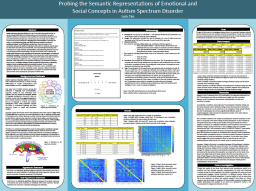
Please Click The Image To Download/See the Poster
Autism Spectrum Disorders (ASD) are a set of neurodevelopmental disorders as shown through difficulties in social interaction and communication as well as repetitive behaviors. Symptoms of ASD manifest at an early age and become most prominent between the ages two to three years old. One major area of defect common among ASD individuals is language and communication, especially the ability to comprehend language and make inferences based on social and emotional context. Recent linguistics studies have shown that there is an association between the ability of individuals with autism to attribute mental states (to themselves and others) and verbal skills. It is found that high-functioning ASD individuals have a less coherent representation of emotional experiences and tend to avoid using emotional terminology. The goal of this study was to examine the relationship between social competence and semantic representation of social and emotional concepts. Knowing that lexical co-occurrences are useful measurements of semantic knowledge, participants of this study were asked to rate pairs of verbs in terms of similarity on a scale from 1 to 5, 1 being very similar and 5 being very dissimilar. Data collected from the typically developing (TD) participants indicates that there is a correlation between social competence and accuracy of similarity ratings of verbs containing social and emotional content. The less socially competent, the less accurate the ratings are. Moreover, such a correlation is not present in verbs of no social or emotional content. However, the investigator failed to identify a significant difference in the ASD population’s perception of emotional and social verbs and the control participants’ perception of these verbs due to reasons of methodology.
The School of Athens’ Tableau Vivant . . . & Memes!
By Keely Dion, Cooper Sarafin, Dylan Sotir, & Charlotte Wood, VI Form and Reevie Fenstermacher, IV Form
The School of Athens’ Tableau Vivant . . . & Memes!
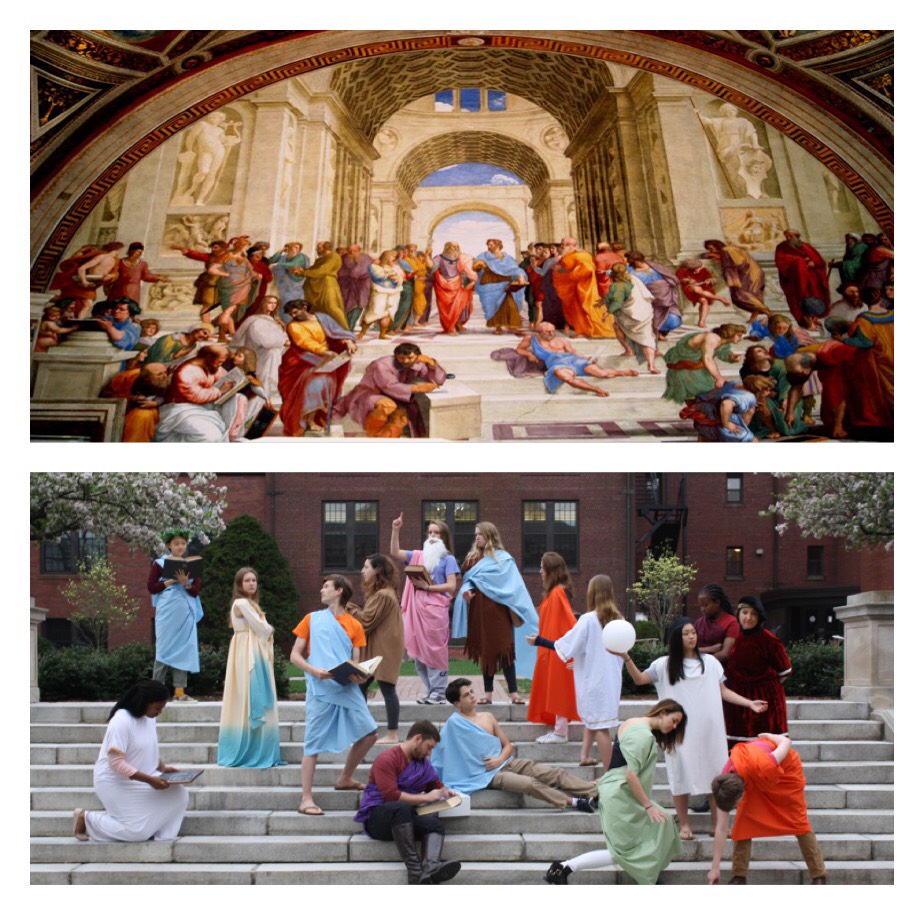 Χαιρετε! Over the course of this school year, we, the Greek II class have put together our Classics Diploma Project, an analysis and celebration of Raphael’s The School of Athens. Our inspiration for this project came from many different places. In class, we’ve read the works of great Greek writers, such as Aristophanes, Plato, and Xenophon, three authors who present different accounts of Socrates’ life. Charlotte Wood, one of the students in the class, had traveled to Rome in the summer of 2015, and while she was there she saw Raphael’s Rooms in The Vatican. She was awestruck by the scale, perfection, and beauty of each work, The School of Athens in particular. She then began studying the work in Art History, and her love for it grew. Once the class started learning about Plato and Aristotle, she shared her enthusiasm for the painting, and the class appreciated the work as much as she did. We then decided to frame the project around Raphael’s awe-inspiring masterpiece.
(more…)

20% Time (Genius Hour) With Freshmen: Civic Action
By Ms. Casey Pickett’s III Formers
20% Time (Genius Hour) With Freshmen: Civic Action
Editor’s Note: In Ms. Casey Pickett’s III Form English classes, her students pursue 20% Time (or “Genius Hour”) projects. Below are Ms. Pickett’s instructions, a student’s reflection, and several artifacts from the experience. Please keep scrolling!
Purpose:
The purpose of the project is to give you time to pursue something that you are passionate about, interested in, or something you’ve always wanted to do. It is a time for you to be creative and to take ownership of your learning AND your education. If it is important to you, it has value.
Essential Questions:
What does it mean to be a citizen (global, local, digital)?
What are civics? Why is it important that we are civically engaged?
How can I be a voice for and/or create social change?
Please click here for the full assignment explanation.
A Reflection by Paige LaMalva
As a student, I feel as though there isn’t enough time after academics and athletics to pursue something a student is interested in. At a school like St. Mark’s, for example, we are in class from 8:30am-3:00 pm and then at sports from 3:30-5:00 pm, which is followed by a short period of time to relax before study hall at 7:30 pm. With the 20% Time project, my fellow classmates and I were permitted to explore a topic of our interest. For me, I chose to research pancreatic cancer. Without the 45-minute block per week working on this, I wouldn’t have learned why pancreatic cancer is called “The Silent Cancer.” (more…)

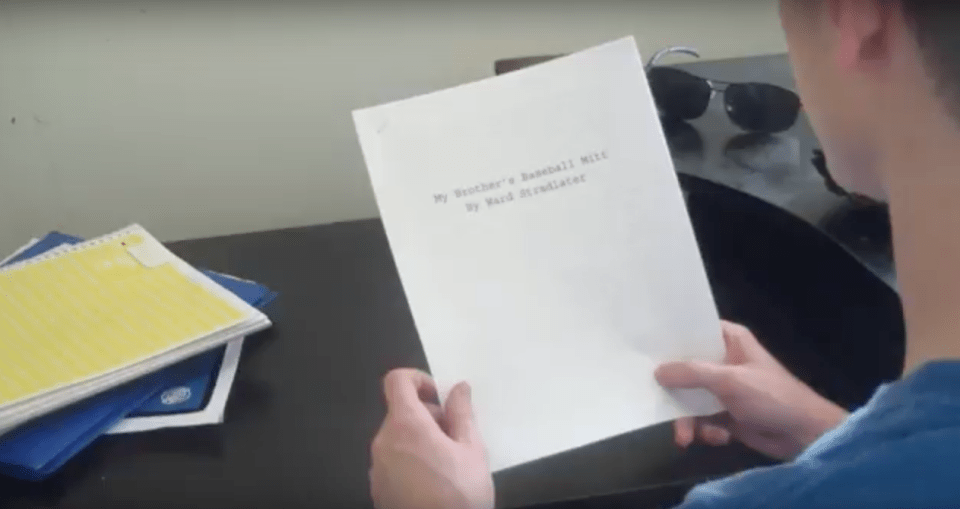
“My Brother’s Baseball Mitt”–Script & Video on Salinger’s The Catcher in the Rye
By Colin Capenito, IV Form
“My Brother’s Baseball Mitt”–Script & Video on Salinger’s The Catcher in the Rye
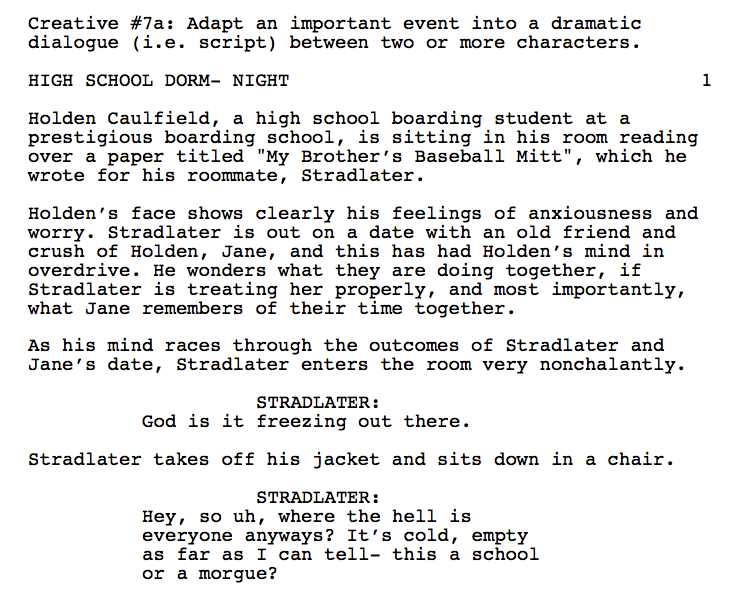
Continued: Click here for full script!
Collaborating on the Command Form in French
By Two French II Classes
Collaborating on the Command Form in French
Editor’s Note: French II students did a full class collaboration in which they made a video entitled, “How to survive at St. Mark’s: A guide for new students.” The video was designed to use the command form in French. The collaborative nature of this project meant that every student had a role in editing, filming, adding music, collecting videos, writing and revising the actual script.
Click here or above image for video by Frank Hua, Nate King, Luc Côté, Jovin Ho, William Osborne, Paige LaMalva, Emma Viens, Izzy O’Toole, Jonathan Noel, Daniela Martinez, and Julianna Gong.
Click here above image for video by Ainsley Dubose, Tucker Hartmann, Sam Leslie, Leann Li, Phoebe Macleod, Aidana Maitekova, Dom Mongillo, Edwardo Perez, Noah Robb, Robert Somme’s, Lindsay Strong, Benjamin Teixeira, Madeleine Wass, TianYu Zhao, and Lucy Zheng. (more…)

Asians & Asian Americans: A “Model Minority”?
By Ivy Li, IV Form
Asians & Asian Americans: A “Model Minority”?
 On April 9, I participated in a conference regarding Asian identity and the impact of such on living in America: Asian American Footsteps Conference: Embrace Your Passion and Others’ Stereotype. Although we were not able to explore the topics thoroughly and deeply enough within small group discussions due to the limited time, I have two main takeaways:
1. Don’t Let Go Your Passion
2. Stereotype Is Motivation
1. “My mother wanted me to be a nurse just like she and other relatives did, but I always had this passion to write. So I quit and became a poet…” This was Keynote Speaker Tina Chang talking about her experience as a Chinese immigrant and the obstacles on her way of pursuing dream. (more…)
Ceramics: “Patterns From Nature” Sculpture Garden {Pictures!}
By Ashley Lee, VI Form; Tony Banson and Darren Pike, V Form; Ashley Battiata, Charlotte Galusza, Lillie Harrison, Tucker Hartmann, Sam Leslie, Phoebe Macleod, Noah Robb, Cam Rubin, Bobby Sommers, and Tyler Young, III Form
Ceramics: “Patterns From Nature” Sculpture Garden {Pictures!}
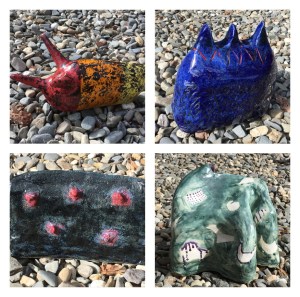
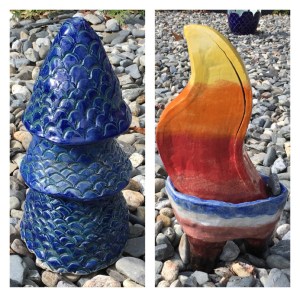
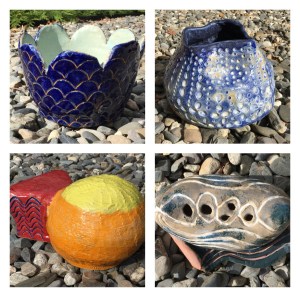
Editor’s Note: The Patterns from Nature project began with exploring Biomimicry and 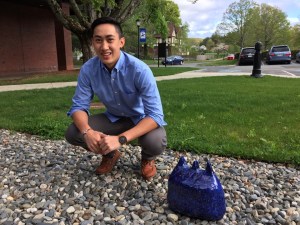 EcoArt. Students then researched nature on a microscopic scale. This involved studying the most finite details in structures to find intriguing patterns, forms, and textures. Inspiration could be found in very obscure places: whether a human cell, rock crystal, or a plant stem. Gathering these designs from nature, students then sketched combinations of patterns and forms to arrive at unique clay module sculptures. This year’s Sculpture class decided to display their work outdoors in the Taft Sculpture garden.


Gun Control in America: A Nonpartisan Investigation
By Sam Lauten, VI Form
Gun Control in America: A Nonpartisan Investigation
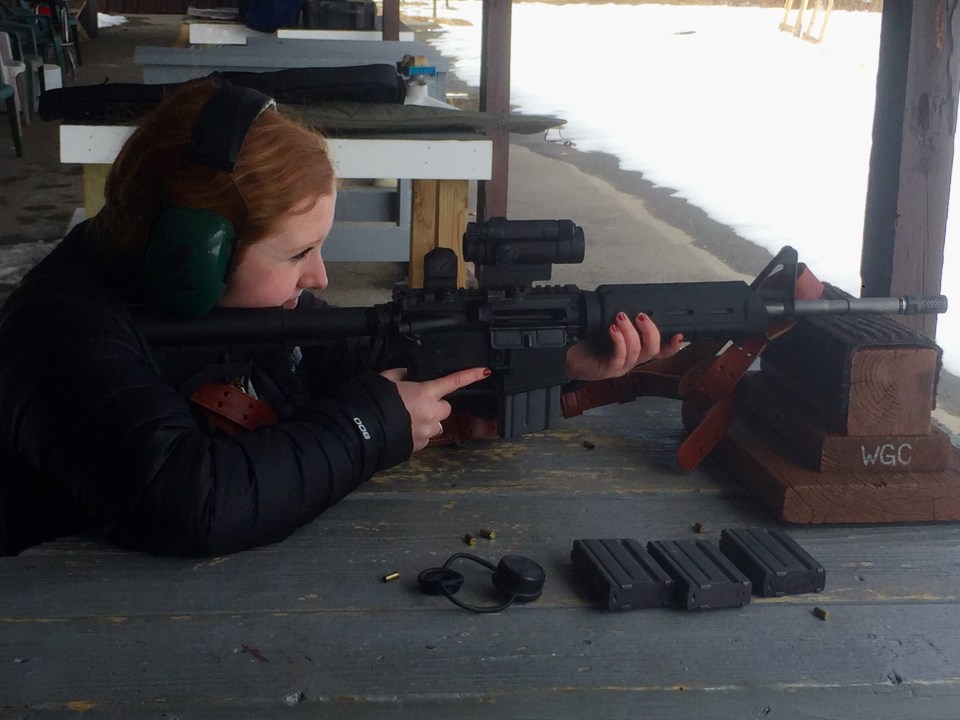 For the entirety of my life, I have been taught that there are good politicians and evil politicians. I have been taught that there is only Democrat and Republican. I grew up in a firmly liberal household, in a liberal state, and attended liberal private schools from kindergarten to my senior year of high school. This is not a criticism of my family, nor is it a criticism of liberal education, rather a recognition of the fact that I have been exposed to very few people that are significantly different than I am. However, this year as I began to look onward to studying political science at college in the fall, there was something that I found deeply troubling about experiencing eighteen years of life without having my own political views truly challenged. Even so, I have always had firm opinions about nearly every issue, even those which I have not necessarily experienced the effects of first hand. An example of one of these issues is gun regulation. (more…)


 LEO
LEO 