
Home » Posts tagged 'Experiential Learning' (Page 4)
Tag Archives: Experiential Learning

Drawing a Blank! Lessons from Studio I Art Class
By Mrs. Barbara Putnam & Her Studio I Class
Drawing a Blank! Lessons from Studio I Art Class
What is it like to see with eyes that learn to notice everything, including what is in between bits of information? What about trying to draw with your non-dominant hand? These are two assignments for Studio I students. Whether you have never risked drawing or have taken many art courses, it is worth remembering what it is like to begin in any discipline.

Frances Hornbostel ‘21
In the first assignment, “Hard Lines,” students learned that different line widths communicate differently in how we perceive not only a shape but also how “gray” it is. Each student had to randomly pencil out areas to explore these line types while leaving several shapes “blank” or white. One of the areas needed to be drawn directly in felt tip pen with the non-dominant hand… which means that it will be permanent because pen is not erasable. Shaky lines remind us of what it was like when we first began to hold a pencil years ago and how your brain needed to communicate instructions over and over to get your hand to “work.” The white spaces tell us that a shape can be made by the end points of other lines, which is a concept lifted from Geometry.

I Built a Canoe!
By Reily Scott, III Form
I Built a Canoe!
Over the summer, I ordered some blueprints, bought some wood, and started on my
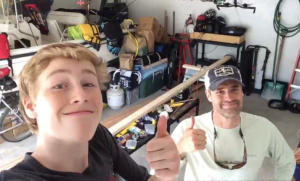
Click the image for a time-lapse video of the project!
seventy-hour journey to buoyancy. For the past three summers, I have built something alongside my dad. Projects have varied from a toolbox to a blacksmith forge. I knew I wanted to build something, so I looked online, but nothing inspired me. After some deep thinking, I decided that my solution should consist of something with fishing because of my dad; oh, and I love the joy of using dangerous power tools! My dad and I searched online for unique canoes that we could construct. Eventually, we came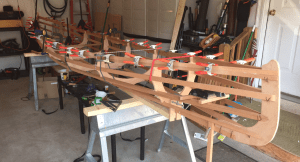 upon a method known as “skin on frame”. This method helped Eskimos construct their boats. Basically, it consists of a seal skin pulled tightly over a wooden frame. Since we were not planning to go to the top or bottom of the world to hunt and skin a seal, we purchased a small tarp of polyester in substitution. (more…)

Productivity, Neuroscience, and Deliberate Practice: Deep Work and School (Part 2)
By Dr. Colleen Worrell, Director of the Center for Innovation in Teaching and Learning
Productivity, Neuroscience, and Deliberate Practice: Deep Work and School (Part 2)
With the school year off to a frenetic start, I am returning to the topic of deep work, which I wrote about in LEO last September. My article, “Make Deep Work Your Super Power,” was supposed to be the first in a series of posts that would connect Georgetown Professor Cal Newport’s book Deep Work: Rules for Focused Success in a Distracted World to school and learning. “Deep work” is the ability to focus deeply on a challenging task for a specific period of time, blocking out all distractions in order to get stuff done efficiently and well. The fact that I’m writing part 2 of the “series” one year later proves that I have yet to master this skill. Indeed, my failure to build deep work into my own practice is, in part, what motivates this post. (more…)
Dreaming Big: Robotics and Circuits Class
By Chris Roche, STEM Faculty
The Circuit Engineering Stair Master
The students in my spring “Robotics and Circuits Engineering with Physical Computing” class did it. They pulled it off!! We now have the “Stair Master” currently installed and running in the stairwell off the first floor of the St. Mark’s STEM building. Students and faculty like the installation, and we are looking forward to a phase two expansion that has music!
The “Stair Master” is an installation that allows a flight of stairs to be interactive with the people walking on them. Here are videos showing the Stair Master in action:
Video 1: Click Here
Video 2: Click Here
Video 3: Click Here
When you step on one of the steps in the “Stair Master”, LED light strips light on the stair you are on. The system uses sensors to know which stair you are on, triggering the appropriate lights. There are versions of interactive stairs already existing, such as the musical staircase at the Museum of Science in Boston. However, the “Stair Master” at St. Mark’s was designed and prototyped exclusively by the “Robots and Circuits” class, using class-built knowhow and our prototyping process. (more…)

Encapsulating Antitumor Nanodrugs
By Michelle Hung, VI Form et al
Encapsulating Antitumor Nanodrugs
Nano-particulate drugs hold great promise in improving drug efficacy because of their enhanced solubility, prolonged retention time, and higher bioavailability with tissues or cells. Generally, these nanoparticles are encapsulated to keep them well dispersed according to specific particle sizes in the manufacturing process. The additional advantage of encapsulation is that a rationally selected coating agent may tailor the pharmacokinetics and control the release of therapeutic nanoparticles in the targeted tissue, simultaneously reducing the toxicity and side effects of drugs. (more…)

Much More Than Building a Classroom in Tanzania
By Frances Hornbostel, III Form
Much More Than Building a Classroom in Tanzania

Saying goodbye to my friend, Kichiki.
This summer I traveled to Tanzania for two weeks with a group of nineteen other students. We primarily went to build a classroom in the Orbomba community near Arusha, but many reasons motivated me to go. I love to experience different cultures, and the community we visited welcomed our group with open arms as well as fun dances and songs by this community. One of the highlights of my trip was befriending students at the school we helped build. They taught me songs in Swahili, and I taught them hand games from America. The trip also exposed me to different lifestyles. Many in America can be materialistic, wanting the new iPhone or piece of plastic that everyone else owns. The people I met in Tanzania were grateful for even just our presence and passion to help. They were grateful for every new word they learned and every scrap of food they ate. (more…)

Returning with a Full Heart, a Master’s Degree, and a Fiancé!
By KK Behan, Spanish Faculty
Returning with a Full Heart, a Master’s Degree, and a Fiancé!
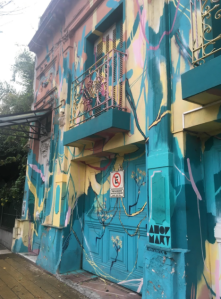
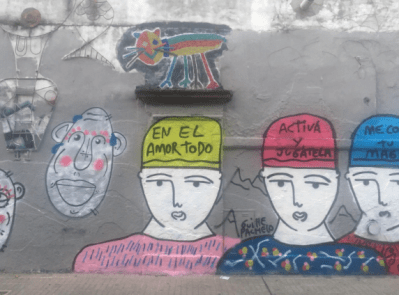
This summer, I traveled to Buenos Aires, Argentina to finish my master’s degree through Middlebury College. The program lasted for six weeks. I lived in Palermo, a trendy neighborhood with an array of awesome restaurants, art, and architecture. One of my favorite parts about the neighborhood was the colorful murals painted by artists involved in the city’s vibrant street-art scene.

ASL Sign Language to Popular Songs
By Samantha Sarafin, VI Form
ASL Sign Language to Popular Songs
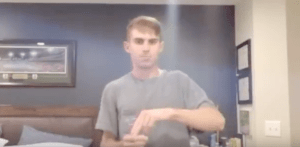
In the spring term of St. Mark’s Saturdays, I created and taught this course: “In this course you will learn and practice the foundational elements of American Sign Language, from alphabet-based finger-spelling to more specific signs in vocabulary units. You will learn essential questions and phrases to communicate effectively in ASL and engage with various activities to practice ASL with your peers. You will also learn the history and social contexts of American Sign Language to develop an appreciation for the diversity and cultural richness of the deaf community.”
I designed the final project to be a video performance of an ASL song cover. Each student
Please click image for full video!
found resources and learned the signs to perform one whole song in ASL. Students spent time in and out of class working on the project and presented their videos in the final class. The goals of the assignment were to learn ASL vocabulary, understand how to sign songs, understand ASL word order, and practice sign fluency. This video is a compilation of each of the covers created by the students.


 LEO
LEO 