
Home » Posts tagged 'English' (Page 8)
Tag Archives: English

Moral Obligation…in Hamlet & a Fetus
By Lulu Eastman, V Form
Moral Obligation…in Hamlet & a Fetus
Hamlet, a Shakespeare play, follows the tragic tale concerning a deeply troubled Danish prince of the same name. Hamlet is forced to confront his traitorous mother and uncle in order to avenge his murdered father, who, as a ghost, has requested Hamlet takes his uncle’s life in order to bring him justice. However, Hamlet is distressed by the thought of committing such a bloody deed. As he wavers through indecision regarding his proposed mission, he also struggles against the drowning weight of his depression, as the toxic environment of the palace causes him to lose faith in the goodness of people. In the novel, Nutshell, by Ian McEwan, the story of the fetus is based off of Hamlet. With the reflective fetus entangled in the plotting of his traitorous mother and uncle, he finds himself in a predicament similar to that of the Danish prince. Although he has yet to even experience life for his own, the fetus has already lost hope for the vitality and decency of humanity. Every moment of his being is spent listening to conversations that only reveal more and more of the villainous and duplicitous ways of his mother and uncle, Trudy and Claude. Both Hamlet and the fetus reach a point where they contemplate committing suicide, as it seems to be the only way to put an end to their pain. However, both decide to live instead. Though both Hamlet and the fetus have cynical views of the world, and both consider suicide, they continue living through their suffering because they have moral obligations, beliefs, and fears that bind them to life. (more…)

“I Simply Speak Best in Metaphors”–Creative Writing at SM
By Alex Colon, VI Form
“I Simply Speak Best in Metaphors”–Creative Writing at SM
Editor’s Note: The Rise of the Short Story and News That Stays News are VI Form elective courses that constitute a key part of St. Mark’s creative writing program. In the fall, students examine the integral parts of a successful short story in order to craft their own. In the spring, students explore poetry, both originally in English and in translation. In News That Stays News, students attempt to define poetry, experiment with form, and establish a personal voice.
Alex Colon’s short story, “Completely Undone,” was composed while using the second person pronoun (you) perspective as the driving force of the story. This is a particularly difficult task, as one risks alienating the reader. For Alex’s second piece here, a poem entitled “The Morning Inconspicuous,” the assignment was simply one of form: write a sestina. However, a sestina is a very complex form of obsession, where the six words at the ends of the lines in the first stanza are repeatedly woven, in a given order, throughout the poem.
Completely Undone
Your heart beats slow- abnormally slow. You are healthy and lean, but your heart is beating along like you are on your deathbed. You must have been in love at some point because there is no other reason why your heart should beat so slow. Your feet struggle to pick themselves up. With every step you are putting yourself in danger. (more…)

Video Oral Arguments: Literature on Trial
Students on Film (in order of appearance): Charlotte Wood, Jenny Deveaux, Joey Smith, Amanda Christie, Josh Loveridge, Gabe Brower, Janelle Carmichael, VI Form
Video Oral Arguments: Literature on Trial
Editor’s Note: This is a highlight reel from Ms. Matthews’ Literature on Trial class (2016 VI Form fall semester English). The course is divided into two sections. In the first half, the focus is on trials, plaintiffs, prosecutors and defendants, reading works of literature and brainstorming criminal or civil wrongs committed by characters in the text. Students work in trial groups to gather evidence, prepare witnesses, and put on their best case. The second half consists of appellate work where students focus on the after effects of a trial, reviewing lower court records for Constitutional issues, drafting briefs for appeal and preparing for a final oral argument.
Please click here or on the images for the “student attorneys” in action! 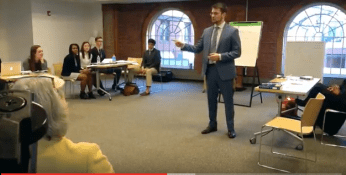
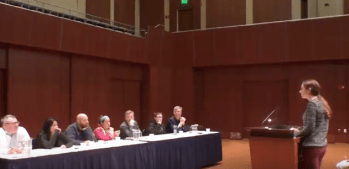 (more…)

Facing the Big Bad Wolf
By Grace Gorman, VI Form
Facing the Big Bad Wolf
My mom has always described me as “fearless.” To some extent, when she recounts my fearlessness, she is referring to my willingness to try new, courageous things. However, I also possess another kind of fearlessness – the determination to face whatever comes with strength and bravery. The way she retells it, she first recognized my fearlessness during a family trip to Busch Gardens amusement park.
That day, I was unable to go on many rides with my siblings because I was too small. However, this all changed when we arrived at The Big Bad Wolf. This ride was notorious for being the fastest and most thrilling at the park, and no matter how much my mom tried to convince me that I should not go on it, I was determined. Despite measuring tall enough to ride, right before stepping into the suspended seat, my stomach dropped, filling with fear and uncertainty. Nevertheless, I proceeded and, with my mom sitting next to me, we climbed the long, steep track. As we were hurled through the air, my mom screamed, “Gracie, are you okay?” I joyfully hollered back, “I want to do this again!”
From that moment on, I have been considered the most adventurous child of my family. At four years old I gleefully jumped off the high diving board at a local pool, at eight years old I began riding horses, and last year I snorkeled in the middle of the ocean, where I swam right next to a Barracuda and touched stingrays. While my mom might use these examples to describe my fearlessness, these are not the moments during which I consider myself to have been the most fearless. My most fearless times were after my sister died. (more…)

Letter to the Editor: Native American Policy
By Mo Liu and Jamie Lance, V Form
Letter to the Editor: Native American Policy
Dear Editor Jackson,
It occurs to me that there is much attention raised among the general public regarding our government’s policy towards Indians, and therefore in writing to you, I, as a member of the Board of Indian Commissioners, want to clarify my position. Indians cannot be entirely excluded from our picture as a nation. However, the Indian society is not a cultivated society likes ours. One of my colleagues, who is experienced with Indian affairs and always provides us with elaborate information about the Indians, says their tribes are corrupted by “idleness, improvidence, and indebtedness”. The lack of private property or land and the underdevelopment of laws mark the Indian society as barbarous and inferior to ours. Because of this difference, since 1871 Indian tribes are no longer considered sovereign nations. Governments before us circumvented the Indian dilemma by relocating and establishing reservations west to the Mississippi River, yet now with a closed frontier and western migration, conflicts between settlers and the Indians are inevitable. The issue is pressing. (more…)

(In)Visible: The TV Pitch Project Winner
By Katie Hartigan, Nick Hadlock, and Anderson Fan, VI Form
(In)Visible: The TV Pitch Project Winner
 Logline:
Unified in isolation, six strangers’ morality is put to the test when taking a pill makes them invisible to everyone but each other, but what they don’t know is that they are part of a social experiment and are constantly being watched.
Elevator Pitch:
(In)Visible is a two-season television show falling under the category of sci/fi, drama, and thriller. It is about six main characters that participate in a seemingly risk-free drug trial by Osiris Pharmaceutical that leaves them invisible to everyone except each other. They must cooperate in order to overcome the challenges presented to them and the mystery of what happened to them. Little do they know, they are being watched by six “monitors” behind the operation who are observing the behavior of people who think nobody is watching. Themes of cooperation, isolation, and leadership emerge as the characters find modes of survival and uncover the mystery. Season One ends with the six participants transitioning into monitors, and thus inheriting the responsibilities of monitors. New participants are introduced as the six monitors give them different moral tasks as part of the social study. Season Two ends with the new participants discovering how to escape the cycle: do the right thing.

Math Modeling: Using Math for Flight Path Safety
By Kate Sotir, Cooper Sarafin, Anderson Fan, Shep Green, VI Form and Mo Liu, V Form
Math Modeling: Using Math for Flight Path Safety
Part 1:
The problem at hand is to create a model, a rating system, that would inform potential flyers of the safety of a particular flight. Our solution includes a mathematical equation that gives us a number between 1 and 100, depending on the inputs. Although the values themselves indicate the safety level of flights, we do not want to our audience to read into the numbers: a flight with a safety index of 63 should not be considered a more dangerous flight than a flight with a safety index of 67. Therefore, to make our model directly presentable to our audience, we classified the possible outcomes into ratings. A safety index ranges from 1 to 20 would have a rating of ★, from 20 to 40 would have ★★, 40 to 60 would be ★★★, 60 to 80 ★★★★, and finally, 80 to 100 would have the highest rating of ★★★★★, and flights that fall under this rating would be the safest choice based on our model. (more…)
SURREAL: The TV Pitch Project Winner
By Teagan Ladner, Tracy LeBlanc, and Riley Lochhead, VI Form
SURREAL: The TV Pitch Project Winner
Logline:

Click Image for Trailer of Surreal
What is real?
Elevator Pitch:
Five adolescents embark on individual journeys to determine what is real, a question that they have been struggling with since early childhood. Surreal will take the viewer through the lives of these characters, bouncing from the “present” to the “future”. All having the connection of a summer camp, the characters experience what seems like an earthquake during their time at camp that leaves them questioning its significance and legitimacy. As they get older, the characters have more visions that are continually perplexing, and for the majority of the show the characters are trying to find meaning with what they see in the visions. These visions are meant to lead them to the ultimate question “What is real?” and causing them to think about some of the common threads of humanity along the way including emotions, beliefs, connections, personal truths, and more. (more…)


 LEO
LEO 