Home » Posts tagged 'English' (Page 7)
Tag Archives: English

The Rocky Horror Picture Show: a Social Commentary
By Charlotte Wood, VI Form
The Rocky Horror Picture Show: a Social Commentary
Jim Sharman’s The Rocky Horror Picture Show (1975), an absurdist musical comedy that parodies sci-fi B-movies, particularly those of the 1950’s, reveals much about the culture of Vietnam era America. Specifically, the film comments on the conservatism of the previous decades, the Watergate scandal and other governmental matters, the counterculture movement, and questions of sexual and gender politics.
The 1970’s were a complicated and often confusing time in American history. By 1975, the U.S. had finally withdrawn from Vietnam after being entrenched in the anti-Communist conflict for nearly twenty years, and even then the war raged on between North and South Vietnam for two years after the U.S. had removed its troops.[1] America was left divided, economically devastated, and, perhaps worst of all, defeated. These troops were not coming home as heroes. The right saw them as failures or losers, while the left saw them as murderers.[2] Vietnam truly “pierced the myth of American invincibility,”[3] and postwar America has never been the same as a result. (more…)

Wake Up! Dreamers: A Rebellious Pamphlet
By Gabe Xu, VI Form
Wake Up! Dreamers: A Rebellious Pamphlet
Editor’s Note: In the VI Form elective “Rebels with a Cause,” the students were tasked with creating articles in a “pamphlet” with an intentional tone to instigate with the dedication of a rebel, thus the approach and aim of the text may come across as aggressive due to the parameters of the assignment.
Click on image above or here to access articles.
Articles:
Undocumented Immigration…is Wrong.
“Life Is Priceless”…is Wrong.
Political Correctness…is Wrong.
Moral Vegetarianism…is Wrong.
Forced Good Deed…is Wrong. (more…)

An Analysis of Alienation: The Natural Estrangement of the Individual
By Cooper Sarafin, VI Form
An Analysis of Alienation: The Natural Estrangement of the Individual
Total Estrangement
Alienation is a natural state of human beings. We are set in an environment that leaves us with a sense of inadequacy and ineptitude and no matter what extent to which we alter our facades and wear a mask of falsity; we will never be able to cross the glass ceiling that is our expectations. From the very moment we are conceived, we are being classified and divided among throngs of opinions, preferences, and expectations. We are expected to live up to this normality of society, the ever prevalent quest to “fit in”. To be amidst the general populace and succeed in a manner relative to the ideas of said society and government that preside over our specific demographic. We are expected to succeed in the realm of capitalism and to move further up this hierarchy and supersede the ranks of the proletariat in turn for the bourgeoisie. We are expected to develop social relationships with everyone we meet and to be liked by them. We are expected to achieve great things and to do what has never been done before. In the aftermath of all this expectation, what is left for us to expect for ourselves other than that which has been told to us? In that we are governed by these (more…)

This I Believe: Let’s Get Realigious
By Tom McKeown, V Form
This I Believe: Let’s Get Realigious
Religion comforts many people and has for most of human history. However, an omnipresent and omniscient being is inconceivable to some, while it frightens others. Religion offers answers to questions that cannot yet be answered through human conception like, “What happens after death?” However, I don’t believe a person needs religions to live a satisfied life.
As a child, I was taught that I would be satisfied with my life if I pursued something that I am passionate about. This always left me asking myself the question which passion is the right one? I was raised Roman Catholic and went to church every Sunday. I attended Sunday school after mass and often went to church functions during the week. I was surrounded by people sharing the same belief, and after my childhood I realized how many different religions were practiced and had existed. This epiphany made me feel small and significantly unsure of the lessons I had been taught. (more…)

20% Time (Genius Hour) With Freshmen: Civic Action
By Ms. Casey Pickett’s III Formers
20% Time (Genius Hour) With Freshmen: Civic Action
Editor’s Note: In Ms. Casey Pickett’s III Form English classes, her students pursue 20% Time (or “Genius Hour”) projects. Below are Ms. Pickett’s instructions, a student’s reflection, and several artifacts from the experience. Please keep scrolling!
Purpose:
The purpose of the project is to give you time to pursue something that you are passionate about, interested in, or something you’ve always wanted to do. It is a time for you to be creative and to take ownership of your learning AND your education. If it is important to you, it has value.
Essential Questions:
What does it mean to be a citizen (global, local, digital)?
What are civics? Why is it important that we are civically engaged?
How can I be a voice for and/or create social change?
Please click here for the full assignment explanation.
A Reflection by Paige LaMalva
As a student, I feel as though there isn’t enough time after academics and athletics to pursue something a student is interested in. At a school like St. Mark’s, for example, we are in class from 8:30am-3:00 pm and then at sports from 3:30-5:00 pm, which is followed by a short period of time to relax before study hall at 7:30 pm. With the 20% Time project, my fellow classmates and I were permitted to explore a topic of our interest. For me, I chose to research pancreatic cancer. Without the 45-minute block per week working on this, I wouldn’t have learned why pancreatic cancer is called “The Silent Cancer.” (more…)

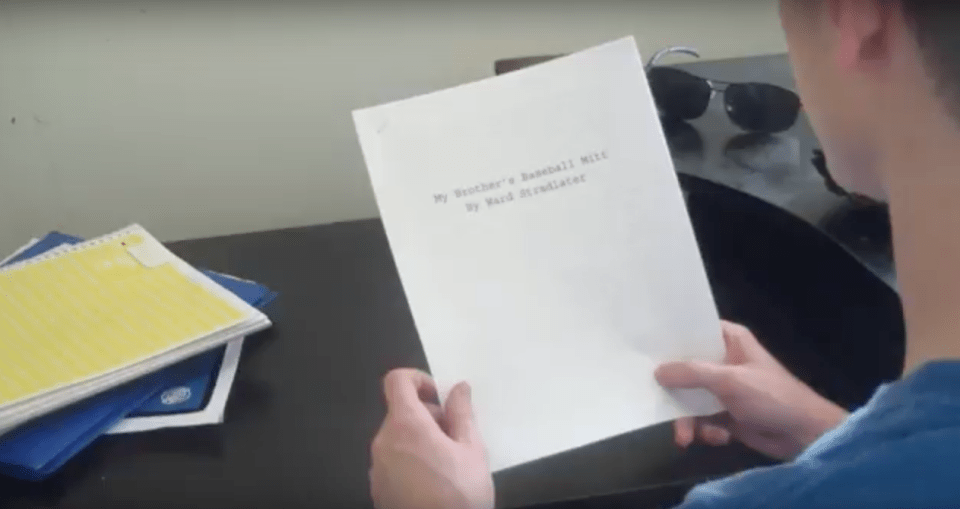
“My Brother’s Baseball Mitt”–Script & Video on Salinger’s The Catcher in the Rye
By Colin Capenito, IV Form
“My Brother’s Baseball Mitt”–Script & Video on Salinger’s The Catcher in the Rye
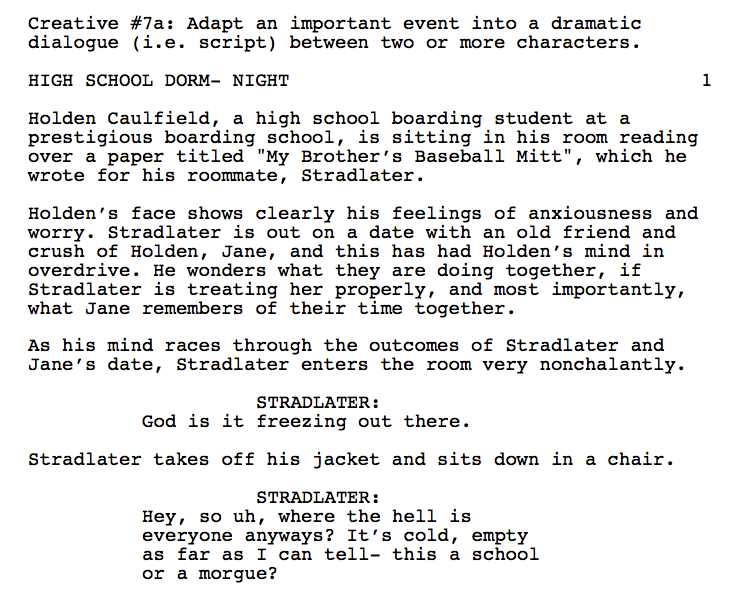
Continued: Click here for full script!

Redesigning Learning Spaces & Flexible Seating
By John Camp, English Department Head
Redesigning Learning Spaces & Flexible Seating
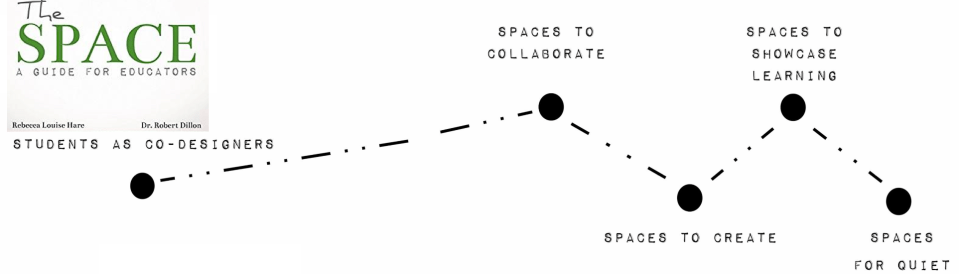
from The Space: A Guide for Educators (Hare & Dillon, 2016)
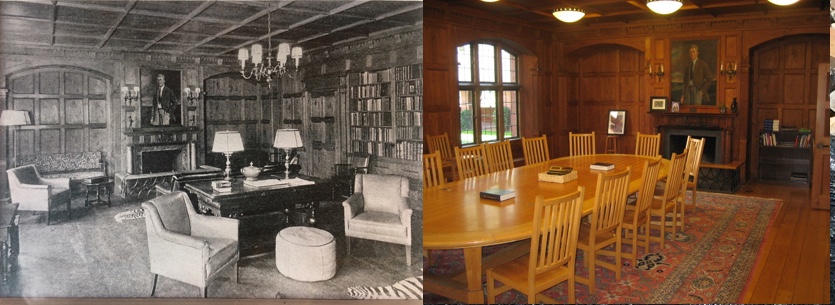
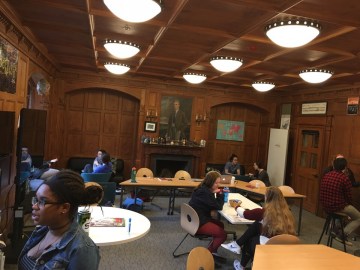
As difficult as it may sometimes be to relinquish the manacles of some tradition(s) in education, I have focused on a main mantra when considering change: what is best for students and learning. Thus, driven by this guiding principle and my teaching methods, I decided to pursue a critical trend in 21st-century teaching and learning: the importance of space, flexible seating, and classroom design. The rub, however, was my particular classroom; since I arrived at St. Mark’s in 2008, I have been fortunate to teach in Room 8/Room 136, which historically had been the “Sixth Form Room” until 1995 (read the partner piece to this article on the history of this room here). Hence, making changes to the “seminar” classroom would be bold, as the beginning move would be removing the large, classic seminar classroom table that has been a fixture since 1995. When I teach, I do not often lecture (if at all), and while seminar-esque discussion is a crucial element of my classes, it certainly is not the only element. In all of my classes (VI Form electives “Getting LOST,” “Getting LOST II: The Writers’ Room,” “Rebels with a Cause,” and V Form English class “Books Without Borders”), students work in small and medium groups, write on their own, present to the class, do activities that include movement and interaction, utilize media, collaborate on writing and projects, watch videos/films, brainstorm and note take on the whiteboards, and conference one-on-one with me (see images below for most of these activities in action!). The large oval table was not conducive to quality student learning in these endeavors. My first stop en route to change was John Warren. (more…)

Fake News & Google: A Vessel in the Sea of Verity and Deceit
By Lulu Eastman, V Form
Fake News & Google: A Vessel in the Sea of Verity and Deceit
In our Digital Age, Google has become a vital tool to the global population, with over a billion people worldwide relying on the search engine as their guide to the human library known as the internet. Google not only nurtures the insatiable curiosity and hunger for knowledge innate to mankind, but also easily provides the masses with unreliable and false information, resulting in an age where anyone can easily be deceived online. (more…)


 LEO
LEO 