
Home » Posts tagged 'English' (Page 3)
Tag Archives: English

The Absurd Act of Looking for Meaning in Camus’ The Stranger
By Jake Oblak, IV Form
The Absurd Act of Looking for Meaning in Camus’ The Stranger
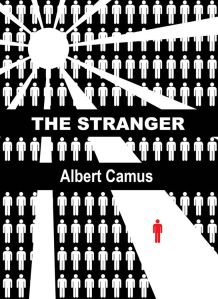 What is the meaning of absurdism? How are absurdist people perceived by others? How can someone be impacted by this lifestyle? These are all questions that arise from The Stranger by Albert Camus. This philosophical novel follows a man named Meursault through a portion of his adult life. His experiences in the book range from his romantic relations with his girlfriend Marie to being sentenced to the guillotine after being convicted of murder. Throughout these events, problems emerge as a result of Meursault’s absurdist lifestyle, and personal values. Consequently, Camus delivers an eloquent introduction to absurdism and negative impacts of believing in a counter-cultural philosophy, but based on his own logic looking for a message in his writing would be ignorant.
Absurdism is an uncommon philosophy compared to modern day ideologies, but its outlook on life is unique. Absurdism is defined as “a philosophical perspective which holds that the efforts of humanity to find meaning or rational explanation in the universe ultimately fail (and, hence, are absurd) because no such meaning exists, at least to human beings” (New World). As this definition explains, absurdism is based on the idea that life has no meaning and is completely arbitrary. As a result, looking for any kind of meaning in life would be considered futile. Through an absurdist lens partaking in events in order to fulfill a requirement created by society is ridiculous. This is a common theme which occurs repeatedly throughout The Stranger. Absurdists believe in doing what feels right to them, rather than doing what is right in the eyes of the norm manufactured by society. (more…)

Survival With God: On Piers Paul Read’s Alive
By Lindsay Davis, IV Form
Survival With God: On Piers Paul Read’s Alive
Alive by Piers Paul Read, a survival story of a plane crash in the Andes Mountains, recounts how the survivors’ trust in God influenced their resilience during a crisis of life and death. In 1972, a plane carrying Uruguayan rugby players and other Uruguayan citizens crashed in the middle of the Andes. While the travelers suffered many injuries or died from the crash, the fight on the mountain came most from their will to survive and the actions needed to outlast the miserable conditions of the Andes. The rations of food, sleeping conditions, injuries, and pre-existing relationships affected the mental status of each survivor. Their bond with God helped them to make life at the Fairchild fair and optimistic. The survivors who boarded the Fairchild came close to death in the Andes, but their hope for survival and reliance on God pushed them through the mental pain and helped inspire their faith in physical recovery.
The survivors ate the flesh of their dead companions knowing that was their only way to survive. God had inspired the courage to engage in repugnant cannibalism. Over the course of the seventy-two days, while the survivors’ mentality fluctuated, food supplies ran out and the concern of starvation became apparent. The injuries and losses suffered by some of the Fairchild passengers would not matter if they could not feed themselves. Although most of the boys were expecting the point at which they would need the protein of their fellow dead friends and passengers, Canessa was the first to discuss aloud with the group. After eliminating the idea of eating the seat cushions and digging deep for grass, the bodies that surrounded them on and in the snow were the last plan. (more…)

An Examination of the Ethics of Examining with Hitchcock and Foucault
By Jason Zhang, VI Form
An Examination of the Ethics of Examining with Hitchcock and Foucault
Surveillance requires two groups: those who are watching and those who are being watched, which brings up the  morality of surveillance. Is it appropriate for someone to observe another person intentionally? Does a person’s behavior change if they know that they are being watched? How is a person affected when their privacy is stripped away from them? Both the film Rear Window by Alfred Hitchcock and the essay “To Discipline and Punish” by Michel Foucault attempt to answer these questions. In Rear Window, Jeff is a brave man who has a history of racing sports cars and being in the military. Unfortunately, his adventurous life comes to a halt when he injures his leg. Jeff is forced to remain in his small, New York City apartment for weeks. Besides the occasional visit from his caretaker and his girlfriend, Jeff’s life is unbearably uneventful until he begins to watch his neighbors from the rear window. Likewise, Foucault’s essay “To Discipline and Punish” tries to understand the consequences of surveillance, but from the perspective of a prison’s architectural design. The prison cells of a Panopticon are arranged so that they all surround one viewing tower placed at the center of the circular building. Therefore, a person inside the viewing tower can see every cell and every person in a cell can see the person inside the viewing tower. Although it is never explicitly said whether or not surveillance is good or bad, both Rear Window and “To Discipline and Punish” come to the conclusion that surveillance is a powerful action. (more…)

Pitch Project TV Show Winner: Noise
By Bailey Horne, Nathan Laudani, and Luca Vicinelli, VI Form
Pitch Project TV Show Winner: Noise
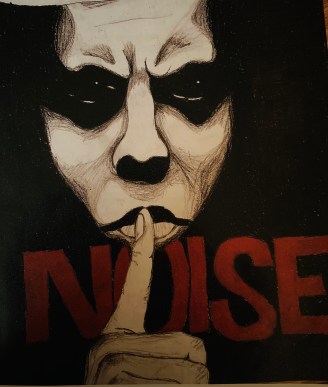
Concept Art by Bailey; click on image for Trailer.
Logline
Police Partners and best friends Walker Gibney and Irvin Demak undertake a horrifying mystery to uncover the disappearance of multiple individuals in a nearby forest.
Elevator Pitch
Walker Gibney, Irvin Demak, and two other police officers get a call and go to investigate a noise complaint in the woods. As they reach the woods, they split up to cover more ground, and the other two officers disappear. When the missing officers don’t turn up, they look further into the matter, and a bigger mystery unfolds. There are supernatural gifts, a fearless leader, and a war that nobody knows about until now. Meanwhile, Walker is facing an internal struggle with his family. The divorce between Walker and his wife has broken many relationships, especially the bond between Walker and his daughter, Sophia. As the mystery unfolds, he must make decisions that will center around the fate of both Fort Collins and Gib’s loved ones. (more…)

The Apple Does Not Fall Far From The Tree: On Cisneros’ “The Family of Little Feet”
By Grace Kingsbury, V Form
The Apple Does Not Fall Far From The Tree: On Cisneros’ “The Family of Little Feet”
Everyone has heard the saying, “the apple does not fall far from the tree,” but is there any truth to it? In “The Family of Little Feet” from The House On Mango Street, Esperanza plays a game of dress-up with her friends, Rachel and Lucy. They are given old high heeled shoes and strut around Mango Street, flaunting their beautiful shoes and long legs. The three girls are catcalled by many older men in the neighborhood, but they enjoy the attention. In the short story “Girl,” the girl is taught of chores that are expected of young women by her mother. Her mother stresses the importance of maintaining a positive reputation and looks down on promiscuity. Due to the differences in their upbringing, Esperanza expresses her sexuality whereas the girl suppresses hers as seen in their prominent accepted hobbies, varying feedback, and female role models. (more…)

Referred Pain: Societal Ailments Manifested as Individual Illnesses in Dystopian Literature
By Ms. Margaret Caron, English Faculty
Referred Pain: Societal Ailments Manifested as Individual Illnesses in Dystopian Literature
“Life is pain, highness. Anyone who says differently is selling something.”
- The Princess Bride
Perhaps life is indeed pain, as Goldman suggests, or perhaps life is only pain when a government’s control and society’s structure become so stifling and warped that its people develop pains and illnesses as a reflection of that government deterioration. The unbearable agony experienced by Westley in the Pit of Despair is not unlike the pain experienced by the residents of the Thieves’ Forest as they are unjustly forced out of their homes; Buttercup’s sorrow at hearing of Westley’s supposed death mirrors Florin’s morning when they hear news that their new princess has been killed; and Count Rugen’s six-fingered right hand embodies a distorted hand of justice. A corrupt prince, an abuse of power, and manipulative treason are made more palpable by a character’s singular screams and suffering.
This narrative tactic is evident in the novels of Atwood, Zamyatin, Abdel Aziz, and Ishiguro. The Handmaid’s Tale, The Queue, We, and Never Let Me Goshare similar authoritarian governments, sick characters, and broken social systems. Offred, Yehya, D-503, and Kathy are broken, ailing humans, but they are also members of irrevocably broken societies and authoritarian governing bodies. These characters’ illnesses are more than mere byproducts of broken government control and societal values. Rather, these dystopian societies with authoritarian governments posit characters’ physical ailments as representative of larger societal illnesses and failings. (more…)

Gender Roles at Fenway Park: Analysis of “Rain Delay” by Michelle Von Euw
By Tate Frederick, Anni Zhang, Clara Hua, Tommy Flathers, Kartik Donepudi, and Elise Gobron, IV Form
Gender Roles at Fenway Park: Analysis of “Rain Delay” by Michelle Von Euw
Editor’s Note: All IV Form Writing & Literature classes embarked on a 30-20-30 Assessment (30 Minutes of Drafting; 20 Minutes of Peer Review; 30 Minutes of Revising & Editing) for a one-paragraph analysis of the short story “Rain Delay” by Michelle Von Euw. PROMPT: “What does “Rain Delay” have to say about gender? Focus your analysis on either Caroline or Kyle.”
Tate: The character Caroline in “Rain Delay” challenges the traditional gender roles used in literature because of her interest in sports and her boyfriend Kyle’s unreciprocated enthusiasm in their relationship.
Anni: Kyle acts as an embodiment for men in the society who are unaware of the other gender’s true feelings.
Clara: Caroline shows how females face more judgments and constraints in society than their male counterparts.
Tommy: By showing the difference between the reactions of boys and girls to their kiss, the way that “Rain Delay” is set up reveals the underlying role of gender that makes Caroline feel even more isolated than she already did.
Kartik: By giving insight into gender norms that guide Caroline’s actions, Michelle Von Euw uses Caroline’s situation in “Rain Delay” to highlight the expectation for high school girls to conform to societal standards when it comes to relationships.
Elise: By representing Caroline’s identity, the short story “Rain Delay” uses symbolism to communicate young women’s struggle of identity due to an underlying male superiority.
SCROLL DOWN FOR FULL PARAGRAPHS! (more…)

Post-Apocalyptic Literature Discussion Posts
By CJ Schumacher, Lucy Zheng, Stephanie Moon, and Robby Harper, VI Form
Post-Apocalyptic Literature Discussion Posts
Editor’s Note: This explanation is about “E-Portfolio and/or Discussion” posts in Ms. Hultin’s VI Form elective, The Dystopian Flood: Post-Apocalyptic Literature–“Posts are due every week or two weeks. Posts must be typed, relatively error-free, and published on your Google Sites E-portfolio or Canvas discussion page. Each post should be a minimum of 300 words. Occasionally, E-portfolio assignments will have more specific instructions. In these assignments, your answer should explore and analyze the material from class. E-portfolio posts are thoughtful, but informal responses that demonstrate your thinking on a topic.”
CJ
Robots are either created to serve humans or to emulate them. They are meant to either be companions or house maids. In “Robbie,” Robbie is created to serve, but he ends up proving that despite his lack of human characteristics; he is equally human in terms of human connection. After being thrown away by the Weston family, he risks his life to save Gloria, his only friend. Just because Robbie cannot talk does not mean he is unable to form human connections or have emotions. Ex Machina tells a different tale. Ava is the closest thing to artificial intelligence and is built to be the next evolution of the human race. However, her own genius is what keeps her from forming human connection. She is too smart to see forming an emotional connection as important. Ava manipulates Caleb into feeling as if he is forming a real connection with her. She gets him to tell her personal things about himself and shows him interest and care, which in turn gets Caleb to fall for the idea that he and Ava have a genuine connection. However, Ava abuses Caleb’s trust and uses him to help her escape and subsequently kill her creator. She leaves Caleb locked away, desperately picking up the broken pieces of his heart. In this story, Ava abuses the human need for connection for her own benefit. (more…)


 LEO
LEO 