Home » Posts tagged 'English' (Page 13)
Tag Archives: English

Willing to Empathize with Another’s “Otherness”
By Hans Zhou, VI Form
Willing to Empathize with Another’s “Otherness”
“Come on, those chicks must be super proud to be portrayed that way,” a boy dismissively interrupted me during a class discussion while I was criticizing the eroticized female images in a magazine that objectifies women for commercial gains. Astonished and silenced, I could not believe what I had just heard. It was my first year in the United States. For a Chinese boy who longed for open-minded conversations in the United States, the all-male school atmosphere was not ideal. Identifying as a feminist only made things worse. I was publicly ridiculed for spreading “stupid feminism” and lacking masculinity. Admittedly frustrated, I was above all baffled. Why would people easily hold on to their prejudices without trying to listen to another perspective? (more…)

Memoirs of a Self-Professed Drama Geek
By Charlotte Wood, V Form
Memoirs of a Self-Professed Drama Geek
 I am a fantastic liar. I lie every day for hours at a time, occasionally to hundreds of people at once. I practice lying in my free time. I never feel bad, I always get caught, and I think it actually makes me a better person. People love my lies, and so do I.
No, I’m not some sort of psychopath, I’m an actor. When you think about it, that’s all acting is, really. Lying. Don’t get me wrong, I hate lying in the conventional sense. Honesty is the best policy, as they say. However, I firmly believe in the value of lying with the consent of the party being lied to, or, in other words, acting. (more…)

To Go Through Hell and Resurface
By Isabella Cruz-Nascimento, V Form
To Go Through Hell and Resurface
Crazy, insane, bipolar, OCD–all terms that have worked their way into colloquial language. Most people use them to describe themselves; “Oh my God, I am so OCD, I can’t handle messy rooms” is a sentence that could be heard regularly among teenagers. However, swap in a teen that genuinely displays compulsive behavior and the declarations turn into murmurs of, “What’s wrong with her?” “She needs to calm down,” “They need to medicate her already”. Mental illness is inconsequential and intriguing, until one sees its effects in person. In a community like St. Mark’s, being diagnosed with a mental illness can be onerous, not only because of the rigorous environment, but also because of the burden of the connotations that come with having a diagnosis. In an environment that demands perfection, I sometimes feel branded as incapable of success because of my diagnosis. For the majority of the past two years I have kept my dishonorable secret closely guarded. I refuse to do that now. (more…)

“I Am” Poetry
By Miss Amanda Hultin, English & Religion Faculty, and Charlie Mosse, Gillian Yue, Cooper Giblin, Hailey Dubose, Peter Ackerman, & Mark Wang, IV Form
“I Am” Poetry
In the first days of school, there is much that I want to learn about my students. I ask them to write, “How can I be a good teacher for you?” “What do you want me to know about you as a student? As a person?” The answers are read only by me.
I also want my students to learn about each other and to begin creating the learning environment unique to each class. I assign the “I am” poem as an exercise in thinking, writing, and talking about (more…)

Optimism About Positive Psychology
By Sarah Eslick, Associate Director of The Center for Innovation in Teaching & Learning
Optimism About Positive Psychology
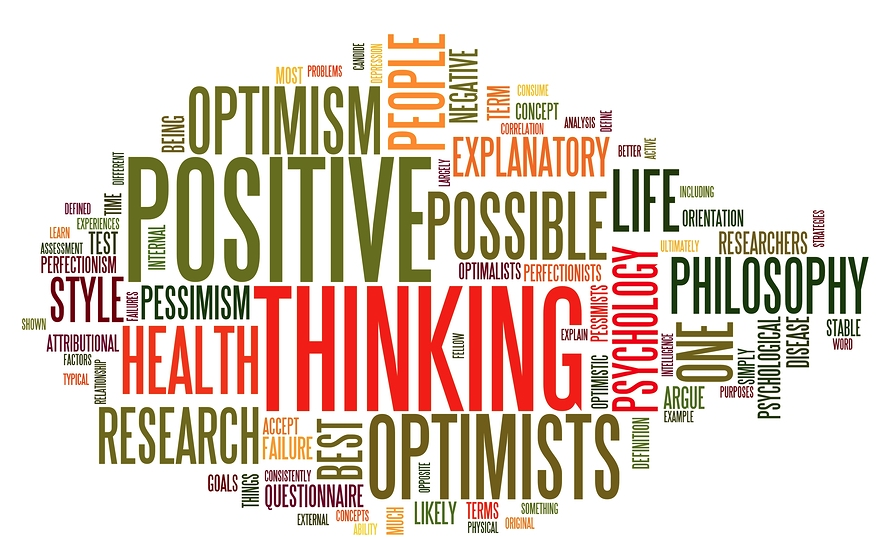 What allows humans to thrive? What conditions, actions, or qualities contribute to well being? How do we help kids become resilient?
Historically, the field of psychology has focused on mental illness. Depression, schizophrenia, and other disorders of the mind carried far more intellectual gravitas than the psycho-emotional characteristics that lead to happiness. Certainly these illnesses are less subtle, easier to categorize, label, and examine. In striking contrast, the field of positive psychology studies how people do well: how we cultivate positive emotions and optimism and how we develop grit and self-regulation. It explores how we benefit from resilience and gratitude while recognizing our (more…)

Biracial Me: Life as an “Other”
By Sophie Haugen, IV Form
Biracial Me: Life as an “Other”
As I walk through school, talk to people, and go through normal, day-to-day activities, I don’t feel as though I have a large sign pinned to my forehead that reads “Biracial.” When I wake up in the morning, it is not the first thought that crosses my mind. In fact, I don’t think about being biracial very often, and I don’t feel biracial most of the time, unless someone or something makes me aware of it.
Something that is an aspect of being biracial is having to choose. In my case, my mom was born in Korea and moved to America when she was young. My dad is 100% Norwegian, but has lived in America for his
entire life. I have been asked if I feel more Korean than Norwegian and vice versa, but in reality I don’t feel (more…)

Anatomy of a Course: Getting LOST
Anatomy of a Course: Getting LOST
By John Camp, English Department Head
mrcamp@stmarksschool.org
Twitter: @gettinglostcamp
 In September of 2004, commercials ran for a new fall show on ABC called LOST. As a self-ascribed t.v. critic (and an acerbically judgmental one at that), I remember distinctly and succinctly saying to my wife Tara, “That looks stupid.” Interestingly, when Lloyd Braun, then the head of ABC, pitched the idea at a
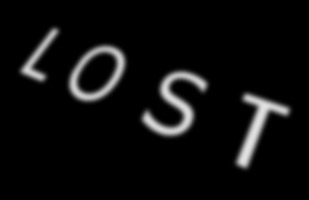 network retreat, virtually all ABC execs had the same reaction that I had. Senior vice president Thom Sherman, however, was intrigued and pursued the idea with Braun and the writer Jeffrey Lieber. Through a few stages of scripting, Braun’s original idea became LOST–driven by J.J. Abrams and Damon Lindelof, and eventually Lindelof and Carleton Cuse. In the summer of 2006, friends of mine implored me to watch the show, saying that they knew I, specifically, would love it. So, I borrowed the Season 1 box set, and Tara and I sat down to watch at least the pilot episode. From the initial moment of protagonist Jack’s eye-opening and its inherent symbolism (Eye of Horus, the Mind’s I, gateway to the soul), the mythology intrigued me, and binge-watching, of course, ensued. From those origins, LOST became a literal religion for me as well as the inspiration for what I consider to be the magnus opus of my teaching career, my course “Getting LOST.” (more…)

Books Are Better Than People
By Maggie Nixon, English Faculty
Books Are Better Than People
Or, the more accurate and less eye-catching, Why I Read Books
Or, Bibliophage
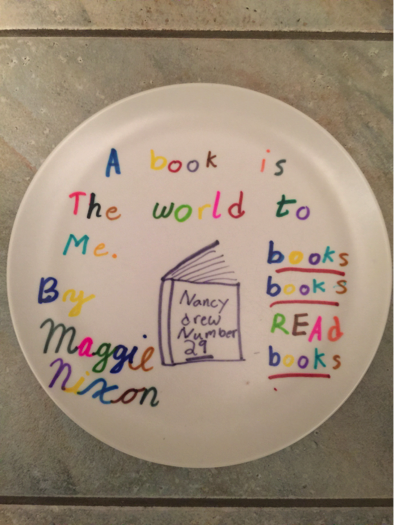 When I was in first grade, my brother and I got a really cool gift for Christmas. Or for a birthday. Or randomly. I don’t really remember when we got it – but it was really cool. It was a “design your own plate” kit–you drew your designs on a white circular piece of paper, shipped it off to a company, and in a few short weeks, BAM, you had plates with your drawings on them. My brother and I each made two plates. His were the “My Mom is Great” and “Hamerhead Shark” plates. He couldn’t spell yet. The misspellings resulted from me trying to be a teacher. I also made two plates. The first was the “Hawii” plate where I drew a lovely picture of a beach and wrote about the 50th state. Jokingly, my father refers (more…)


 LEO
LEO 