
Home » Posts tagged 'English' (Page 10)
Tag Archives: English

Voice in Guitar and in Literature…and in Me
By Shep Greene, VI Form
Voice in Guitar and in Literature…and in Me
The guitar is an integral part of who I am. As my skill has progressed, I’ve seen my appreciation and understanding of music progress as well. Over this past year, I began to delve into a more abstract form of music in improvisation. Within this form of my guitar playing, I began to find striking similarities between music and literature. Imagine every note as a letter and every note coming together to form a riff, with all of the respective letters coming together as one word. By the end of a piece, just as by the end of a novel, you’ll have a powerful message to send out to your listeners and readers. (more…)

Shakespeare’s The Tempest: Missing Piece Storyboards
By Daisy Williams, Steven Landry, Teagan Ladner, Grace Gorman, Sam Lauten, Riley Lochhead, Jess Adams, Tracy LeBlanc, Maeve McCuine, Caroline Bailey, and Kahler Mabbs, VI Form
Shakespeare’s The Tempest: Missing Piece Storyboards
Between Season Three and Season Four of LOST, the writers (for ABC and in 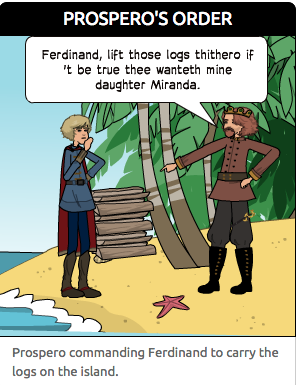 conjunction with Verizon) produced 13 short (< 4 minutes) “mobisodes” or “webisodes” that divulged scenes that didn’t appear in the first three seasons, but yet were considered part of the canonical narrative. These were called “Missing Pieces.” In Getting LOST, students were assigned to create a four-panel storyboard of a “Missing Piece” from Shakespeare’s The Tempest that they could imagine and create to be part of any aspect of the story from any point in history (from 5000 years ago to the unseen elements of Shakespeare’s plot to the present day ramifications of the characters’ actions). The storyboard–a graphic illustration that previews what would be staged or filmed by actors–could be crafted in any format or program.
Below are the varied storyboards created. Keep scrolling! (more…)

Rebel Without a Cause and Juvenile Delinquency Hysteria
By Harry Kuperstein, VI Form
Rebel Without a Cause and Juvenile Delinquency Hysteria
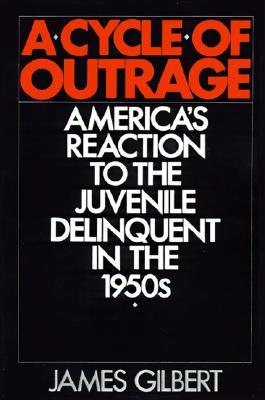 Rebel Without a Cause, starring James Dean, was released in 1955, which was around the peak of the hysteria surrounding juvenile delinquency. Chapter 4 of Gilbert’s A Cycle of Outrage states that from 1953 to 1958, there was a spike in articles about delinquency. The Senate also heard cases of delinquency in 1953, some of which lasted over a decade. And, it soon became evident that movies about teenagers turning towards delinquency, likely propped up by famous icons like James Dean, became wildly popular. Over sixty films centered on the idea of juvenile delinquency were released in the 1950s (Gilbert 85). (more…)

Empathy Through Education in China’s Xi Ma Yin Village
By Carrick Zhu, V Form
Empathy Through Education in China’s Xi Ma Yin Village
 My mom and I began our volunteer teaching trip in 2014. With the help from the local Red Cross Organization in Ning Xia, China, we were able to find a local primary school situated in Xi Ma Yin village. Xi Ma Yin rests at the base of the Helan Mountain where the water supply is scarce. The villagers are mostly immigrants from the other side of the Helan Mountain. The elementary school where I worked is called Xi Ma Yin Immigrant Development Zone Elementary School. (more…)

Race in Hurston’s Their Eyes Were Watching God: an Infographic
By Haley Dion, IV Form
Race in Hurston’s Their Eyes Were Watching God: an Infographic
We were given a project that instructed us to create an infographic on a key theme from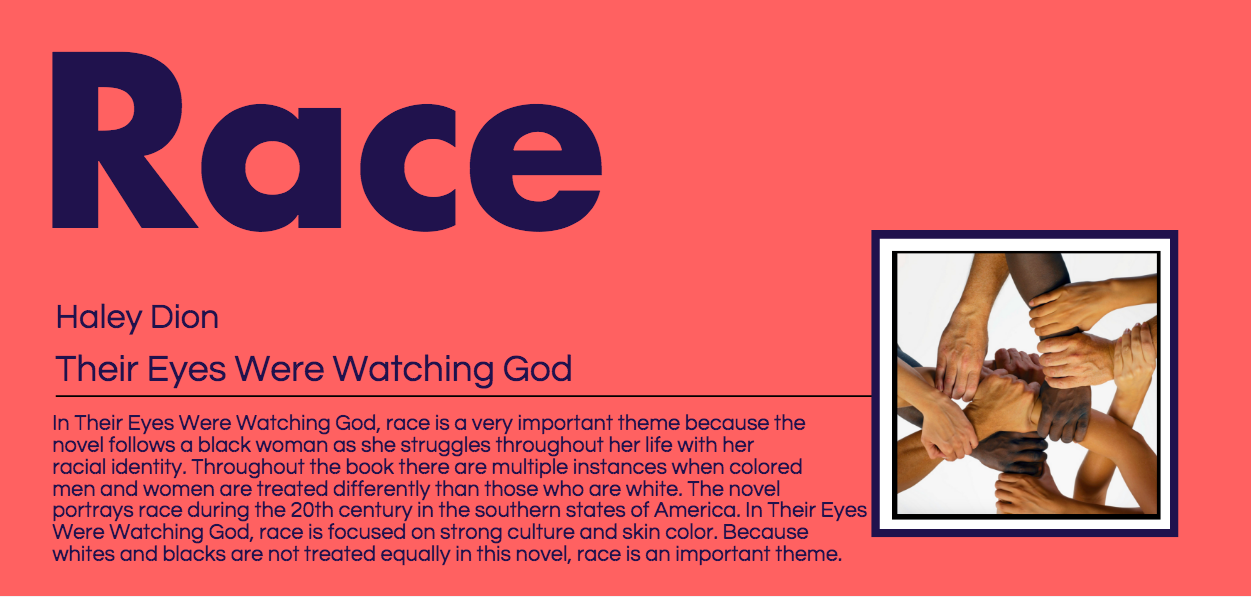 Their Eyes Were Watching God. My infographic focuses on the theme of race in the novel. It discusses the characters’ connections to race, the relationship between race with other themes in the book, and the presence of race throughout the chapters. I enjoyed creating this infographic because I got to look at the importance of a modern day issue in the 1920s/1930s time setting of the novel. The elements of the infographic are below or you can access the full infographic by clicking here. (more…)

Global Connections of Media and Skin
By June Seong, IV Form
Global Connections of Media and Skin
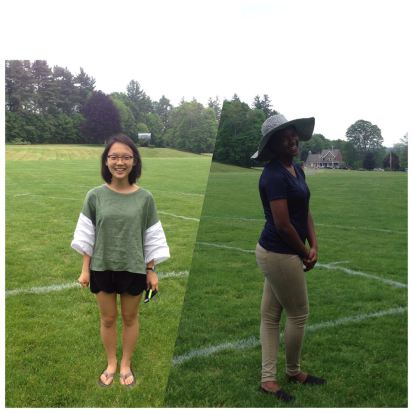
Amidst the chaos that is my life – including the future I must decide upon, the necessity to be “special,” and my attempt to make this post somewhat grammatically correct – I am struck by my simultaneous privilege and ignorance. This privilege and ignorance is exhibited through myriad ways at this very moment: 1) this dull MacBook Air that I am communicating through and that was probably configured by an underpaid or unpaid laborer; 2) the whizzing air conditioning that is breathing on my neck so that I might not die from heatstroke whilst the world scales up a few sweltering Centigrades; 3) the immensity of the world that is within computer click’s reach via Facebook. (more…)

Read the Pilot Episode: GASLIGHT–a Sci-Fi T.V. Series
By Sarah Robertson, Chloe Ene, Jasmine Williams, Madison Falzon, Justin Elkinson, Payton Nugent, Penelope Benkard, Aigerim Bishigayeva, Jasen Ripley, Lilly Drohan, Abby Moses, VI Form
Read the Pilot Episode: GASLIGHT–a Sci-Fi T.V. Series
 GASLIGHT is a nine-episode television sci-fi drama written in Getting LOST II: The Writers’ Room during the Spring Semester.
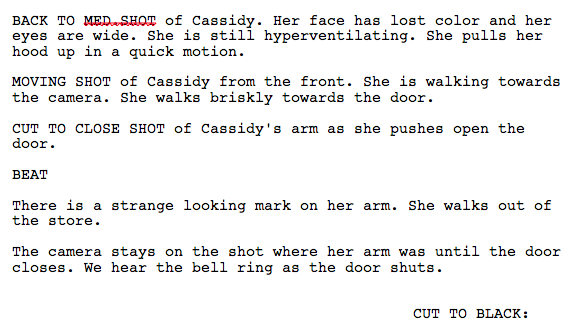
Click here to read the Pilot episode written by Chloe Ene, Sarah Robertson, and Jasmine Williams.
Check out the Official GASLIGHT WEBSITE HERE. (more…)

Defining Chaos
By Sean Kim, VI Form
Defining Chaos
Editors’ Note: As a part of a college dorm application, Sean wrote this essay with Mr. Lubick (English faculty). Sean attempted to answer what chaos might be after several sessions of intense discussion and joint writing/editing together with Mr. Lubick. {The prompt for the application appears after the essay.}
It’s interesting to consider whether chaos can be constructive or deleterious, however, the definition of chaos in the article is insufficient. The problem with defining “chaos” is that the very word represents what we don’t really understand. What appears to us as chaotic may in fact have pattern or cause or order beyond what we understand. Chaos is in the perception of the beholder. In terms of ideas, chaos is intellectual terra incognita. In other words, any positive or negative value that we impose upon the idea of chaos originates from our limited scope of understanding of the universe. (more…)


 LEO
LEO 
