
Home » Posts tagged 'Biology' (Page 3)
Tag Archives: Biology

Hypoxia: The Forming of Dead Zones
By Rosanna Zhao, V Form, Mary Hoffman, VI Form, and Claire O’Brien, VI Form
Hypoxia: The Forming of Dead Zones
Infographic: https://infograph.venngage.com/ps/l35FghyQ4DM/dead-zone-project
A “Dead Zone” is a region in the ocean in which oxygen concentrations are too low to support healthy marine life. This phenomenon of insufficient oxygen levels is known as hypoxia. Hypoxia is associated with the overabundance of algae which can lead to oxygen deficiency when they cover the water surface and disallow photosynthesis to occur within plants beneath the water. Once a vast body of water becomes hypoxic and oxygen levels drop below 2 ppm DO, a dead zone is formed.
Dead zones occur near coastal regions because the cause of formation is primarily linked with eutrophication. Eutrophication is defined by an excess of nutrient pollution in an open body of water, causing death of animal life due to a deficiency of oxygen. Although nutrients are good for fertilizing plants, nutrient pollution is detrimental to the ocean because it causes chances in the marine ecosystem, resulting in deaths of animals. During the spring and the summer, heavy rain washes nutrients containing nitrogen and phosphorus that farmers use to fertilize their land into streams and rivers. Once these nutrients flow into coastal areas, they stimulate the growth of algae. (more…)

Prep School Youth Coalition for Health Opportunities Infographics: Bronchitis, Altitude Sickness, & Emphysema
By Nathan Laudani, Mary Flathers, and Danny Ciccarello
Prep School Youth Coalition for Health Opportunities Infographics: Bronchitis, Altitude Sickness, & Emphysema
Editor’s Note: In an effort to educate our community on common physiological conditions, the St. Mark’s chapter of the Prep School Youth Coalition for Health Opportunities (PSYCHO) is sponsoring an informational poster competition and invites submissions from all current Biology students. Poster submissions are to explain the science behind an ailment caused by a traumatic event. Posters will be assessed based on informational accuracy, detail, clarity, originality, and workmanship.
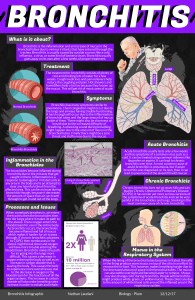
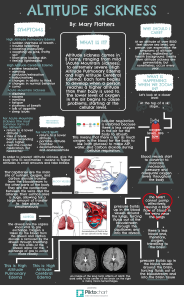
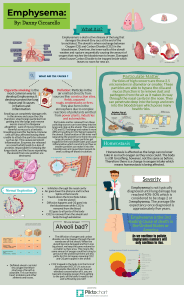
Please scroll down to see FULL and detailed infographics! (more…)
How the Adolescent Brain Works: In Annotated Diagrams
By Hannah Hassara, Katherine Gao, Kennedy Petties, Ryan Yang, Mary Flathers, Nathan Laudani, Cecily Bradley, David Ragone, Caitlin Lochhead, Teresa Meyer, and Steven Sinchi, V Form
How the Adolescent Brain Works: In Annotated Diagrams
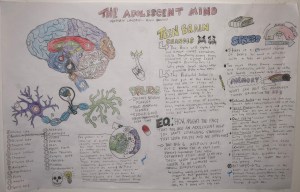
Editor’s Note: In the culminating assignment of the Biology 30 unit on Learning and the Brain, the students created Annotated Diagrams of their brains and how their brains learn new information. An Annotated Diagram is a formal sketchnote that aims to demonstrate understanding of the information by demonstrating how the information was processed. The following question was posed: “How might the fact that 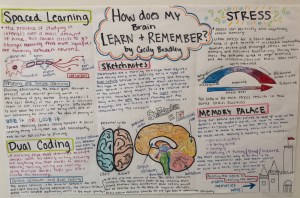 you are an adolescent help you craft learning strategies that work for you and are effective?”
Scroll down for large images of the Annotated Diagrams. (more…)

Are Year-Round Islands Off the Coast of Maine Economically Sustainable?
By Emily Taylor, IV Form
Are Year-Round Islands Off the Coast of Maine Economically Sustainable?
Editor’s Note: Emily created this presentation while attending the Waynflete Sustainable Ocean Studies Summer Camp through partial funding from The Matthews Fund. (For better clarity images, click here for Google Slide presentation)
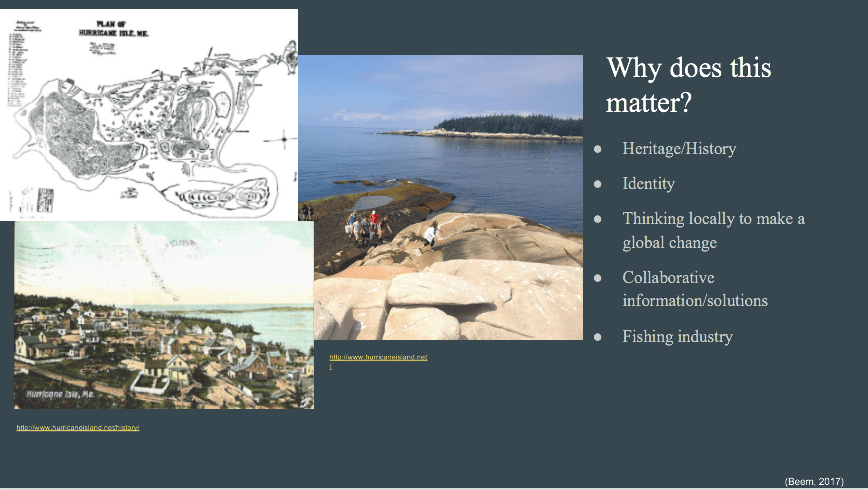
Hurricane once was… now is not. We don’t want this happening to the current year round islands… but why?
I wanted to figure out why this mattered, not only to me but to everyone in Maine and everyone who cares about Maine.
Year round island communities are something that have been a part of maine for a very long time. Holding on to these islands almost maintains the heritage, history, and identity of Maine.
In order to look at islands around the world on a global scale, figuring out how these small Maine islands work on a local scale will help to make a global change. Also, the collaborative information and solutions for islands around the world could be a useful database.
The fishing industry is very prevalent and important on the islands of Maine, so the island communities are important to preserve.
Constructing a Flowchart in Biology
By Amy Wang, V Form
Constructing a Flowchart in Biology
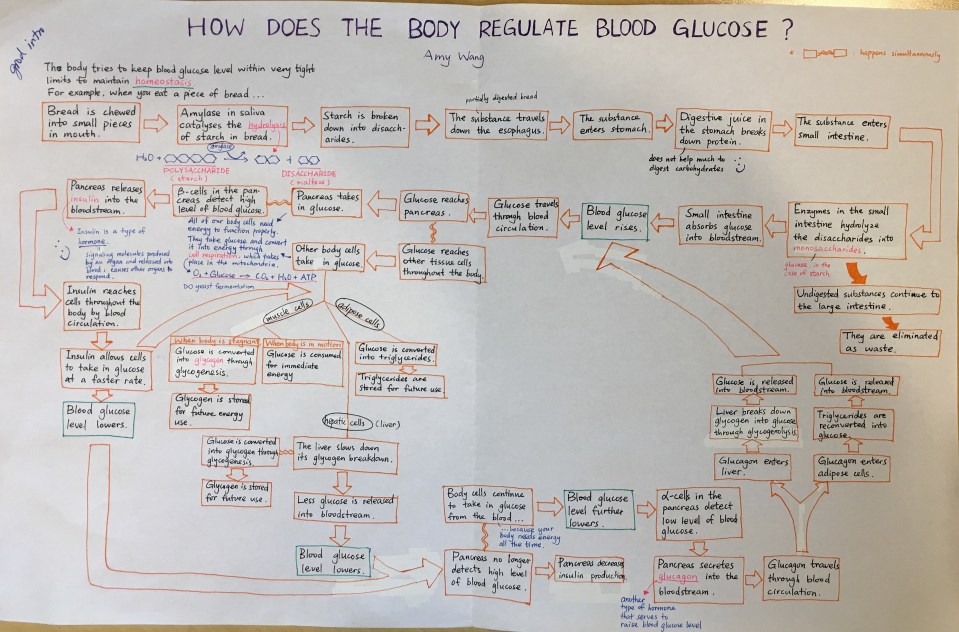
Editor’s Note: The following description of the assignment provided by Ms. Kimberly Berndt, STEM Faculty–
It can be challenging to understand the complex physiological mechanisms and pathways we explore in Biology. One effective strategy to synthesize, organize, and review information is through visual thinking. We employ visual thinking in a number of ways. In this assignment, students were charged with constructing a flowchart to illustrate their current understanding of how carbohydrates are metabolized.
An effective flowchart takes a complex process and simplifies it in a manner that makes the information more accessible. Flowcharts can be found in many Biology textbooks for this reason. However, the process of constructing a flowchart can be an even more effective tool for learning. Constructing a flowchart requires multiple intellectual tasks. (more…)

A New Reality for Cancer Patients
By Sophie Haugen, VI Form
A New Reality for Cancer Patients
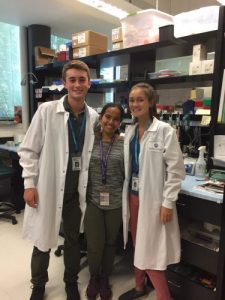 “No radiation. No Chemo. No Cancer.” These are the words on the sign hanging from the window of the Ben Towne Center for Childhood Cancer Research at the Seattle Children’s Research Institute. Partway through my fifth form year in Advanced Biology, Jack Thalmann and I were fortunate enough to be selected for internship positions at a cutting-edge research lab for one month of the coming summer.
This past August, we traveled to Seattle and lived in Magnolia, an urban-residential neighborhood located a few miles north of downtown Seattle, with Max (‘72) and Marcia Witter. Each day we commuted to the Ben Towne Center and worked in the Jensen Lab, which focuses on immunotherapy as a treatment for pediatric cancer. Dr. Michael Jensen (‘82), the director of the Center, has made remarkable strides and has achieved some incredible success. Dr. Jensen and the staff at the Jensen Lab take an innovative approach to fighting cancer: they collect blood samples from pediatric cancer patients, genetically engineer the patient’s own T-cells to recognize cancer cells, and infuse the treatment back into the patient’s body. (more…)

Encapsulating Antitumor Nanodrugs
By Michelle Hung, VI Form et al
Encapsulating Antitumor Nanodrugs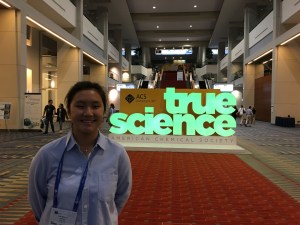
Nano-particulate drugs hold great promise in improving drug efficacy because of their enhanced solubility, prolonged retention time, and higher bioavailability with tissues or cells. Generally, these nanoparticles are encapsulated to keep them well dispersed according to specific particle sizes in the manufacturing process. The additional advantage of encapsulation is that a rationally selected coating agent may tailor the pharmacokinetics and control the release of therapeutic nanoparticles in the targeted tissue, simultaneously reducing the toxicity and side effects of drugs. (more…)

STEM Fellow: Probing the Semantic Representations of Emotional and Social Concepts in Autism
By Lucy Cao, VI Form
Probing the Semantic Representations of Emotional and Social Concepts in Autism
Abstract
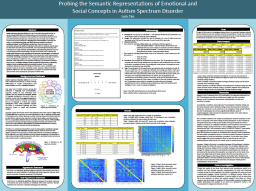
Please Click The Image To Download/See the Poster
Autism Spectrum Disorders (ASD) are a set of neurodevelopmental disorders as shown through difficulties in social interaction and communication as well as repetitive behaviors. Symptoms of ASD manifest at an early age and become most prominent between the ages two to three years old. One major area of defect common among ASD individuals is language and communication, especially the ability to comprehend language and make inferences based on social and emotional context. Recent linguistics studies have shown that there is an association between the ability of individuals with autism to attribute mental states (to themselves and others) and verbal skills. It is found that high-functioning ASD individuals have a less coherent representation of emotional experiences and tend to avoid using emotional terminology. The goal of this study was to examine the relationship between social competence and semantic representation of social and emotional concepts. Knowing that lexical co-occurrences are useful measurements of semantic knowledge, participants of this study were asked to rate pairs of verbs in terms of similarity on a scale from 1 to 5, 1 being very similar and 5 being very dissimilar. Data collected from the typically developing (TD) participants indicates that there is a correlation between social competence and accuracy of similarity ratings of verbs containing social and emotional content. The less socially competent, the less accurate the ratings are. Moreover, such a correlation is not present in verbs of no social or emotional content. However, the investigator failed to identify a significant difference in the ASD population’s perception of emotional and social verbs and the control participants’ perception of these verbs due to reasons of methodology.


 LEO
LEO 