
Home » Season 3 (Page 7)
Category Archives: Season 3

Unitarianism in New England
By Payton Nugent, VI Form
Unitarianism in New England
Rising liberal ideologies in the early nineteenth century caused a split of the more liberal beliefs of Unitarians from the conservative, orthodox beliefs of the Congregationalists. This separation occurred slowly, but gradually, throughout New England. When the majority of a church congregation preferred Unitarian beliefs to those of the Congregationalists, the parish converted to Unitarianism.[1] The most influential driving force of this split was William Ellery Channing’s book, Unitarian Christianity, which has become known as the “Unitarian Manifesto.”[2] Unitarian Christianity proclaimed many of the beliefs that caused the Unitarian sect to break from the Congregationalists. While the Congregationalists believed in the idea that Jesus, God, and the Holy Spirit were all the same entity, the Unitarians believed that Jesus was not God.[3] Unitarians also rejected predestination, which asserts that God determines a person’s salvation before birth.[4] His book was a result of many movements and rising liberal ideologies of the time such as the Enlightenment, Scientific Revolution, and Great Awakening. One church that this separation greatly influenced was the Pilgrim Church in Southborough, Massachusetts. (more…)

William Peck and Nativist Fears
By Jack Foley, VI Form
William Peck and Nativist Fears
From 1883 to 1894, William E. Peck was the first layman to be Head of St. Mark’s, a conservative, Episcopalian school. Many Trustees at the school believed that Peck was leading the school away from its religious roots. At the same time, in the late nineteenth century, Catholic immigrants came to the U.S. in huge numbers and threatened its Protestant elites. The changing nature of St. Mark’s and the U.S. threatened the Board of Trustees, which led to Peck’s dismissal. (more…)

George G. McMurtry and the Lost Battalion
By Jack Wood, VI Form
George G. McMurtry and the Lost Battalion
The Medal of Honor is an award issued by the President of the United States that is given to an individual for his or her bravery and selflessness of during war.[1] In World War I, arguably the most deadly and brutal of all wars, there were 122 Medal of Honor recipients in the U.S. Army.[2] According to the award criteria, each one of these men “distinguished himself conspicuously by gallantry and intrepidity at the risk of his life above and beyond the call of duty.”[3] One of these recipients, George Gibson McMurtry Jr., was a student of the class of 1896 at St. Mark’s School.[4] His military service included acting as captain of Company E of the 308th Infantry of the 77th Division of the U.S. Army during World War I.[5] This infantry division is known as the famous Lost Battalion, a group of U.S. soldiers who were pinned down by German forces in the Argonne Forest in France in late 1918. George McMurtry’s steadfast leadership and courage helped the Lost Battalion survive five days of combat behind German lines. While over one hundred U.S. soldiers died in this engagement, many more would have lost their lives were it not for McMurtry’s ingenious thinking and optimism. (more…)

Reviving Ophelia’s Song
By Sam Sarafin, V Form
Reviving Ophelia’s Song
What happens to a life so battered and bruised under the gift wrap of perfection? What happens to a life
 whose opportunities have been seized by another, whose ideals and self-importance are plucked out of fingertips before they even left a print? In the play Hamlet by William Shakespeare, Ophelia is often depicted as well-composed and sophisticated. When Ophelia sings a song before her death, she can attribute the meaning of the lyrics to one feeling or event – most often, this meaning is madness or grief. While Ophelia sang this song to convey her distress, there are many hidden meanings in the lyrics. Ophelia’s song is not an expression of one event or one feeling – it is the verbalization of grief over Polonius and Hamlet and a scrutiny of Gertrude’s portrayal of love. In it, Ophelia laments about patriarchal society and the way she had been controlled and used. (more…)

La Realidad de la “Democracia Racial” entre Brasil (En Español and English)
By Theo Bartlett, V Form
La Realidad de la “Democracia Racial” entre Brasil (En Español and English)
Our core objective in our Spanish IV class is to study Latin American history in order to understand how and why Latin America has been shaped into the region that it is today. Within our curriculum, we accomplish this task by doing case studies on many different countries in Latin America, in which we study the national history of the country and then connect it to recent publications regarding its modern day situation. Within these case studies, we explore the demographics, economics, politics, and social scene of a country by immersing ourselves in Latin American literature, political debates, documentaries, and movies, and we reflect on what we have learned in both classroom discussions and written responses throughout the studies. Most recently, at the end of our case study on Brazil, we were asked to take the information that we learned in the PBS documentary “Black in Brazil”, which talks (more…)

Advice to a “Girl”–What I Wish I Knew
By Mary Hoffman, IV Form
Advice to a “Girl”–What I Wish I Knew
(Based on Jamaica Kincaid’s short story)
Always be aware of your surroundings; never ignore your gut feeling; when you don’t feel comfortable in a situation- leave; the police are always there to help; nothing good happens after midnight; learn from your mistakes; you deserve what you tolerate; treat people how you want to be treated; make your bed every morning, it teaches smart habits; clean your room; dress to impress, people will treat you better when you look nice whether that’s right or not; never slut shame- girls are supposed to support each other; friends and family are more important than romantic relationships; don’t gossip; don’t burn (more…)

Knowing God
By Adriana Roman, VI Form
Knowing God
The majority of people do not believe in the existence of anything if it cannot be seen, felt, smelled, or touched. This notion has to do partly with the time period we live in—the era of technological advances, where almost anything in the world can be proven through tangible proofs and reasons. As a result, everything we experience externally, through the world, can be “known”, or believed in, because there is irrefutable evidence that will produce the same result every time a specific situation occurs or a question is brought up. For example, gravity’s existence can be “known” because we have experienced countless times that a dropped pencil will fall to the ground due to the pulling force of gravity. Experience (more…)

Literature Review: Creating Value in US Health Care Industry

By David Baek, VI Form
Literature Review: Creating Value in US Health Care Industry
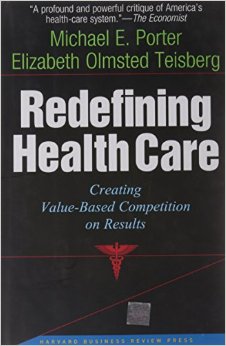
Redefining Health Care, by Michael Porter, and Fixing Health Care From Inside & Out, by several Harvard Business School professors, will be the foundation upon which this review will be built. The two books differ in that the former centers its content on a general, abstract principle that can be applied to the whole industry while the latter provides practical business solutions to problems occurring inside each component of the industry. Many health care leaders today are provided with far too many solutions, such as these two, to decide which one is the best option. This review serves to combine the two seemingly complementary solutions to better the health care leaders’ vision for moving US health care forward.
The status quo of the health care industry is looking very dim. There have been reports of unhelpful pharmaceutical mergers, doctors charging patients unnecessary amounts, a decline in employer-based (more…)


 LEO
LEO 