Home » Season 2 (Page 4)
Category Archives: Season 2
Hinduism: a Dialogue in the Eastern Religious Thought Class
Hinduism: a Dialogue in the Eastern Religious Thought Class
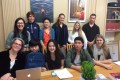
Eastern Religious Thought is a survey of the major Eastern religions – Hinduism, Buddhism, Confucianism, and Taoism. We not only study the traditions and symbols of each religion but also examine its philosophy and theology. We first studied Hinduism. Hindus worship many deities but recognize that there is only one Ultimate Reality (Brahman). Hindus believe in reincarnation and strive for the ultimate goal of liberation (moksha).
Emma: A Reading from the Upanishads–A seeker named Vidagdha Śākalya approaches the sage Yājñavalkya with the question, “How many gods are there, Yājñavalkya?”
“Three thousand three hundred and six,” he replied.
“Yes,” said he, “but just how many gods are there, Yājñavalkya?” (more…)
The Horrific Nazi Experiments During World War II
By Lucy Holland, VI Form
The Horrific Nazi Experiments During World War II
Presently, informed consent is a widely used and understood term – the process of receiving consent from patients before administering a medical intervention on them. But before a court case in 1957[1], only 58 years ago, informed consent was not required in medical practices, which meant that medical practitioners could do almost anything to their patients without them knowing or realizing that it was ethically wrong. In The Immortal Life of Henrietta Lacks, Henrietta’s cells were taken for a culture when she went into Johns Hopkins because of what the doctors eventually discovered was (more…)
Video: A Study in Kiva Micro-Loans (en Español)
Video: A Study in Kiva Micro-Loans (en Español)
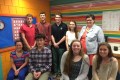
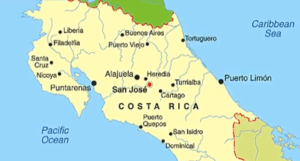 This Window, Ms. Ramirez’ Advanced Spanish Language and Culture students have been studying the challenges facing many families and communities in the developing world. Lack of access to resources hinders many communities’ ability to improve their economic standing. Traditionally, charitable organizations have made the mistake of forcing their help upon the locals and these organizations tend to ignore the culture and the opinions of the locals, making the situation worse. NGOs (Non-Governmental Organizations) often fail to realize that the best way to aid locals is when they want help and ask for it. These organizations should allow the locals to take the lead with ideas and then help to implement them. This strategy yields the greatest success because the people provide practical local knowledge to solve their own problems and the NGOs can help with connecting people and providing technical assistance. (more…)

Chalk Talk: My RANT on “Old” and “New” Pedagogy
By Adam Jewell, History Faculty
Chalk Talk: My RANT on “Old” and “New” Pedagogy
Ahhhh the smell of those white board markers, I love them, I just love them. If they do anything, they, at the very least, keep us from getting chalk all over us and having students ingest chalk dust like some sort of appetizer. It is my nostalgia for chalk that leads me to ponder something that keeps coming back to me like some sort of bad meal at every restaurant my wife and I ever go to. It is the practice of “chalk and talk” instruction. As the name entails, it is a practice as old as chalk, and well slate; I will confess I have no clue which came into use first. To be more exact, it is also as old as whenever one human sat and talked to another about something one of them was either curious about or “knew” more about. In essence, “chalk and talk” is a representation of the “old style” of teaching. (more…)

The Power of Grants in Student Development
By Camille Banson, VI Form and Ryan Lee, VI Form
Editor’s Note: The Matthews Educational Fund provides grants to students of any form who are good citizens and solid students. Grants are made for special needs such as tutoring assistance, special instruction, seminars, academic experiences of a national or international nature, and personal growth and advancement opportunities. Awards are based on merit and need as determined by a faculty committee. Last year, Camille Banson and Ryan Lee received the Matthews Fund Award to pursue their educational endeavor. Here is an overview of their experience.
Camille Banson:
Over the summer, I participated in a Boston University Summer Program. It ran for two weeks (more…)

Bring Back #BringBackOurGirls
By Lauren Menjivar, III Form
Bring Back #BringBackOurGirls
Remember the campaign #BringBackOurGirls? It was a worldwide trend on Twitter last year between April and May. Maybe you forgot about it because #ALSIceBucketChallenge took over the world during the summer, but what if I told you #BringBackOurGirls still exists. What if I told you that 219 girls out of 276 from Nigeria are still held captive by an Islamic jihadist group named Boko Haram. What would you do? Would you just continue with your life as if everything is fine or will you become one of those special individuals in the world who spread the news to others and say, “It hasn’t ended.” You might be saying, “What does this have anything to do with me? I’m not living there.” Okay, maybe you aren’t living there, but there are other individuals who are living in fear every day because someone is threatening to kill them. Put yourselves in their shoes: Is this how the world should be? They’re humans, too, and they have human rights just like we do. (more…)

Book Club: A Necessary Tool in Partnership
By Desmond Goodwin, V Form & Student Chair of the Haiti Partnership Committee
Book Club: A Necessary Tool in Partnership
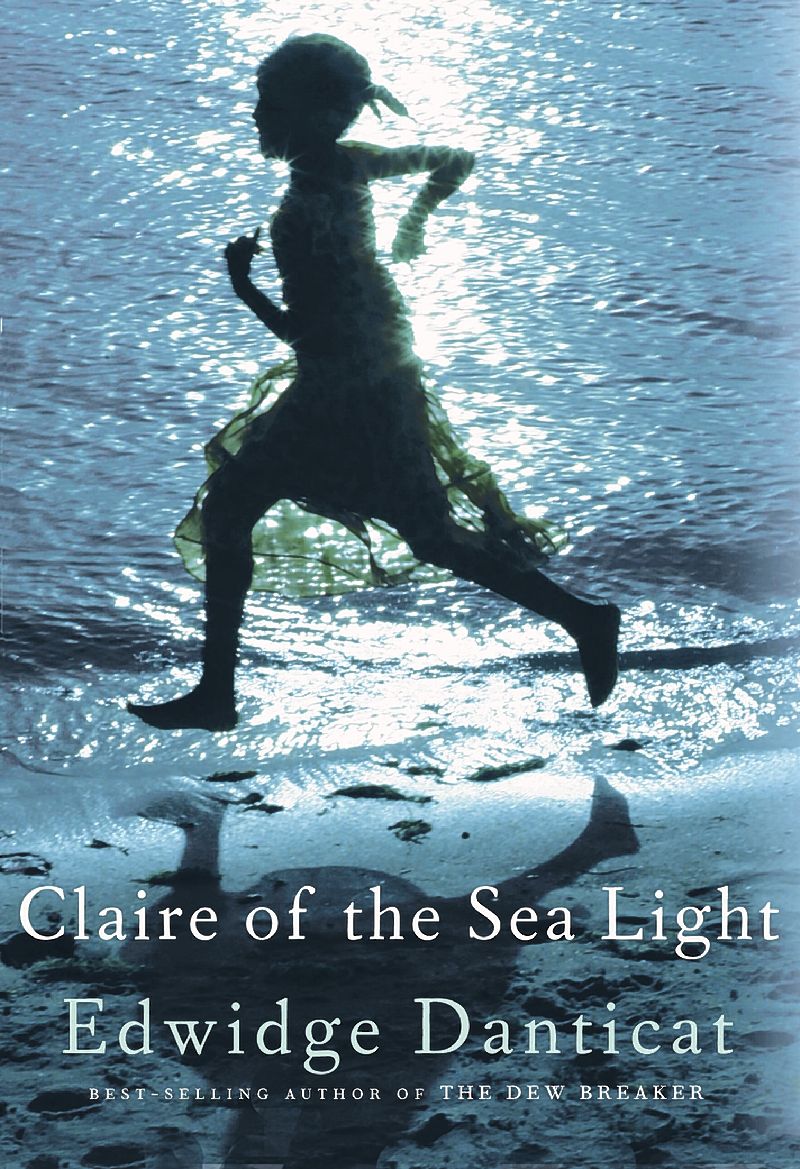 At the end of last year, the Haiti Partnership held a meeting to discuss our goals for the 2014-2015 school year. The committee members agreed that we needed to emphasize to the community that the Haiti Partnership is just that: a partnership. How would we show St. Mark’s that we are benefitting just as much from this relationship as St. Marguerite’s, our partner school in Latournelle, Haiti? We knew that we had to bring Haiti to St. Mark’s. We wanted to bring the beautiful culture to our school and teach our fellow students and faculty about life in Haiti. We wanted to celebrate the country. By creating a “Haiti Book Club,” we hoped to bring a part of Haiti to St. Mark’s and use it to strengthen our partnership with St. Marguerite’s.
The idea was to read three books over the course of the school year; one book would be read over each vacation. Over Thanksgiving vacation, we read Clare of the Sea Light by Edwige Dandicat, a Haitian-American author. Over winter vacation we read The Big Truck That Went By by Jonathan Katz. And over spring vacation, we will read A Wedding in Haiti by Julia (more…)
Biology Research Paper: Tuskegee Syphilis Study
By Conor Brockway, V Form and Damion Nsiah, V Form
Biology Research Paper: Tuskegee Syphilis Study
The first half of the 20th century was plagued by actions that are deemed unethical and frightening in today’s society. These actions included the spreading of the Jim Crow Laws, the rising of the KKK, and the speculation of the stock market, resulting in the Great Depression. Many Americans now know of these actions and condemn them. However, poor medical practices during this time period were often overlooked. Many doctors, without advanced equipment or proper safety guidelines, would perform procedures on living bodies to see what happened to them. These experiments were often completed without informed consent. One of the most unethical studies that came from the 1900’s was the Tuskegee Syphilis Study. (more…)


 LEO
LEO 