
Home » Season 2 (Page 10)
Category Archives: Season 2
My Felon and I Started at the Same Place
By Mame Kane, VI Form
Yo, ma, can you put some money on my account? I heard these words quite frequently while listening to inmate calls from Rikers Island. I started my internship in the District Attorney’s office assuming that all prisoners were awful people, but by the end of my six weeks, I learned that prisoners can be truly ordinary people. I listened to 206 calls and was able to profile my assigned inmate as a decent human being. My fellow interns thought that I was insane. After all, we were listening to prisoners who were affiliated members of three notorious Upper West Side Manhattan gangs. As interns, we were each assigned to a separate inmate who was a part of Manhattan’s largest drug bust, which occurred in early June 2014. 104 members of the three Manhattan gangs were arrested on 125th Street, central Harlem, a location I visit quite frequently. (more…)
Why 4,000 Mathematicians Came to Seoul
By Ryan Lee, VI Form
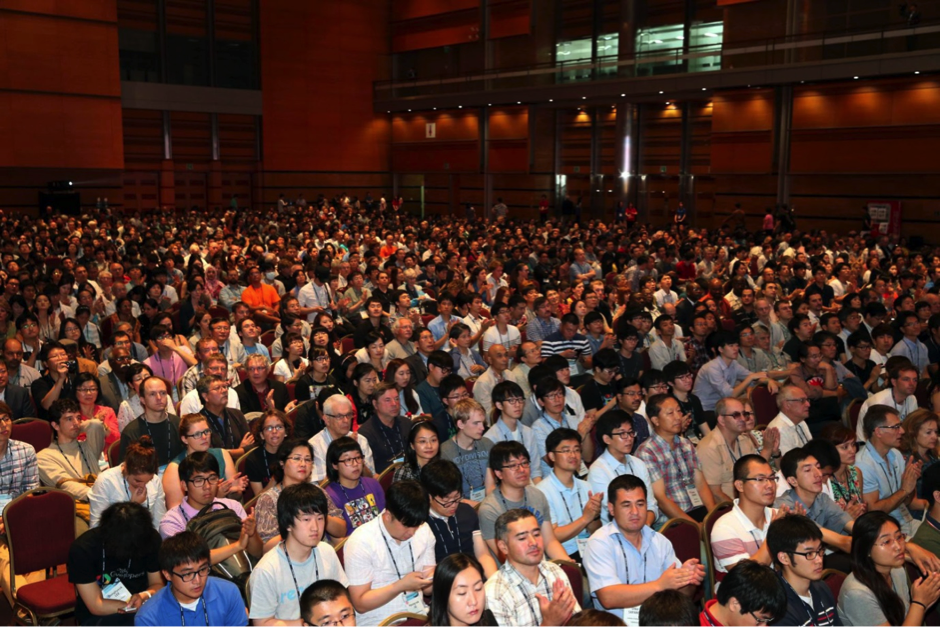 This summer, the International Congress of Mathematicians (ICM) was held in Seoul, Korea. Lasting ten days, ICM 2014 started on August 13th. Over four thousand mathematicians from around the world came to Seoul to share information on research studies on mathematics and congratulate the mathematicians getting the Fields Medal. (Fields Medal is an award for mathematicians that is similar to the prestige of the Nobel Prize; it is awarded to four people not over the age of forty.) The Seoul ICM consisted of hundreds of lectures as well as numerous booths. The lectures ranged from some well-known fields such as number theory, combinatorics, geometry, and algebra to less familiar topics such as lie theory and topology. Many famous academic publishers such as the (more…)

Multiple Ways To Think About the Ice Bucket Challenge
By Lucy Cao, IV Form
Over the past summer, the Ice Bucket Challenge captured the social media world’s attention. Friends, families, and celebrities have all been actively participating in this event. This challenge is designed to inform more people of a rare disease called ALS. Amyotrophic Lateral Sclerosis (ALS) is a neurodegenerative disease that affects the functioning of motor neurons in one’s brain. As the motor neurons degenerate in one’s brain, they will eventually die. Dead motor neurons will not be able to help the brain start or control the movement in one’s muscles. As the disease progresses, an ALS patient has the risk of becoming completely paralyzed.[1]
(more…)

The 15-Minute Lecture By Our Exchange St. Markers
By Emma van der Schyff, Sara Shuttlewood, and Kevin Nicholls, Australian Exchange Students
Exchange started as an elusive dream, an idea that Emma and I (Sara) thought to be too good to be true. However after the application process and several interviews, the dream darted toward reality. We were granted the overseas adventure. St Mark’s was then assigned to us a couple of weeks later. The countdown began–271 days until take off. During this period, we were fortunate to meet Mr. Warren, Dr. Warren, and their lovely daughter Amanda during their trip to Australia. This only excited us even more that we had already met integral people at St. Mark’s. Kevin had requested America as a possible exchange, because of his interest in learning about the culture. Kevin was granted the opportunity, and this trip would be his first overseas. (more…)

Three Weeks in English Teacher Heaven — Shakespeare’s Globe Theatre
By Jeniene Matthews, English Faculty
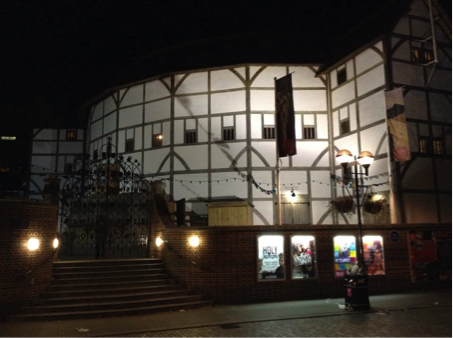 What happens when you bring together 25 passionate, talented, and eager teachers of English and Drama? What happens when that diverse group of people works nonstop in and around The Globe Theatre — one of the most significant performance spaces on the planet? You get magic.
The magic comes from the building itself. Conceived, built, rebuilt, and rebuilt again, the Globe Theatre was the vessel that brought Shakespeare’s genius to the people. Learning its history — and living it and becoming a small part of it — has a way of changing us.

Making a Difference: The Story of Rebecca Skloot and The Immortal Life of Henrietta Lacks
By John Warren, Head of School
Convocation Speech: 5 September 2014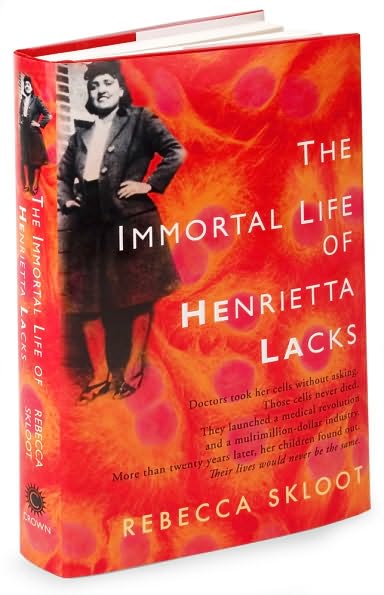
Stories about people who make a difference—who lead lives of consequence—fascinate and inspire me. I hope the same is true for you. These stories provide examples of special qualities that we can learn from and try to employ ourselves. Role models, people we know who live their lives admirably and people we learn about, provide an important standard for us to aspire to and make us think harder about how we can be our best selves. I encourage you to be constantly on the lookout for such people and to take the time to reflect upon what makes them special and how their lives can relate to yours.
An individual who fascinates and inspires me is Rebecca Skloot, a science journalist who wrote the book The Immortal Life of Henrietta Lacks. As you will see, Skloot’s story seems especially relevant as we start our academic year. (more…)

Revealing the Invisible and the Paradox of Genuine Self-Expression: A Critical Analysis of Véronique Doisneau by Jérôme Bel
By Candice Wang, VI Form
Commissioned by Opera National de Paris in 2004, Jerome Bel’s dance Veronique Doisneau contrasts an individual, the ballet dancer Veronique Doisneau, with an institution, the world of classical ballet and the dance company. The performance is named after the dancer Veronique Doisneau, who has years of experience working for the Ballet of the Opera de Paris as both a soloist and a member of the Corps de Ballet. By highlighting Doisneau, the dance exposes the touch of humanity and reality hidden behind the balletic illusion of effortlessness and perfection. As the choreographer Jerome Bel declares in an interview, the dance lays bare the language and (more…)

The Epic Hero: An Analysis of the Shields of Achilles and Aeneas in Comparison to Hesiod’s “Shield of Heracles”
By Matthew Flathers, VI Form
While the pseudo-Hesiodic Shield of Heracles is largely considered to be a poorly composed piece of poetry, criticized and deemed inauthentic by other antiquated authors[1], it is through its mimicry and plagiarism that it is able to provide valuable insight into Greek, and later Roman, heroism. This short, 450-lined recounting of the contest between Heracles and Cycnus is, as the title suggests, an ekphrastic work about the shield that Heracles bore in the fight. However, seeing as the poem is not particularly well written or unique, the focus of the work lies entirely in the description of the shield itself as opposed to the quality of the imagery used. While large portions of the text are paraphrased and even directly quoted sections of Homer’s Iliad,[2] other sections are indeed original


 LEO
LEO 