

Art Informed by Science: The Mediterranean Monk Seal
By Students in Studio I and Advanced Printmaking Students
Art Informed by Science: The Mediterranean Monk Seal
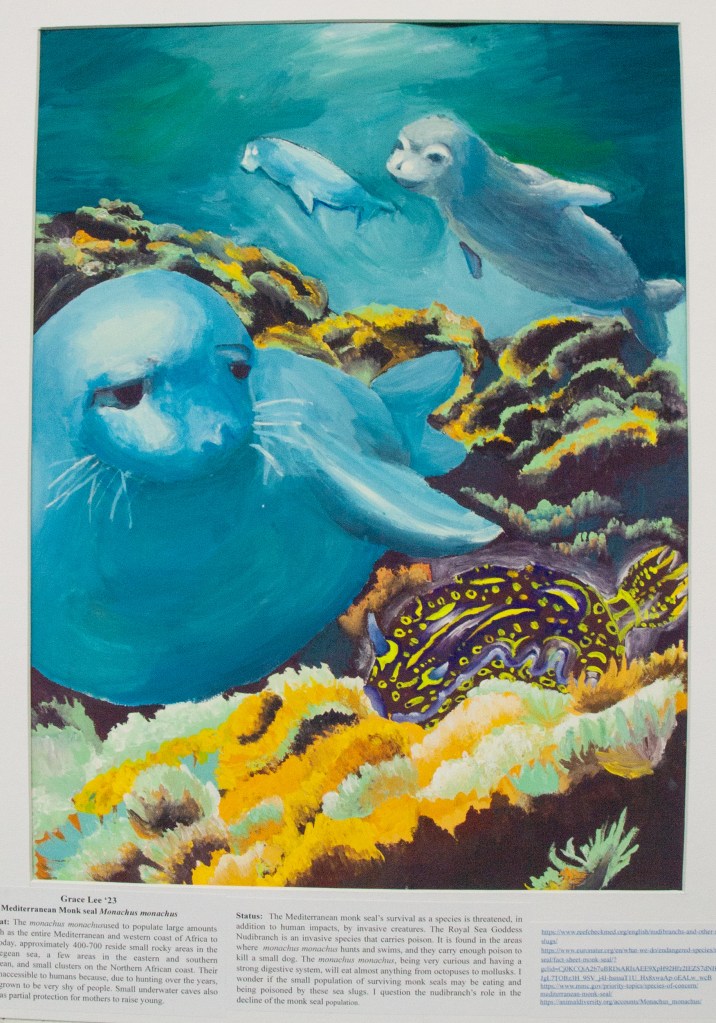
Instructor’s Note from Ms. Barbara Putnam: This is the first time I have done this assignment with the collaborative help of a scientist in the field. Dr Bundone is affiliated with University Ca’ Foscari of Venice and with Archipelagos, of which he is co founder, to save the critically endangered Monk Seal from extinction; There are thought to be only about 400. Currently, he and his team are working on a project to photo ID all of the remaining seals and catalogue them for protection and legislation.
Interspersed essay by Darius Wagner, III Form


The Effect of Visual Support on Learning: A Psychology Case Study
By William Osborne and Julian Yang, VI Form
The Effect of Visual Support on Learning: A Psychology Case Study
Abstract
Memorization plays a major role in education, especially throughout grade school and middle school. Despite this, many teachers support studying for memorization based tests by only repeating the information needed until it is stuck in the student’s brain. This study examines the positive effect visuals have on the brain’s ability to memorize words. Past experiments have found that the inclusion of images with text would increase a person’s ability to memorize and recall information. To test this, participants were given a short period of time to memorize ten words and then recall them. The same process was then repeated, but with a different list which also contained images of the words. The results showed that participants’ ability to memorize was facilitated with the use of images. One possible explanation is that the brain is able to mentally picture the image when remembering the words, giving it a concrete example to pull from instead of only a few letters on a page.
Keywords: Memorization, Visual Learning, Information Recall, Learning Strategy
(more…)
Colorblindness To Gender Inequality in the SM Community
By Ryley Holmes, V Form, and Hannah Macleod, IV Form
Colorblindness To Gender Inequality in the SM Community
Summary:
Despite gains made after the passing of Title IX in 1972, gender inequality still exists in school athletic programs. A close look at St. Mark’s athletics program helps suggest the ideas of gender equity in sports.
| Key Points:Due to Title IX, Women are unable to be excluded from participating in sports in educational institutions that are federally funded. However, we are socialized and have conformed to the norms that women do not participate in certain sports at St. Mark’s. Sports donors at St. Mark’s are required to donate to both the boys and girls varsity programs for a specific sport, as opposed to a particular gender in that sport to ensure equitable funding. However, those sports that only have one varsity team receive all of the funds for only one program. Men typically specialize in one sport whereas women tend to be members of multiple sports teams. This specialization is geared towards men, for their future income is reliant on playing a professional sport. This specialization is reinforced throughout all of American society. |

Humans as One: How The Wayfinders Illustrates Human Integrality
By Kian Sahani, VI Form
Humans as One: How The Wayfinders Illustrates Human Integrality
Language and culture are like animals and plants: the forcefulness of Western culture endangers many of them. In The Wayfinders, Wade Davis explores the concepts of language, culture, race, and the ways they fare in a world primarily dominated by Western ideology. Within his first two lectures, Season of the Brown Hyena and The Wayfinders, Davis argues that although differences between people are fascinating, it is the similarities that are worth celebrating; below the surface, each person is virtually the same.
Season of the Brown Hyena begins with the statement that “on average, every fortnight an Elder dies and carries with him or her into the grave the last syllables of an ancient tongue” (Davis 2009, 3). Davis then continues with the argument that with every language there is an associated culture; therefore, for every language lost, there is a culture lost as well. Each language has the idiosyncrasies that make it unique, allowing a whole new culture to bloom from it. For example, the different ways in which people may describe a color can reflect something about their culture, such as how much of a role color plays into tradition or how specific one must be with different shades. Each ethnic group’s Sprachgefül, as Germans would call it, affect how the group views language. Lera Boroditsky’s TED Talk regarding “How Language Shapes the Way We Think” explains how differences in language are reflected in physical differences in the brain. These differences will affect thoughts, which, in turn, change beliefs and morals, generating a unique culture. Each of the latter is worth celebrating as Davis states, “every culture is by definition a vital branch of our family tree, a repository of knowledge and experience, and, if given the opportunity, a source of inspiration and promise for the future” (Davis 2009, 5). At the same time, every human on this Earth is almost identical to one another, according to biology.
(more…)
Tantalizing Taboos: Homoerotic Language in The Great Gatsby
By Catie Summers, V Form
Tantalizing Taboos: Homoerotic Language in The Great Gatsby
F. Scott Fitzgerald does a fantastic job of lacing taboos throughout The Great Gatsby. The most common, however, is homosexuality and homoerotica. Of course, the outlook on homosexuality and the rest of the LGBTQ+ community has changed dramatically over the past one hundred years. It was quite negative and derogatory during the time of the story, commonly referred to as the Roaring Twenties. F. Scott Fitzgerald incorporates aspects of homosexuality in The Great Gatsby through the narrator, Nick Carraway, and his interactions with other male characters throughout the novel. Specifically, Nick’s descriptive language carries a homoerotic affect, meaning his presence in the narrative invites, at least, a queer reading of The Great Gatsby.
Fitzgerald premiers Nick’s homoerotic tone in his description of male characters, particularly in Tom Buchanan. When Nick first meets Tom, Nick speaks as though in reverence of Tom’s physique by stating, “not even the effeminate swank of his riding clothes could hide the enormous power of that body — he seemed to fill those glistening boots until he strained the top lacing, and you could see a great pack of muscle shifting when his shoulder moved under his coat” (Fitzgerald 7). This passage has a sexual appeal to it, a climax, one might argue. Fitzgerald alludes to this by tantalizingly and purposely influencing readers to anticipate a sexual reference after “he seemed to fill those glistening…” but then dropping off and finishing with the word “boots.” By primarily setting a homoerotic tone for Nick’s description, it is natural to assume that this phrase should be an innuendo or euphemism. Yet, Fitzgerald’s writing is so meticulous and nuanced that by ending the phrase with the word “boots,” he allows an ambiguous reading of the phrase, implying a simple in-depth physical description of a character or a subtle hint as to Nick’s sexual tendencies and a queer side to his character unrecognizable before that point.
(more…)
A New Condition: Sustainable Agriculture in Costa Rica
By Jason Park, VI Form
A New Condition: Sustainable Agriculture in Costa Rica
During a summer program last year, I developed a deep, heartfelt connection to Costa Rica – more specifically, an organic farm. Located in Chilamate, the farm is owned and operated by Don Daniel, his wife, and his son. Our group designed, prepared, and built a mandala garden based on permaculture principles. As an ardent supporter of organic farming, Don Daniel showed us how he gathers manure and creates organic fertilizers for his farm. We combined all the necessary ingredients – sawdust, mulch, pig/cow manure, calcium, and microorganisms – in order to use the fertilizer as we built the garden bed. As a symbol of warmth and peace, the sun was our design of choice. Not only has our service to Don Daniel established a mutual bond, but listening to his story also evoked a mixed sensation of poignancy and respect. In fact, my interaction with Don Daniel and his history and wisdom advance beyond the physical parameters.
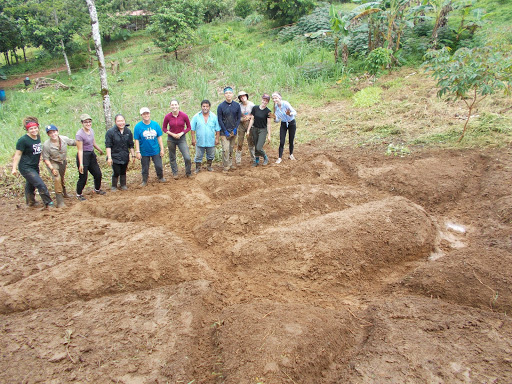
Following the completed work, Don Daniel and his wife treated us with warm Costa Rican coffee and yuca fries from the yucas we harvested earlier that day. We sat around the tables, facing Don Daniel. He smiled during every moment we shared, but this moment seemed difficult for Don Daniel to cope with as he was about to share his life story.
(more…)
The Implied Spider-Man: Transcreating Religious Imagery and Meaning in Spider-Man India
By Dr. Rex (Dejai) Barnes, English and History Faculty
The Implied Spider-Man: Transcreating Religious Imagery and Meaning in Spider-Man India
Editor’s Note: This essay was written for and previously published in The Assimilation of Yogic Religions Through Pop Culture, Edited by Paul G. Hackett.
When Stan Lee and Steve Ditko created the Amazing Spider-Man in the August 1962 issue of Amazing Fantasy #15, they conceived a young, reticent hero from Queens whose superhuman powers were the result of a scientific accident: the bite of a radioactive spider. Peter Parker’s transformation thereafter is well known. Having assimilated the proportional strength and agility of the spider, he can now climb walls and has gained a (sixth) spider-sense of alarm to imminent danger. Upon discovery of these newly acquired faculties, however, Peter initially seeks fame and celebrity, not crime-fighting. Only after the murder of his Uncle Ben does he embody the famous axiom: “With great power must also come great responsibility.” This is an important point often overlooked by avid and causal fans alike: it is the ongoing ethical engagement with Uncle Ben’s death, rather than the extraordinary arachnid encounter, which provides Peter the impetus to don the Spidey costume and enact his sense of inspired duty. [1]
That American comic book superheroes are often equated with and interpreted through their powers is understandable. Animistic designations often govern the namesake of many characters (e.g., Spider-Man, Ant-man, Hawkman), whereas a superlative or descriptive quality may emphasize another hero’s abilities and identity (e.g., Superman, Storm, the Human Torch). These are of course not hard and fast rules. Neither Wolverine nor the Batman derive their skills from the wolverine or bat. Their titles exemplify the respective traits of ferociousness and fear evoked by the symbolism of their animal avatars. No doubt myriad variations exist for how a hero’s name might dovetail with their capacity to astonish audiences in contemporary popular culture. In other words, the ways in which our superheroes are diversely portrayed and culturally perceived depends on more than simply a hero’s name. Social and political contexts, narrative setting, intended audience, and the publishers own creative intentions, among others, contribute to the numerous dynamic readings attributed to comic book characters.

Marco Carillo ©2013
Type 2 Diabetes as a Global Epidemic
By Charlie Rumrill, V Form
Type 2 Diabetes as a Global Epidemic
Type 2 Diabetes mellitus is a group of chronic disorders caused by either the number of pancreatic beta-cells, their ability to function, or the skeletal muscle and liver cells ability to transduce insulin’s signal, all of which result in hyperglycemia. Due to genetic, environmental, and epigenetic factors, Type 2 Diabetes has rapidly become a global epidemic.
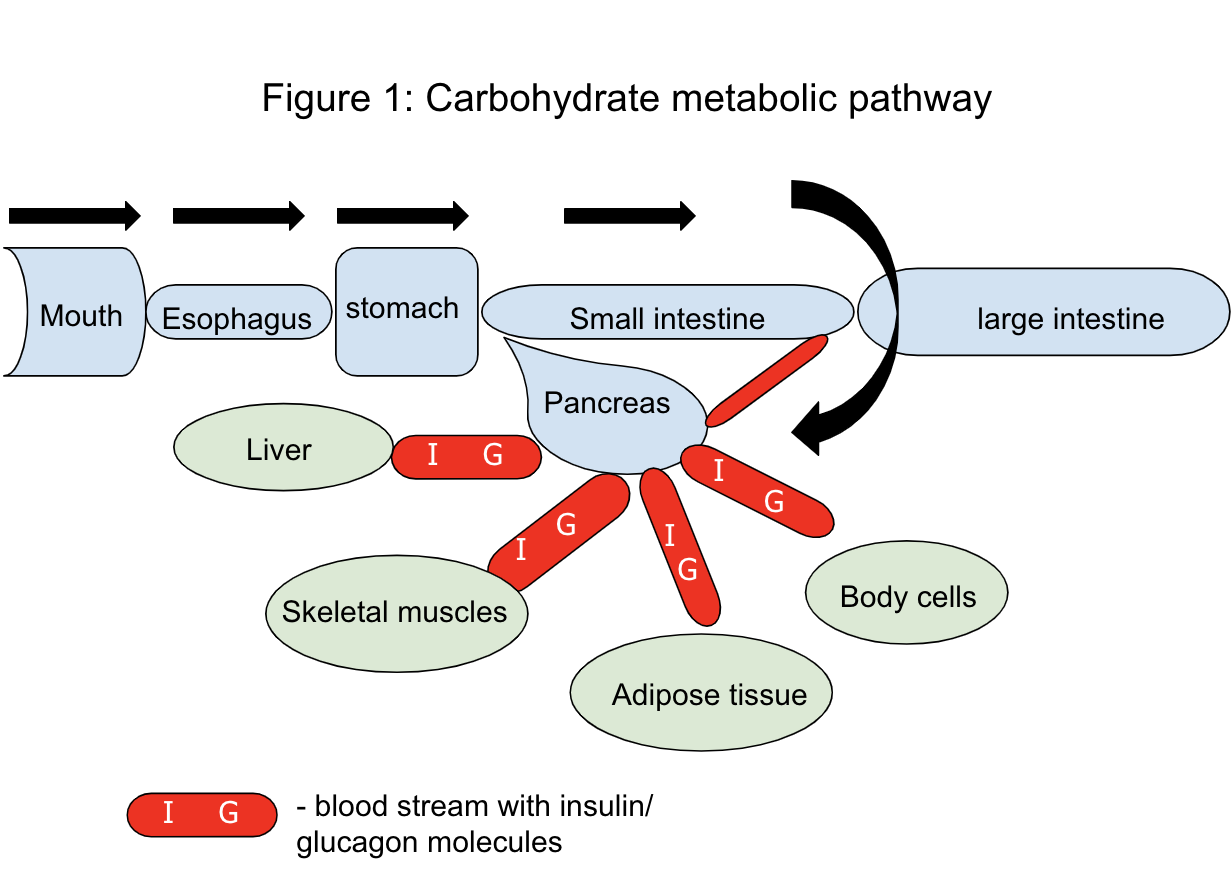
In order to understand the pathophysiology, or diseased state, of Type 2 Diabetes, a comprehension of how the body typically regulates carbohydrate metabolism is required. As shown in figure 1, the catabolism, or breakdown, of carbohydrates begins as soon as it is ingested, with salivary amylase enzymes hydrolyzing the large polysaccharides into smaller oligosaccharides. When the salivary mixture is swallowed, it continues through the esophagus to the stomach which denatures the enzymes with its highly acidic environment. Since no enzymes can function in the stomach, the digestion of the carbohydrates temporarily stops until it continues to the small intestine, where more amylase enzymes produced by the acinar cells in the pancreas meet the fluid in the small intestine and continue to hydrolyze the oligosaccharides into simpler disaccharides. As the mixture continues through the small intestine, brush border cells with enzymes attached hydrolyze the disaccharides into simpler monosaccharides, such as glucose. Only now can the once large polysaccharides be absorbed into the bloodstream. From the small intestine, the blood circulates directly to the pancreas, where the pancreatic beta-cells secrete insulin due to the elevated blood-glucose levels. Then, the blood flows to the liver and the rest of the body (Figure 1) where the liver and skeletal muscle cells bind to insulin, triggering more glucose transporters to be embedded in the cellular membrane. Due to the cells having more transporters, more glucose molecules can enter the cell, and the glycogen phosphorylase enzymes can bind them together through dehydration synthesis to form glycogen. Insulin also travels to the adipose tissue, where the glucose is then stored as fats. In addition to the effects of insulin, glucose molecules are constantly being taken into every cell in order for it to have the energy to complete its functions. Over time, due to the glycogen being produced and cells constantly needing glucose the body’s blood-glucose levels then lower. When the blood-glucose levels decrease, the pancreatic alpha-cells secrete the hormone glucagon which, when bound with the skeletal muscle and liver cells, triggers the glycogen to be hydrolyzed and released back into the bloodstream as glucose.


 LEO
LEO 