
Home » 2016 (Page 8)
Yearly Archives: 2016

Racial Colorblindness: The Solution to a Delusional Society?
By Sophie Haugen, IV Form
Racial Colorblindness: The Solution to a Delusional Society?
Lois Lowry’s dystopian community of sameness in The Giver appears to be perfect, but this is not true. This world of sameness represses individuality, creating a meaningless world without love. Imagine our world – progressive and controversial – without difference. Upon first glance it seems ideal; no conflict about humanity’s differences or room for judgement. But, would there be any culture or diversity at all? Lowry’s creation of a colorblind society warns our own that while we should strive for equality, “colorblindness” isn’t the answer. Racial colorblindness has been part of discussions around affirmative action in college admissions and the Constitution. Colorblindness is exactly what it sounds like: blindness to skin color, race, and any variety these bring. As an ideal, it’s well-intentioned, but in reality it is a way to pretend race doesn’t exist and to ignore racism as social problem, as well as devalue the importance of culture and difference. (more…)

My Exploration in Printmaking on a Scroll
By Grace Barron, V Form
My Exploration in Printmaking on a Scroll
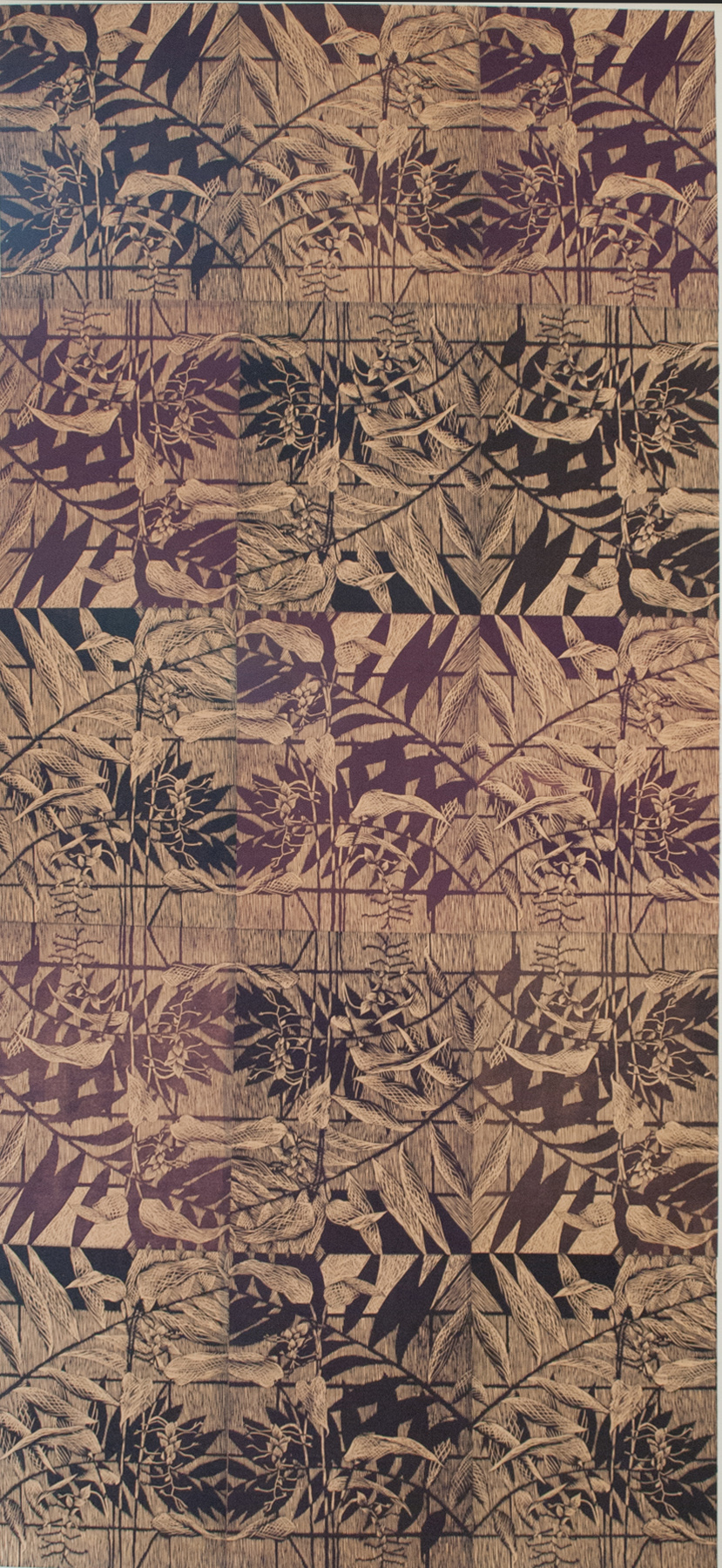
To turn a single, or in my case double, print into a lengthy scroll (h 82″ X w 40″), my first step was to print out large quantities of both blocks in different shades of purple. Before it came to all of that, I had to have an original print. For the original assignment, the Advanced Studio class went to the Wesley greenhouses, drew from life, and created a print based on our drawings. An experimental print assignment then followed. Looking at my single print, I noticed that the mirrored prints in a scroll would have an effect that would allow the viewer’s eyes to follow a path. While I first looked for a gradient effect with the top prints being the lightest and the bottom prints the darkest, I decided to scratch the idea and make the piece follow more of a random pattern. I laid out the prints and arranged them in a way that I liked and then glued them to a large piece of paper. I wanted the viewer to see almost a scalloped effect. (Go to bottom of this page to see a larger rendering). (more…)

Akshaya Patra: Addressing Both Hunger and Education in India
By Yusra Syed, IV Form
Akshaya Patra: Addressing Both Hunger and Education in India
India is the world’s largest democracy and the second most populous country in the world – with over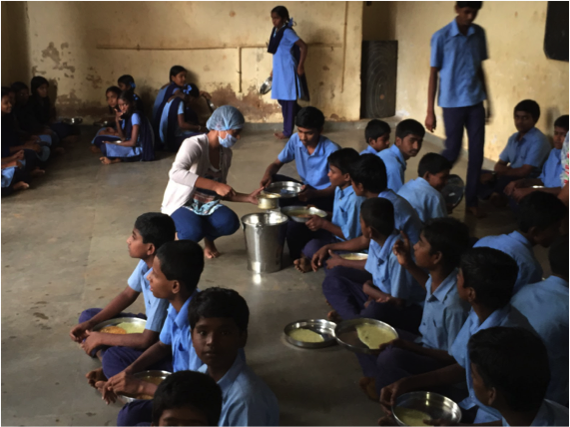 1.2 billion people. It is expected to be the most populated in the world by 2022. India is booming and, by many measures, is the world’s fastest growing big economy. Challenges of urban poverty in India are tied with the challenges of the country’s fast development. Cities are fostering poverty and hunger at a scale and extent unseen before. Nearly 70% of Indians live on less than $2 a day, with 61 million malnourished children – 1/3 of all the malnourished children in the world. This is causing too many children to choose food over education. (more…)

The Unfortunate Failures of the International Criminal Court
By Matt Walsh, III Form
The Unfortunate Failures of the International Criminal Court
For advocates of human rights, peace, and equality, the International Criminal Court (ICC) seemed to be an ultimate solution to acts of violence, hatred, and greed. The ICC acts as a court of last resort, prosecuting crimes when national courts cannot. With the ICC, many thought the world could be one step closer to international order. Unfortunately, a lack of cooperation has turned a seemingly revolutionary idea into a lamentable failure. The ICC hopes “that by ending impunity for such crimes, [it] might prevent the occurrence and contribute to the peace, security, and well-being of the world”
(“Law”). However, The ICC is not a viable and sustainable path to justice because of its inability to prosecute perpetrators from both State Parties and non-State Parties, its historical failure to prosecute major international crimes, and its practice of retributive justice that fails to restore peace. (more…)

The Great Gatsby: Chapter 10
By Eric Zhang, V Form
The Great Gatsby: Chapter 10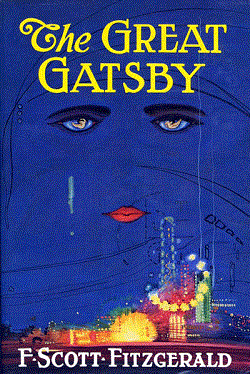
(Editors’ Note: In Ms. Matthews’ American Literature class, this assignment prompted students to create a 10th chapter of Fitzgerald’s The Great Gatsby, utilizing Nick Caraway’s melancholic tone and including some type of closure for the characters)
It had been five years since the funeral, and I finally returned to this city that I once thought was haunted. Everything was so depressing. There were no sounds of the orchestra playing or shimmering sights of the girls wearing fancy dresses with decorations on their shoes. The city of New York had changed since that October in 1929, what was later called Black October. I wandered the streets of New York, and ultimately, I was pulled back to the Eggs and Gatsby’s mansion. What was once a (more…)

American Exceptionalism and The Hunt for Red October
By Conor Brockway, VI Form
American Exceptionalism and The Hunt for Red October
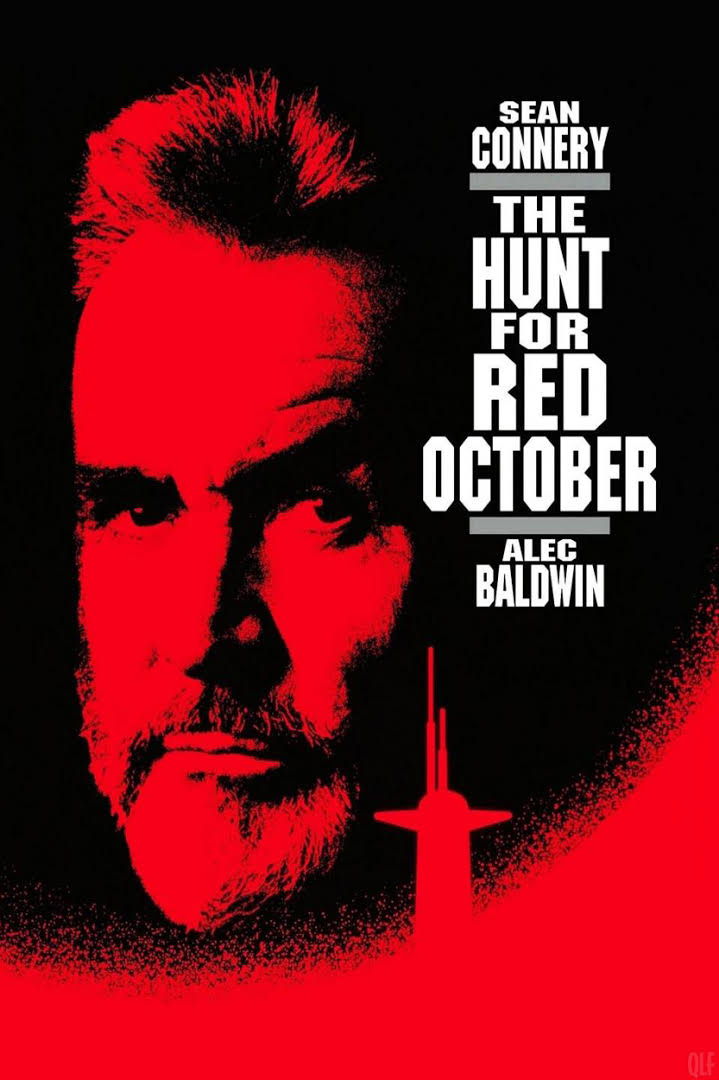 The Cold War was a time period when America and Russia were threatening to attack each other, as both countries wanted to become the most powerful nation in the world. Tensions were heightened within America during the latter part of the Cold War, specifically during the early to mid 1980’s. American Exceptionalism became prevalent in the world, as the Americans were seen as having freedom and power within their country[1]. Also, the concept that Communism was a “virus” and could “infect” Americans and that Communists were a threat to national security within the U.S, as Communists were primitive, sneaky, subversive, and dangerous still lingered in the thoughts of Americans[2]. After World War II (WWII), the U.S. had the blueprint to build an
atomic weapon, which was a powerful weapon no other nation had. The U.S. also started building (more…)

Un jour typique
By Kitty Chen V Form, Stephanie Moon III Form, and Rosanna Zhao III Form
Un jour typique
French 2 assessments this year have been largely project-based, and following each project, students submit video reflections through Voicethread. After finishing a video project this fall, their reflections offered three pieces of feedback: 1 – “We’d like to do bigger projects over longer periods of time. Sometimes it feels like we just do one project after the next.” 2 – “Working with others is fun, but sometimes it would be nice to do our own projects.” 3 – “What if we had more choices in HOW we present what we know?” Armed with this information, all 16 students and Ms. McCulloch brainstormed. (more…)

Seamus Heaney: The Pen and The Spade
By Logan King, IV Form
Seamus Heaney: The Pen and The Spade
“The Forge” by Seamus Heaney expands upon the theme of strength that he first established in his poem, “Digging.” However, instead of exploring the similarities between using a pen and a spade like in the latter, in “The Forge”, Heaney examines the craftsmanship and beauty a blacksmith uses despite the force required to do his job. The bluntness of the short words used contrast with their meaning to create the image of a tough, rhythmic job that creates art. He does this similarly in “Digging,” where his word choice creates a non stereotypical image of farmwork, all underscored with the rhythmic act of digging. Linking both poems is not only the sense of wonder and appreciation the author holds for the two jobs, but also regret, because he can only recognize instead of participate in the art of their work. (more…)


 LEO
LEO 