Home » 2015 (Page 7)
Yearly Archives: 2015

Babies Are Babies: Multiple Viewpoints on IVF
By Faith White, VI Form
Babies Are Babies: Multiple Viewpoints on IVF
My older siblings are twins, scientifically made in a lab, test tube babies. Scientists wearing white coats created them, in a Petri dish. Just like 4 million other children, they would not be here without science and medicine. Despite its many success stories, however, IVF has brought about many ideological controversies involving religion, ethics, and socioeconomics. But had it not been for my IVF siblings and my mother’s reproductive system resetting, I am not sure that I would ever be born. The question remains, however, should a couple that is struggling to conceive for one reason or another, but is able to pay to use IVF to have the baby that they have always wanted, benefit while (more…)
Please Comment–Should Byblis Be Pitied, Condemned, or Both?
By Allegra Forbes, V Form
Please Comment–Should Byblis Be Pitied, Condemned, or Both?
Click Here for Allegra’s Ovid Website!
This past month the Latin III H class read and translated various chapters from Ovid’s narrative poem Metamorphoses, in which the author gives subtle social commentary on Roman politics and morals through his adaptations of metamorphosis myths from the Hellenistic tradition. As a final project for the unit, I created this website to display my work on the myth of Byblis, the tragic tale of a river nymph consumed with lust for her twin brother Caunus. When I finished my first draft of the translation I was still torn as to whether tormented Byblis should be pitied or condemned (or perhaps both?), so I added a survey page to the website so that others can contribute their opinions on the matter.
Please comment! I would love to publish a compilation of different people’s answers. (more…)

Self Obligation, Patriotic Obligation, or Family Obligation? I’m with Antigone
By Abby Peloquin, IV Form
Self Obligation, Patriotic Obligation, or Family Obligation? I’m with Antigone
Throughout Antigone, the question of what is most important in the lives of the characters varies greatly. Creon professes his deepest devotion to his country through his actions concerning Polynices and Antigone; Antigone, on the other hand, remains steadfast in her beliefs in family as she sacrifices her life and marriage for the sake of burying her brother. I mirror the meritorious attitude of Antigone – my family, more than any material or human law–is the most essential part of my life. They are the basis of my existence, the platform upon which I draw myself together and carry on my journey of life, and the arms that hold me and guide me through the turmoil set before me. (more…)

Through a Different Lens – A Book, Blood, and Altruism: Thinking About Philanthropy
By William Bagley, Advancement Office
Through a Different Lens – A Book, Blood, and Altruism: Thinking About Philanthropy
On a corner in Cambridge in 1974, a day before taking my graduate degree, a favorite professor stopped me and offered a book. He described it as “something you have to read.” Though I had visions of reading a Trollope novel on a beach on Cape Cod, I could not say no. The book, written by Richard Titmuss, changed my life. Its title is The Gift Relationship.[1]
In the late 1960’s, Titmuss was a professor at the London School of Economics. His academic interests would lead him to study philanthropy – but in a very distinctive way.
Rather than look at philanthropy expressed as gifts of money, he looked at philanthropy in the (more…)

The Orchestra Coalesces (incl. a video of “Ashokan Farewell”)
By Jonathan Qu, VI Form
The Orchestra Coalesces (incl. a video of “Ashokan Farewell”) (click on photo or scroll to bottom for the video link)
Have you ever wondered what it was like to do four things at the same time? Well, all members of the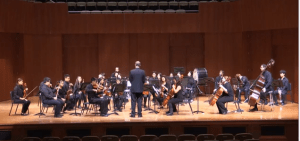 orchestra do. To effectively coalesce and produce a song that is pleasing to the ear, members must read the music, translate the music, play the music, and then listen to the music. This may not seem difficult at first, but simply playing the music and then listening to the music takes a lot of skill. Take the cello for example. Not only do you have to translate the notes on the page, but you also have to pay attention to what kind of combination those notes tell your fingers to do. You then also have to keep in your mind how you (more…)

Hinduism: a Dialogue in the Eastern Religious Thought Class
Hinduism: a Dialogue in the Eastern Religious Thought Class
Eastern Religious Thought is a survey of the major Eastern religions – Hinduism, Buddhism, Confucianism, and Taoism. We not only study the traditions and symbols of each religion but also examine its philosophy and theology. We first studied Hinduism. Hindus worship many deities but recognize that there is only one Ultimate Reality (Brahman). Hindus believe in reincarnation and strive for the ultimate goal of liberation (moksha).
Emma: A Reading from the Upanishads–A seeker named Vidagdha Śākalya approaches the sage Yājñavalkya with the question, “How many gods are there, Yājñavalkya?”
“Three thousand three hundred and six,” he replied.
“Yes,” said he, “but just how many gods are there, Yājñavalkya?” (more…)
The Horrific Nazi Experiments During World War II
By Lucy Holland, VI Form
The Horrific Nazi Experiments During World War II
Presently, informed consent is a widely used and understood term – the process of receiving consent from patients before administering a medical intervention on them. But before a court case in 1957[1], only 58 years ago, informed consent was not required in medical practices, which meant that medical practitioners could do almost anything to their patients without them knowing or realizing that it was ethically wrong. In The Immortal Life of Henrietta Lacks, Henrietta’s cells were taken for a culture when she went into Johns Hopkins because of what the doctors eventually discovered was (more…)

Video: A Study in Kiva Micro-Loans (en Español)
Video: A Study in Kiva Micro-Loans (en Español)
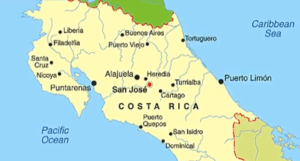 This Window, Ms. Ramirez’ Advanced Spanish Language and Culture students have been studying the challenges facing many families and communities in the developing world. Lack of access to resources hinders many communities’ ability to improve their economic standing. Traditionally, charitable organizations have made the mistake of forcing their help upon the locals and these organizations tend to ignore the culture and the opinions of the locals, making the situation worse. NGOs (Non-Governmental Organizations) often fail to realize that the best way to aid locals is when they want help and ask for it. These organizations should allow the locals to take the lead with ideas and then help to implement them. This strategy yields the greatest success because the people provide practical local knowledge to solve their own problems and the NGOs can help with connecting people and providing technical assistance. (more…)


 LEO
LEO 