Home » Posts tagged 'Teaching' (Page 8)
Tag Archives: Teaching
Collaboration Ties Us Together With Haiti
By Liz McColloch, French Faculty
 Our partnership with a Haitian school may seem, on the surface, to be about little more than the generosity of a well-to-do New England boarding school and the needs of a small school in a rural community of a disadvantaged nation. This assessment may be true at first glance, but the partnership and the work of the Haiti Partnership Committee (HPC) are about much more than philanthropy or even cultural awareness. For me, the HPC represents a future model of learning, one that will become increasingly relevant as we at St. Mark’s support students who seek to contribute to a globalized world. The students involved with the (more…)
Global Competence in the Classroom: Reflections on a Week at the Salzburg Global Seminar
By Nat Waters, Associate Dean of Academics
One of the great challenges of living in this intentionally small boarding community is the mythical “St.  Mark’s Bubble”– an all-consuming sense of “dailyness” that insulates residents from the wider world. Most often, I hear folks cite the bubble when explaining away their own limited grasp of world events or geopolitical trends (and occasionally, the latest plot twists from Breaking Bad or Downton Abbey). Modern learning communities like St. Mark’s are wired for connection to issues of global consequence. As St. Mark’s works to become an even more globally-minded community, we’ll (more…)
Creating High School Students’ Dispositions for Lifelong Learning Through Open Online Courses
By Lauren Riva, Director of the St. Mark’s Mathematics Institute
People are members of an ever-changing world, a world in which change occurs more and more rapidly. These swift changes give rise to major problems for the workforce because workers (especially those involved in design, production, maintenance, sales, and planning) are constantly faced with the need to learn how new systems work (Dubinsky, 2000; Van Dam, 2012). Becoming and remaining a productive member of the workforce requires more than simply being well versed in present day systems; an individual must also be able to adapt their knowledge and skills to new situations. (more…)
Notes from a History Research Paper Purist
By Caitlin Jones, History Faculty
Lately, I have been giving a lot of thought to the value of the traditional history research paper. Has the shift towards instantaneous, accessible information made historical research skills obsolete or has it made the role of the historian that much more important in wading through the sea of information that is readily available at our fingertips? In all of this discussion about global citizenship and twenty-first-century skills, is the history research process relevant and valuable? (more…)
Working with Working Memory
by Andrew Watson, President of Translate the Brain and Contributor to St. Mark’s Professional Development Through Sponsorship by The Center for Innovation in Teaching and Learning
Here’s a quick exercise: think of a phone number you know well and say all ten digits out loud. (Go ahead, say ‘em. No one’s looking.) Now, say those ten digits in the reverse order. (Yes, you can do it.) Okay, say them in the reverse order: AND, add 1 to the first digit, 2 to the second, 3 to the third, and so forth…
Don’t feed bad that you couldn’t get all ten digits; Rain Man could, but practically no one else can. When you tried to do that mental work, you were using your working memory: a specialized cognitive capacity that simultaneously (more…)
The Value of Office Hours
by Katharine Millet, History Department Head
As a freshman in college I had my first introduction to “Office Hours.” The concept was simple enough – each professor had an allotted time each week during which he or she would be sitting behind a large wooden desk in their book-lined office, waiting to receive any student who wished to stop in. The purpose was to give students the opportunity to get to know their professors and ask questions about the material covered in big lecture classes where time was at such a premium that few had a chance to speak at all, let alone compete against the hundred other kids with their hands up. (more…)
The “Toy” World of St. Mark’s: Tilt-Shifting Effect
by The New Media Class of Mr. Christopher Roche, Computer Science and Physics Faculty
The New Media class (a computer science elective) at St. Mark’s explores digital design and desktop publishing 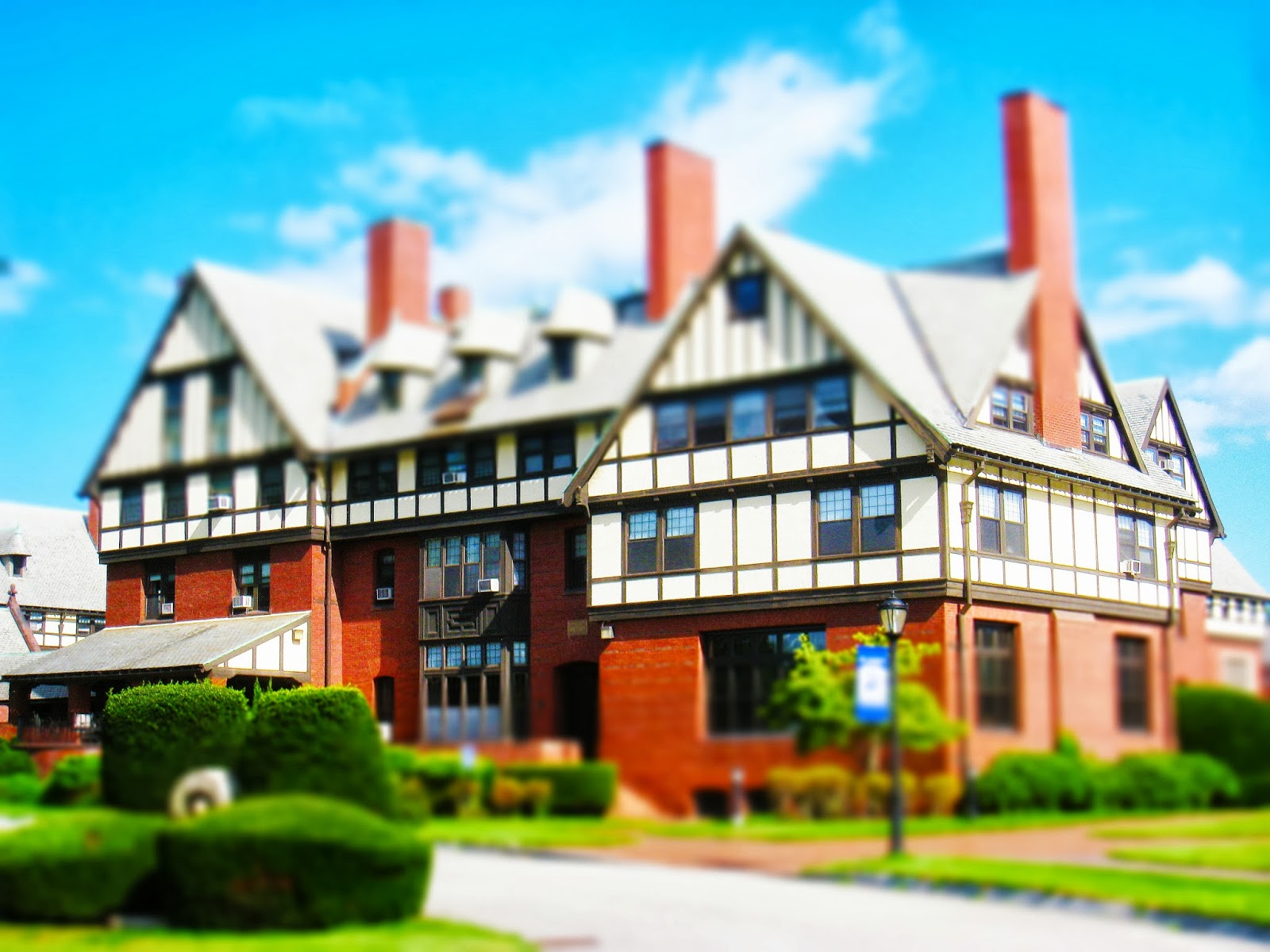 ideas, using 2D and 3D tools like Photoshop, Illustrator, and CAD software. The class seeks to show students the myriad possibilities of design in the digital world. Gabriel Xu, III Form, came to the second class this fall with an amazing image he found that showed the “tilt-shifting” effect (it was his response to a “favorite photo” assignment). When we saw the image, we were so excited to investigate tilt-shifting so we could learn how it works and practice it ourselves. (more…)
Math and Physics as Play
by Jacob Backon, Mathematics and Science Faculty
When I tell people that I teach physics and geometry they usually respond with a grimace or a sound usually reserved for the taste of something rotten. This is almost always followed up with some sort of admission of defeat at the hands of either or both of these subjects. Occasionally, someone will tell me they loved geometry but hated algebra as if the two were competing vacation locales. In many ways, this is like admitting that you love words but hate reading. It seems to me that many people’s opinions of math and physics are negative. (more…)


 LEO
LEO 