
Home » Posts tagged 'Teaching' (Page 4)
Tag Archives: Teaching
A Novel of Reaction: Larsen’s Passing
By Charlotte Wood, V Form
A Novel of Reaction: Larsen’t Passing
W.E.B. Dubois wrote that “all Art is propaganda and ever must be…” He thought that artists and writers should try to make the world a better place through their work. Nella Larsen, the author of Passing, would not agree. Her novel centers on two light-skinned black women, Clare Kendry and Irene Redfield, and their respective decisions to pass as white or not. I believe she wrote this novel not to persuade the reader of something or to convince them to enact change, but rather to reflect the world how she sees it. The book is a reaction to society, not something for society to react to. Passing itself is portrayed as something that simply is, not wholly good or wholly bad. Both characters participate in it, and so the reader is not meant to side with one over the other. The relative passivity of its message is reflected in the passivity of its main character, Irene. Because she is not active, the intention of the novel is not active. Lastly, the ambiguity of the ending leaves the reader, like Irene, with more questions than answers. (more…)
The Quest to Improve the Teaching of Electricity in the St. Mark’s Introductory Physics Course
By Jacob Backon, STEM Faculty
The Quest to Improve the Teaching of Electricity in the St. Mark’s Introductory Physics Course
Abstract
In response to research indicating significant conceptual misunderstandings of basic electrical concepts, the physics teachers at St. Mark’s incorporated the CASTLE curriculum into the introductory physics course. Over the past few years this curriculum has met with two significant challenges: delivering efficient feedback in response to student model building, and the time it takes to move through the curriculum. Canvas modules were used to address these challenges, and a concept test was administered before and after instruction to gather data on the effectiveness of these techniques. Preliminary data with a very small sample size indicates the CASTLE curriculum and Canvas modules did result in higher scores on the concept test than data reported from a more traditional style of instruction. (more…)
Make Peace With the Day to Enjoy the Evening: Remains of the Day
By Gabriel Xu, V Form
Make Peace With the Day to Enjoy the Evening: Remains of the Day
There’s an old Chinese idiom that roughly translates to, “The person on the spot is baffled, the onlooker sees clearly”. Surely, this applies to the case of Mr. Stevens. As the aged butler in Remains of the Day travels farther away from the house he has been in service of for decades, he starts to see the truth of his former employer more clearly — a truth so dark and ugly that Stevens has tried very hard to escape. Although Mr. Stevens is forced to learn the tragic truth about his former lord and consequently his own small, yet undeniable contribution as butler to the evildoing his master was conducting, the meeting with Ms. Kenton, a former housekeeper, allows him to see value in his decades of service, to make peace with his past, and eventually to move forward into a hopeful future. (more…)

Outcomes in Team Based Learning in Algebra II
By Mr. Scott Dolesh, Mathematics Faculty
Outcomes in Team Based Learning in Algebra II
My project compares the outcomes of students in Team Based Learning (TBL) Algebra II courses versus students in traditional teacher directed Algebra II courses. I had one Algebra II course that I used the TBL approach, and I had one Algebra II course that I used a traditional teacher directed approach. I also had a colleague who had two Algebra II courses that she taught using the TBL approach, and another colleague who had one Algebra II course that she taught using a traditional teacher directed approach. I compared the outcomes on our two common assessments that we give in Algebra 2: the first being the midterm exam and the second being the final exam. (more…)

The Quest: An Original Composition for a Life Philosophy
By Helena Lin, IV Form
The Quest: An Original Composition for a Life Philosophy
At the end of my fall Roman Religion and Philosophy class, Dr Harwood assigned us a free-swim 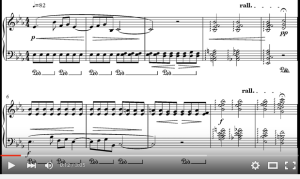 final project that asked for a creative presentation, in any desired form, of something we found interesting and meaningful in what we learned in class. After several conferences with Dr Harwood, I decided to produce my first music composition, which aims to demonstrate my understanding of Epicureanism and Stoicism, the two Roman philosophies that we studied. (Click right image!) (more…)

The Circadian Clock and The Adverse Effects of Elevated CAT Level
By David Baek, VI Form
The Circadian Clock and The Adverse Effects of Elevated CAT Level
Introduction: This project probes into the molecular mechanism of the circadian clock of Drosophila Melanogaster. The circadian clock exists in all living things and regulates the daily rhythm of organisms’ metabolism, behavior, and other outputs that affect the organisms’ development (CH Ko, 2006). The circadian clock is a field that researchers and scientists have yet to fully understand due to the ambiguity of how circadian clock affect invertebrates and vertebrates. To uncover one small aspect of this obscurity, this study seeks to find the effect of sleep deprivation on antioxidant defense in fruit flies. If there were to be a link, the investigation would be significant as the effect will explain how sleep deprivation in humans can lead to the weakening of their antioxidant defense, leading to multiple cardiovascular diseases and pathological conditions such as plaque formation in vessels (Takeda, 2011) (Dominguez-Rodriguez et al, 2009). (more…)

From Classroom To Lab: My Work With T Cell Therapy
By Lilly Drohan, VI Form
From Classroom To Lab: My Work With T Cell Therapy
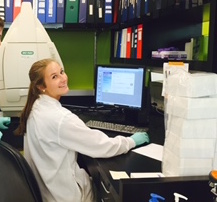 This summer, I traveled to Seattle, Washington to work in the Ben Towne Center for Childhood Cancer Research at the Seattle Children’s Research Institute. My biology teacher presented me with the opportunity, and I immediately got my hands on it. Studying cancer at the microbiological level in Advanced Biology my junior year really challenged me and stimulated my curiosity, but what I experienced during August turned my attraction into almost an obsession. Dr. Michael Jensen, the director of the lab, takes an approach to pediatric cancer therapy that not many take: using the body’s own immune system to fight off the cancer. Dr. Jensen and his team reprogram immune cells called T cells using virus technology to give the cells specific properties that help them proliferate and target specific molecules expressed on cancer cells. This form of therapy is incredibly innovative and creative, and it was so captivating to be at the forefront of the further development of the treatment for just a brief month.
(more…)
Festina Lente: Reflections on Teaching and Gardening
By Heather Harwood, Classics Faculty
Festina Lente: Reflections on Teaching and Gardening
This past spring and summer, I was once again actively involved in the St. Mark’s Community Garden Project. With the help of five students last spring and with the committed labor of several St. Mark’s faculty during the summer, the garden continued to expand and flourish into its fourth season. It provided all of us who participated with an abundance of delicious and nutritious food and was a quiet, reflective refuge where I could escape any given sunny morning to harvest my thoughts about the past school year and think about the upcoming one. (more…)


 LEO
LEO 