
Home » Posts tagged 'Science' (Page 7)
Tag Archives: Science

The Circadian Clock and The Adverse Effects of Elevated CAT Level
By David Baek, VI Form
The Circadian Clock and The Adverse Effects of Elevated CAT Level
Introduction: This project probes into the molecular mechanism of the circadian clock of Drosophila Melanogaster. The circadian clock exists in all living things and regulates the daily rhythm of organisms’ metabolism, behavior, and other outputs that affect the organisms’ development (CH Ko, 2006). The circadian clock is a field that researchers and scientists have yet to fully understand due to the ambiguity of how circadian clock affect invertebrates and vertebrates. To uncover one small aspect of this obscurity, this study seeks to find the effect of sleep deprivation on antioxidant defense in fruit flies. If there were to be a link, the investigation would be significant as the effect will explain how sleep deprivation in humans can lead to the weakening of their antioxidant defense, leading to multiple cardiovascular diseases and pathological conditions such as plaque formation in vessels (Takeda, 2011) (Dominguez-Rodriguez et al, 2009). (more…)

From Classroom To Lab: My Work With T Cell Therapy
By Lilly Drohan, VI Form
From Classroom To Lab: My Work With T Cell Therapy
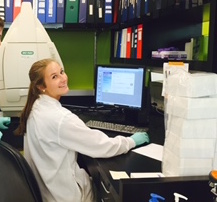 This summer, I traveled to Seattle, Washington to work in the Ben Towne Center for Childhood Cancer Research at the Seattle Children’s Research Institute. My biology teacher presented me with the opportunity, and I immediately got my hands on it. Studying cancer at the microbiological level in Advanced Biology my junior year really challenged me and stimulated my curiosity, but what I experienced during August turned my attraction into almost an obsession. Dr. Michael Jensen, the director of the lab, takes an approach to pediatric cancer therapy that not many take: using the body’s own immune system to fight off the cancer. Dr. Jensen and his team reprogram immune cells called T cells using virus technology to give the cells specific properties that help them proliferate and target specific molecules expressed on cancer cells. This form of therapy is incredibly innovative and creative, and it was so captivating to be at the forefront of the further development of the treatment for just a brief month.
(more…)

Optimism About Positive Psychology
By Sarah Eslick, Associate Director of The Center for Innovation in Teaching & Learning
Optimism About Positive Psychology
 What allows humans to thrive? What conditions, actions, or qualities contribute to well being? How do we help kids become resilient?
Historically, the field of psychology has focused on mental illness. Depression, schizophrenia, and other disorders of the mind carried far more intellectual gravitas than the psycho-emotional characteristics that lead to happiness. Certainly these illnesses are less subtle, easier to categorize, label, and examine. In striking contrast, the field of positive psychology studies how people do well: how we cultivate positive emotions and optimism and how we develop grit and self-regulation. It explores how we benefit from resilience and gratitude while recognizing our (more…)

Drunk Worms: My Internship and Research on Alcoholism
By Marissa Huggins, VI Form
Drunk Worms: My Internship and Research on Alcoholism
Alcoholism is a serious disease that affects 7.2 % of the United States adult population.¹ This illness is often influenced by genetics; more people are predisposed to develop alcoholism, or alcohol addiction, based on their DNA. While significant discoveries have been made, there is room for growth in the scientific research field surrounding the genetic factors that contribute to the development of alcoholism.This past summer, I engaged in an eight-week long internship at Rosalind Franklin University under the mentorship of Dr. Hongkyun Kim. Dr. Kim’s work focuses on researching muscular dystrophy, ion channel localization, and alcohol and excitability using Caenorhabditis elegans (C. elegans) as a model organism. (more…)

The Threats Facing Whales


Alternative Assessment and the Art of Exploring
By Brady Loomer, Science Faculty
Alternative Assessment and the Art of Exploring
Exploring can be described as the simple act of discovery. In a literature course, a student may explore meanings, interpretations, and characters’ lives. In an art course, a student may explore depth, shadow, and space. In a science course, a student may explore the structure of the atom, cellular structure, or action vs. reaction. All these are important aspects of a student’s education, however there is something still missing in that definition of exploring and discovery. Exploratory Sciences tries to delve into a distinctly human condition, the desire to explore new places. If human beings were not inherently curious about what lies over the next hill we would not be one of the most well adapted and expansive species on the (more…)

The Right to Death and The Death with Dignity Act
By Liz Swain, VI Form
The Right to Death and The Death with Dignity Act
Ethics and the law have clashed numerous times in history. What one believes is right and justifiable may not be so under federal law. Laws against physician assisted death have been heavily debated for with conflicting viewpoints. Physician assisted death occurs when a doctor prescribes a patient the necessary medication and dosage that would be lethal. The patient typically has a terminal illness and instead of slowly and painfully dying, the patient can choose to end his/her life in a peaceful and chosen way. Laws only permit physician-assisted death to be legal in five states: Oregon, Washington, Vermont, Montana, and New Mexico.[1] The Death with Dignity Act, allowing physician assisted death, should be ratified in all 50 states to allow someone to die on his/her own terms. (more…)
The Horrific Nazi Experiments During World War II
By Lucy Holland, VI Form
The Horrific Nazi Experiments During World War II
Presently, informed consent is a widely used and understood term – the process of receiving consent from patients before administering a medical intervention on them. But before a court case in 1957[1], only 58 years ago, informed consent was not required in medical practices, which meant that medical practitioners could do almost anything to their patients without them knowing or realizing that it was ethically wrong. In The Immortal Life of Henrietta Lacks, Henrietta’s cells were taken for a culture when she went into Johns Hopkins because of what the doctors eventually discovered was (more…)


 LEO
LEO 