
Home » Posts tagged 'Pedagogy' (Page 6)
Tag Archives: Pedagogy

Why Crew? Crew Builds. . .
By Liz Cavanaugh ’04, Associate Director of Admission & Girls’ Varsity Crew Head Coach
Bad weather. Physically and mentally grueling practices. The Erg. Travelling to and from practices. The year-round commitment. The six minutes of torture called “racing.” The unisuit. The muddy, marshy riverbanks. The long bus rides home every April and May Saturday night. The destroyed, bleeding, blistered hands.
Why crew? Because of what it builds. . . (more…)
Doodling and the Mind: Drawing Your Attention
By Samantha Wilson, English Faculty
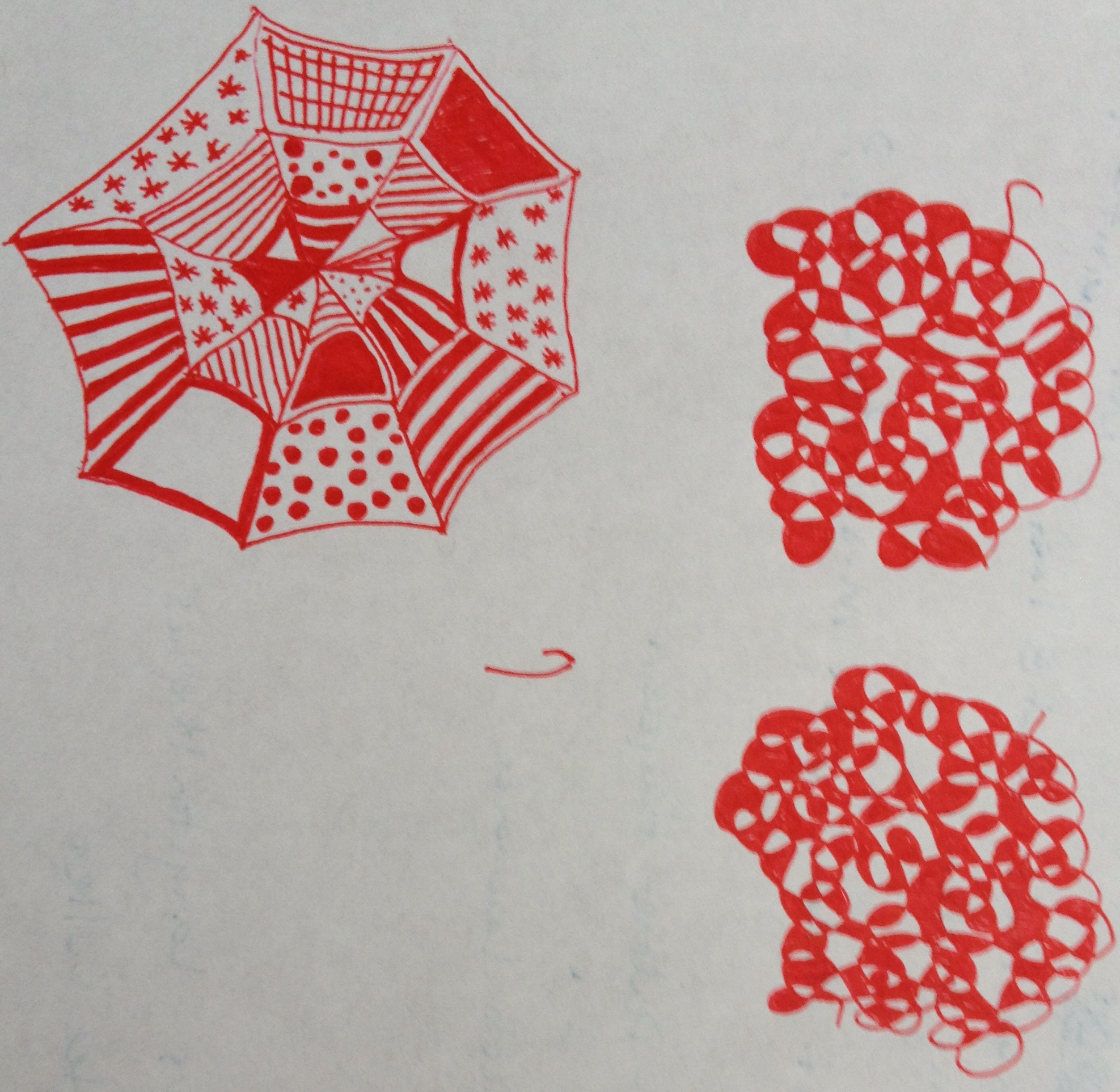 I’ve been a doodler as long as I can remember, and for just as long, I’ve been accused of not paying attention. I even wrote a piece about it for my elementary school newsletter entitled “It’s OK to Doodle” or something to that effect. Basically I’ve been defending doodling and explaining that I AM listening and paying attention for a long time now. I’ve been claiming for decades that this type of multitasking is not an indication that the mind has wandered off topic, and there is finally strong evidence to support my position. (more…)

Stand Up and Be Counted: The Butterfly Effect
By Jeniene Matthews, English Faculty
If you don’t stand for something you’ll fall for anything. ~Chaplain Peter Marshall
It is not enough to be compassionate. You must act. ~Dalai Lama
Can the flapping of a butterfly’s gossamer wings, which occur over a flowerbed in Texas, result in a snowstorm in Ireland? While I know it sounds like a ridiculous question, experts on the theory of chaos say yes, it can. This phenomenon even has a name: The Butterfly Effect. The flapping of the wings represents a small change in the initial state of the system (the weather), which causes a chain of events that can lead to a large-scale phenomenon (a snowstorm). This “Butterfly Effect” can also be analogized, I believe, to those little acts that we do that ripple out and make a difference whether we know it or not. It is the idea that everything is (more…)

Why I Do Not Grade “Class Participation”
By John Camp, English Department Head
I am a vehement opponent to class participation grades. I am fully cognizant that I am in the minority in my department, perhaps at St. Mark’s at large, and even in the teaching profession. Despite the self-imposed peer pressure to grade for this, I refuse, based on both my life personally as an introvert (and the value I place on my introversion as a healthy and necessary part of my identity) and my pedagogical beliefs about participation overall. (more…)
Global Competence in the Classroom: Reflections on a Week at the Salzburg Global Seminar
By Nat Waters, Associate Dean of Academics
One of the great challenges of living in this intentionally small boarding community is the mythical “St.  Mark’s Bubble”– an all-consuming sense of “dailyness” that insulates residents from the wider world. Most often, I hear folks cite the bubble when explaining away their own limited grasp of world events or geopolitical trends (and occasionally, the latest plot twists from Breaking Bad or Downton Abbey). Modern learning communities like St. Mark’s are wired for connection to issues of global consequence. As St. Mark’s works to become an even more globally-minded community, we’ll (more…)
Creating High School Students’ Dispositions for Lifelong Learning Through Open Online Courses
By Lauren Riva, Director of the St. Mark’s Mathematics Institute
People are members of an ever-changing world, a world in which change occurs more and more rapidly. These swift changes give rise to major problems for the workforce because workers (especially those involved in design, production, maintenance, sales, and planning) are constantly faced with the need to learn how new systems work (Dubinsky, 2000; Van Dam, 2012). Becoming and remaining a productive member of the workforce requires more than simply being well versed in present day systems; an individual must also be able to adapt their knowledge and skills to new situations. (more…)
Notes from a History Research Paper Purist
By Caitlin Jones, History Faculty
Lately, I have been giving a lot of thought to the value of the traditional history research paper. Has the shift towards instantaneous, accessible information made historical research skills obsolete or has it made the role of the historian that much more important in wading through the sea of information that is readily available at our fingertips? In all of this discussion about global citizenship and twenty-first-century skills, is the history research process relevant and valuable? (more…)
The Role of STEM in a Liberal Arts Education
By Michael Wirtz, Assistant Head of School and Dean of Faculty
“In my perspective … science and computer science is a liberal art, it’s something everyone should know how to use, at least, and harness in their life. It’s not something that should be relegated to 5 percent of the population over in the corner. It’s something that everybody should be exposed to and everyone should have mastery of to some extent, and that’s how we viewed computation and these computation devices.” – Steve Jobs, from a 1996 interview with NPR’s Terry Gross
At St. Mark’s, a school with a proud and strong liberal arts tradition, there has been a fair share of head scratching and hand wringing about the role of the school’s STEM (science, technology, engineering, and mathematics) education initiative in our future. During the early evolution of this (more…)


 LEO
LEO 