
Home » Posts tagged 'Learning and the Brain' (Page 3)
Tag Archives: Learning and the Brain

Drawing on Our Brains: How Neuroscience and Art Can Teach Us About Learning
By Gabe Brower, VI Form
Drawing on Our Brains: How Neuroscience and Art Can Teach Us About Learning
I have yet to meet a single student at Saint Mark’s that has never crammed for an exam. They fill up their brain temporarily with information for an upcoming test in a vain attempt to not fall flat on their face the next day during their test. To be honest, it sometimes “works”, as defined by a good score, and I can speak from experience in this area. However, that doesn’t mean cramming is effective. It is the result of disengaged students and ineffective teaching methods that culminates in temporary information retention, and over the long run the crammed information isn’t retained. Therefore, no valuable learning takes place. (more…)

Global Connections of Media and Skin
By June Seong, IV Form
Global Connections of Media and Skin
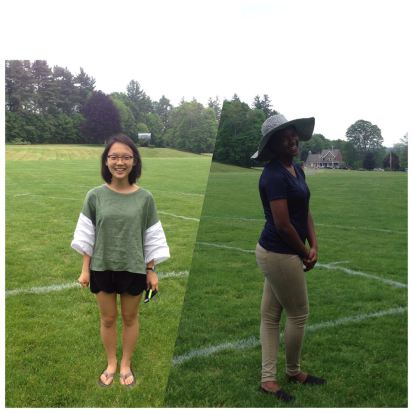
Amidst the chaos that is my life – including the future I must decide upon, the necessity to be “special,” and my attempt to make this post somewhat grammatically correct – I am struck by my simultaneous privilege and ignorance. This privilege and ignorance is exhibited through myriad ways at this very moment: 1) this dull MacBook Air that I am communicating through and that was probably configured by an underpaid or unpaid laborer; 2) the whizzing air conditioning that is breathing on my neck so that I might not die from heatstroke whilst the world scales up a few sweltering Centigrades; 3) the immensity of the world that is within computer click’s reach via Facebook. (more…)

Engaging in 20% Time for Lifelong Learning
By Casey Pickett, English Faculty
Engaging in 20% Time for Lifelong Learning
From the time I was in kindergarten, I knew that I wanted to be a teacher. As a child, I spent 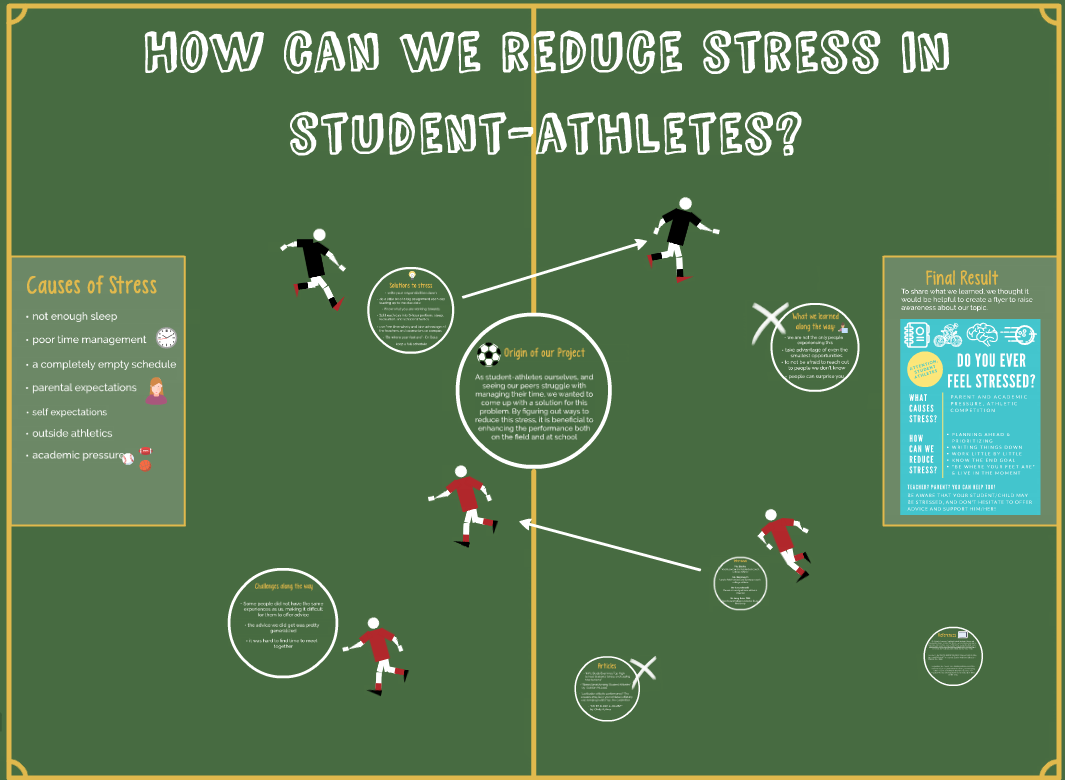 countless hours in my basement forcing my four siblings to be my students while I taught them whatever lessons my teachers had taught me earlier in the day. So, as I entered my Masters in the Arts of Teaching (MAT) program at Northeastern in the Fall of 2013, I couldn’t have been more excited to FINALLY learn my craft. I showed up to my first class ready to write down the formula for becoming a good teacher. I was expecting my professor to tell me EXACTLY what I needed to do in order to teach my students everything there was to know about reading, writing, and analyzing literature. Throughout my 18 months in the MAT program, I never did get that formula. What I did get, however, was a constant reminder that my job as a teacher was to prepare my students to become lifelong learners. So, with lifelong learning in mind, I decided to have my students engage in a 20% Time project (based off of Google’s 20% Time policy). (more…)

A Novel of Reaction: Larsen’s Passing
By Charlotte Wood, V Form
A Novel of Reaction: Larsen’t Passing
W.E.B. Dubois wrote that “all Art is propaganda and ever must be…” He thought that artists and writers should try to make the world a better place through their work. Nella Larsen, the author of Passing, would not agree. Her novel centers on two light-skinned black women, Clare Kendry and Irene Redfield, and their respective decisions to pass as white or not. I believe she wrote this novel not to persuade the reader of something or to convince them to enact change, but rather to reflect the world how she sees it. The book is a reaction to society, not something for society to react to. Passing itself is portrayed as something that simply is, not wholly good or wholly bad. Both characters participate in it, and so the reader is not meant to side with one over the other. The relative passivity of its message is reflected in the passivity of its main character, Irene. Because she is not active, the intention of the novel is not active. Lastly, the ambiguity of the ending leaves the reader, like Irene, with more questions than answers. (more…)

Make Peace With the Day to Enjoy the Evening: Remains of the Day
By Gabriel Xu, V Form
Make Peace With the Day to Enjoy the Evening: Remains of the Day
There’s an old Chinese idiom that roughly translates to, “The person on the spot is baffled, the onlooker sees clearly”. Surely, this applies to the case of Mr. Stevens. As the aged butler in Remains of the Day travels farther away from the house he has been in service of for decades, he starts to see the truth of his former employer more clearly — a truth so dark and ugly that Stevens has tried very hard to escape. Although Mr. Stevens is forced to learn the tragic truth about his former lord and consequently his own small, yet undeniable contribution as butler to the evildoing his master was conducting, the meeting with Ms. Kenton, a former housekeeper, allows him to see value in his decades of service, to make peace with his past, and eventually to move forward into a hopeful future. (more…)

The Importance of Classics in the 21st Century
By Riley Lochhead, V Form
The Importance of Classics in the 21st Century
Editor’s Note: In Latin III Honors, the students wrote essays to submit to the Eidolon Essay Contest. The prompt called for an explanation and argument for why studying Classics is important in the 21st century.
Studying Classics has helped me with many things such as SAT vocabulary, gaining a better understanding of the foundation of the English language, and having a better grasp on the history of ancient Rome. Although all of these skills are valid examples of the importance of studying the Classics, they are not what makes studying Classics most valuable in the 21st century. It is crucial to continue to educate students in the area of Classics is because Latin and Greek create opportunities for students to be independent critical thinkers who are able to produce their own ideas and to ask questions that provoke them to question their previous assumptions about the topics being discussed. This skill can be applied to many other disciplines and is crucial to development of a growth mindset. (more…)

The Great Gatsby: Chapter 10
By Eric Zhang, V Form
The Great Gatsby: Chapter 10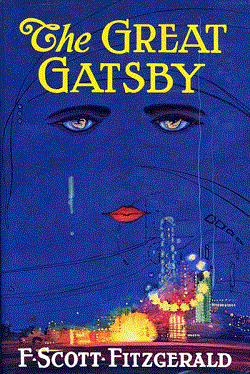
(Editors’ Note: In Ms. Matthews’ American Literature class, this assignment prompted students to create a 10th chapter of Fitzgerald’s The Great Gatsby, utilizing Nick Caraway’s melancholic tone and including some type of closure for the characters)
It had been five years since the funeral, and I finally returned to this city that I once thought was haunted. Everything was so depressing. There were no sounds of the orchestra playing or shimmering sights of the girls wearing fancy dresses with decorations on their shoes. The city of New York had changed since that October in 1929, what was later called Black October. I wandered the streets of New York, and ultimately, I was pulled back to the Eggs and Gatsby’s mansion. What was once a (more…)

U.S. Historical “I am” Poems
By Samantha Sarafin, John Hart, George Littlefield, and Ginny Walsh, V Form
U.S. Historical “I am” Poems
Each of our United States History courses revolves around eight major themes prevalent throughout history. One of those themes is the question of “Who is an American” at any given time in the nation’s history. In keeping with our work and also trying to connect what we do inside our classroom to the broader St. Mark’s community and world at large, each class took their Community and Equity Day “I am” poems and looked at them from a historical angle. Each student was asked to look at an “I am” poem from the perspective of a figure from history. Some students were asked to be someone as specific as Alexander Hamilton, while others were (more…)


 LEO
LEO 